
Wool vs Down Pillows: Why One Sleeps Hot and the Other Sleeps Cool
Wool vs Down Pillows: The Quick Answer
When choosing between wool and down pillows, the decision depends on sleep style. Down offers plush, moldable softness ideal for side sleepers who like to sink in. Wool provides firm, resilient support and superior moisture-wicking, making it the ultimate choice for hot sleepers and allergy sufferers.
THE 8-WEEK HYGGE HOME TRANSFORMATION PLAN

If you are new to hygge home decor and want to skip the guesswork, I’ve mapped out a Free 8-Week Hygge Home Transformation Plan It is a transformation road map for each room, week by week.
Click the button above · Enter your email · Check your inbox and confirm the verification email · Your transformation plan unlocks instantly · NOTE: Check your spam folder too!
Wool vs. Down Pillows: At a Glance
| Feature | Wool | Down |
|---|---|---|
| Moisture Regain | About 30%; absorbs moisture vapor | About 11–13% |
| Warmth | Moisture-buffering, breathable | Traps air for warmth |
| Weight | Heavier, substantial feel | Light and airy |
| Loft | Low to medium, supportive | High, soft and compressible |
| Allergens | Moisture management may discourage dust mites | Requires proper cleaning and protection |
| Care | Air regularly; wash sparingly | Wash sparingly; dry thoroughly |
| Best For | Hot sleepers and those preferring a supportive feel | Cold sleepers and those preferring soft, moldable loft |
It was 3 a.m. on a Tuesday in deep January, and I was flipping the pillow to the cool side for the third time.
My hairline was damp. My neck was sweating. Beside me, Henrik was buried to his nose, sleeping the sleep of the righteous on his plush down pillow.
We share one duvet. I haven’t yet convinced Henrik to adopt the full two-duvet Scandinavian sleep method — that negotiation is ongoing.
But under that one shared blanket, we are living in two different climates. At least, our heads are. He runs cold. I run hot. We are in the same bed, under the same duvet; what differs are the pillow fills.
The pillow is the microclimate your head lives in for eight hours. The pillow fill decides who sleeps and who sweats.
Here is the wool vs down argument, settled by physics and experience, not marketing hype.
This website participates in the Amazon Associates program. As an Amazon Associate, I earn from qualifying purchases. It also participates in the Impact and AWIN affiliate programs. If you buy through links on this site, I may earn a small commission at no extra cost to you. Thank you for supporting The Hugged Home.
The Physics of the Sweaty Head
Type why does my pillow make my head sweat into a search bar, and the results will try to sell you gel, foam, and “cooling technology.” The real answer is older and cheaper: fiber.
Your head is usually the only uncovered body part during cold winter nights. Everything else is under the duvet; the head is out there dumping heat all night. The pillow either helps it dump, or blocks it.
Down blocks it beautifully. A down pillow is a cluster of trapped still air — that is the whole product. Fill power, the number you see on the label, is a measure of how much air one ounce of down traps.
For a cold sleeper, that trapped air is heavenly. For a hot sleeper, it is a thermos with your head inside.
Wool works differently. The fiber is hygroscopic keratin — the same protein as your hair, carrying a whisper of lanolin — and it absorbs roughly thirty percent of its own weight in moisture vapor before it feels wet.
Down manages about half that; polyester, four-tenths of one percent. Wool pulls the vapor off your scalp, holds it in the fiber, and releases it slowly to the drier room air.
Your head stays dry. A dry head is a cool head. Wool’s resume for the hot sleeper fits on a napkin: dry scalp, cool neck, no static, mite resistance.
Is a wool pillow worth it? For the hot sleeper, it is the cheapest available sleep upgrade.
Before the label lesson, one caveat: “hypoallergenic wool” is marketing overreach. Wool resists dust mites and mold because it stays dry, and mites and mold don’t particularly like a dry bed.
But some people are genuinely allergic to wool itself — accuracy over adjective.
Wool vs Down Pillows: The Specs to Check
Skip the roundup screenshots. The label tells you everything, once you know which numbers matter.
The Wool Specs
- Fill weight in grams — and ounces. A pillow that won’t state its fill weight won’t tell you its loft either. 400–500 g (14–18 oz) is low and soft; 700 g (25 oz) and up is steady and supportive.
- Carded vs felted. Carded wool is the airy, loftier fill; felted or rolled wool is the dense, flat one.
- The cover. Cotton or linen, never polyester. A wool fill under a poly shell can wick all night into a fabric that won’t let the vapor out.
- A zipper. An adjustable layer you can thin by one handful is the difference between a pillow and your pillow.
The Down Specs
- Fill power. 600–700 is good; 800 and up is premium — more loft per ounce, less weight on your neck.
- The number travels: most European labels print the same figure as “cuin,” and Canada reads it exactly as the US. If a label only speaks millimeters, skip the math — the Loft Test below is the universal translator.
- Fill weight. Fill power rates the loft’s quality; fill weight tells you how much of it you’re getting.
- Down-to-feather ratio. 90/10 is the cloud; 70/30 is the crunch.
- RDS certification. The Responsible Down Standard is the material-honesty line. A label that can’t say where the down came from is a blind purchase.
- Construction and cover. Chambered build keeps the fill out of the corners; cotton sateen or percale on the outside. A down pillow in a polyester shell is a natural fiber serving a plastic sentence.
The Loft Test
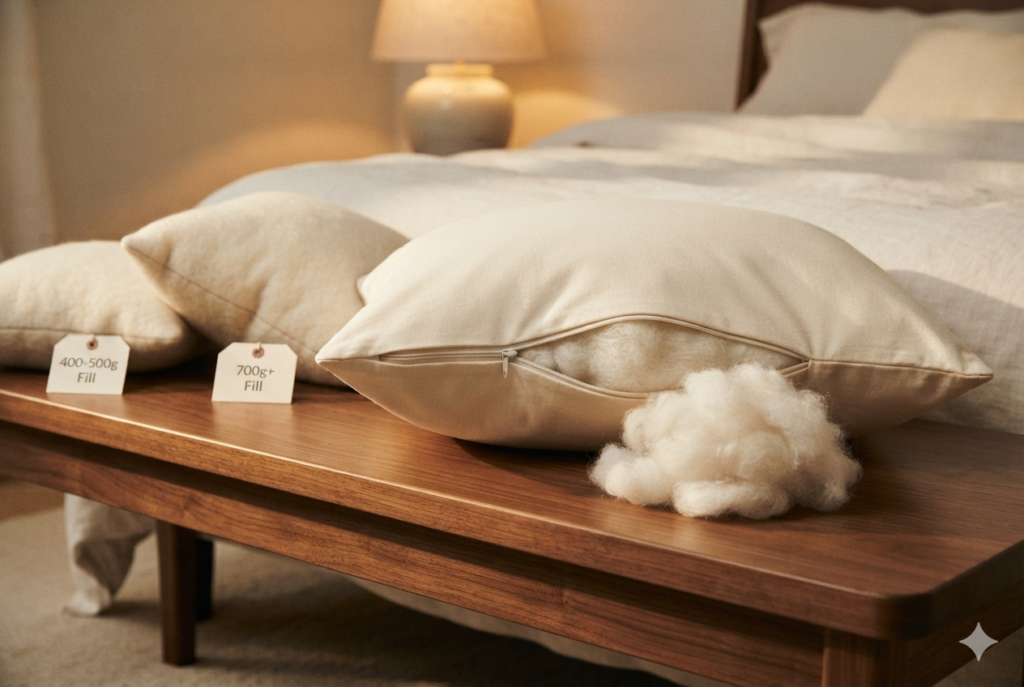
Loft is the height of the pillow under your head, and it maps to how you sleep:
- Side sleepers: high loft, to fill the shoulder gap.
- Back sleepers: middle.
- Stomach sleepers: low.
The wool vs down question for side sleepers comes down to recovery: down springs back to fill the gap all night; wool settles and stays, so buy it higher than you think.
In the store, press it and watch the recovery. If it stays flat and sad, walk away.
Here are the Pillows I recommend:
Elise would pick
Holy Lamb Organics Wool Pillow
A bedroom of natural fibers might start with the pillow. This one is listed with wool batting, an organic cotton cover and a medium fill, made in the USA, and I would choose it for that reason.
See itAffiliate link. As an Amazon Associate I earn from qualifying purchases.
Holy Lamb Wool Pillow is highly recommended for hot sleepers like me. For cold sleepers, like Henrik, a chambered, RDS-certified feather-and-down pillow is the one to go for.
Elise would pick
Pacific Coast 3-Chamber Down Pillow
The listing describes a three-chamber pillow: goose feathers in the inner chamber, down in the outer one, all in a cotton shell. I would choose it for a bedroom that leans on natural fills.
See itAffiliate link. As an Amazon Associate I earn from qualifying purchases.
Wool Pillow vs Down Pillow for Neck Pain
If you wake up with a stiff neck, pillow loft and resilience are critical.
- Down Pillows: High-quality down is incredibly soft and moldable, but it can flatten out overnight. This lack of consistent support can cause your head to drop, misaligning your cervical spine.
- Wool Pillows: Wool fibers are naturally springy and resilient. A wool pillow maintains its loft throughout the night, providing consistent, ergonomic support that keeps your head, neck, and spine in a neutral alignment. For those seeking structured comfort, wool is often the superior choice for neck pain relief.
Are Wool Pillows Dust Mite Resistant?
For allergy sufferers, the internal environment of your pillow matters just as much as the feel. Wool is naturally dust mite resistant.
The structure of wool fibers and their ability to wick moisture away create a dry environment where dust mites and mold cannot thrive.
Down, while luxurious, can trap humidity and requires rigorous, frequent washing to remain hypoallergenic.
If you suffer from seasonal allergies or asthma, a natural wool fill is a much safer, cleaner investment for your hygge bedroom.
(Learn more about creating a healthy sleep sanctuary in my article on the Scandinavian sleep method).
The Quick Care Guide: Two Fills, Two Routines
A pillow is not arv. Nobody inherits a pillow, and a brand that tells you otherwise is selling you a price point.
But the stewardship logic still applies: the better you treat the fill, the longer it sleeps well, and the later it reaches the landfill.
Caring for Wool
Wool cleans itself. Most mornings the care is nothing: a shake, an hour of air, the steamy-bathroom refresh while you shower.
When you must wash it: cold, delicate, wool-specific wash. Skip the softener — it leaves a film on the keratin and quietly cancels the wicking you paid for.
Dry flat, reshaped, away from the radiator. For storage, cedar blocks beat mothballs, and the pillow comes out smelling like a cabin, not a chemical cabinet.
Caring for Down
Down is washed rarely but fully: gentle, cold, a down-safe wash. Then the part everyone ruins — dry it thoroughly, with dryer balls, twice as long as feels reasonable. Damp down is mildew, and mildew is a dead pillow.
Fluff it daily; the ten-second scrunch is the whole maintenance plan. Do this and down outlasts wool: ten years against five to seven. That is a long life for a pillow. The drying cycle is how it gets there.
How to Care for Wool and Down Pillows: A Complete Guide
Natural wool and down pillows bring softness, warmth and breathable comfort to a hygge bedroom. But each filling has its own care requirements. Wool benefits from regular airing and occasional gentle washing, while down needs careful washing and exceptionally thorough drying.
The golden rule: Refresh regularly, wash only when necessary, follow the manufacturer’s care label, and never store a pillow before it is completely dry.Wool vs. Down Pillows: Care and Maintenance Compared
| Care Category | Wool Pillows | Down Pillows |
|---|---|---|
| Everyday Care | Shake and fluff each morning. Allow the pillow to air regularly to refresh the natural wool fibers. | Fluff and gently scrunch daily to restore loft and redistribute the down clusters. |
| Refreshing | Air outdoors in suitable dry weather or in a well-ventilated space. A steamy bathroom may provide a light refresh, but avoid exposing the pillow to excess moisture. | Air in a dry, well-ventilated space. Fluff gently to help maintain its natural volume. |
| Washing Frequency | Wash infrequently, only when needed and when the care label permits. Wool’s natural properties can help resist odors between washes. | Wash infrequently, when necessary and according to the manufacturer’s instructions. |
| Water Temperature | Cold water, using a gentle or wool-approved washing method. | Cold water on a gentle cycle, if machine washable. |
| Detergent | Use a mild, wool-specific wash formulated for wool fibers. | Use a mild detergent specifically formulated for down, following the care instructions. |
| Washing Method | Check whether the pillow is machine washable. Some structured wool pillows require professional cleaning. | Machine wash only if the care label permits. Use a gentle cycle and sufficient room for the pillow to move freely. |
| Water Extraction | Use a gentle spin cycle if permitted. Press out excess water carefully. Never wring or twist the pillow. | Use an appropriate gentle spin cycle to remove excess water before drying. |
| Drying | Preferably dry flat on a rack, reshape periodically and keep away from direct heat. Tumble dry only if the label explicitly allows it. | Tumble dry on a low setting if permitted, using dryer balls to help separate the down and restore loft. Dry thoroughly. |
| Fabric Softener | Avoid. It can leave a coating on the fibers and interfere with wool’s moisture-management properties. | Avoid. It can leave residue on the filling and affect the pillow’s natural feel. |
| Seasonal Storage | Store completely dry in a breathable cotton bag or pillowcase. Cedar blocks can help deter moths. | Store completely dry in breathable fabric, in a cool, dry, well-ventilated place. |
| Typical Lifespan | Often around 5–7 years, depending on construction, use and care. | Quality down pillows may last around 5–10 years or longer with proper maintenance. |
How to Wash Wool Pillows: A Step-by-Step Guide
Wool Pillow Washing Routine
Gentle care protects the natural fibers, loft and moisture-management properties of your wool pillow.
- Check the Care Label: Confirm whether your specific wool pillow is machine washable. Some structured wool-filled pillows require professional or dry cleaning. When in doubt, follow the manufacturer’s instructions.
- Pre-Treat Stains: Gently dab visible stains with a clean cloth and a small amount of mild, wool-safe detergent diluted in cold water. Avoid aggressive rubbing, which can felt or distort the fibers.
- Wash Gently and Cold: If machine washing is permitted, wash the pillow according to the care label, using cold water, a delicate cycle and a specialized wool wash. Avoid bleach and fabric softener.
- Extract Water Carefully: Use a gentle spin cycle if permitted to remove excess water. Never wring or twist the pillow, as this can distort the wool filling and shape.
- Dry Flat and Reshape: Lay the pillow flat on a clean drying rack in a well-ventilated area, away from radiators and direct heat. Reshape and turn periodically as it dries. Do not use a tumble dryer unless the manufacturer explicitly permits it.
- Check That It Is Completely Dry: Ensure the filling is thoroughly dry throughout before putting the pillow back on the bed or storing it. Residual moisture can encourage mildew and damage the filling.
How to Care for Down Pillows
Down Pillow Washing and Drying Routine
Down needs gentle washing and meticulous drying to preserve its loft and prevent clumping or mildew.
- Check the Care Label: Confirm that the pillow is washable and follow the manufacturer’s instructions for water temperature, detergent and drying.
- Wash Gently: Use cold water, a gentle cycle and a down-specific detergent. Avoid bleach and fabric softener. Wash according to the pillow’s construction and care instructions.
- Remove Excess Water: Run an additional gentle spin if permitted. Handle the pillow carefully while it is wet, as the filling can become heavy.
- Tumble Dry Carefully: If the care label permits, use a low-heat dryer setting and add clean dryer balls to help break up clumps and redistribute the down.
- Dry Thoroughly: Check the pillow frequently, fluffing and repositioning it during drying. Repeat low-heat drying cycles as needed until the filling is completely dry. Cool or damp clumps may indicate that more drying is necessary.
- Restore the Loft: Once completely dry, gently shake and fluff the pillow to redistribute the down and restore its natural volume.
How Often Should You Wash Wool and Down Pillows?
Both types of pillows benefit from regular airing and daily fluffing, rather than frequent washing. Wash when needed, taking into account perspiration, spills, allergens and the manufacturer’s care instructions. Use a washable pillow protector to help keep the filling clean between washes.
How Should You Store Natural-Fill Pillows?
Before storing wool or down pillows for the warmer months, ensure they are completely clean and dry. Use a breathable cotton bag or pillowcase, and keep them in a cool, dry location. Cedar blocks can help deter moths around wool bedding. Avoid airtight plastic storage that may trap residual moisture.
When Down Is the Right Call
Down is not the enemy, and a site that recommends wool shouldn’t pretend otherwise. It is a natural fiber, and for the right sleeper it is the right tool.
Cold, dry sleepers. Stomach sleepers who need a low, cloud-soft loft that wool can’t quite flatten into. Anyone who loves the scrunch — the nightly kneading is a small ritual of its own. And the weightless feel, when a heavy day asks for a light landing.
Wool is for the sweaters, the mite-prone, and anyone who likes a little real weight on the shoulders — the weighted-throw comfort, moved to the neck.
Two fills, two jobs. The only wrong answer is buying one for the wrong sleeper.
Browse Throws, Blankets, & Rugs →
The Pillow at the End of the Night
It is 6 a.m. The room is still dark. I wake up with a dry hairline. No 3 a.m. flip. No damp neck.
We still share one duvet. The full two-duvet Scandinavian sleep method is still a negotiation for another winter.
But the two-pillow compromise? That one stuck. My head stays cool on the wool; his stays warm on the down.
A small truce in the dark season, but the one that lets us both sleep.
P.S. If you are ready to take the next step and divide the bed entirely, read the Scandinavian Sleep Method Guide next.
And if your feet are still the cold part of the equation, the cold feet guide finishes the thermoregulation puzzle — feet warm, head cool, sleep deep.
Light a candle. Slow down. Hygge.
— Elise