Wool vs Fleece Throws: Why Your Sofa Probably Needs Both
It was a Saturday in mid-January, and the living room was divided by age, gravity, and tomato soup.
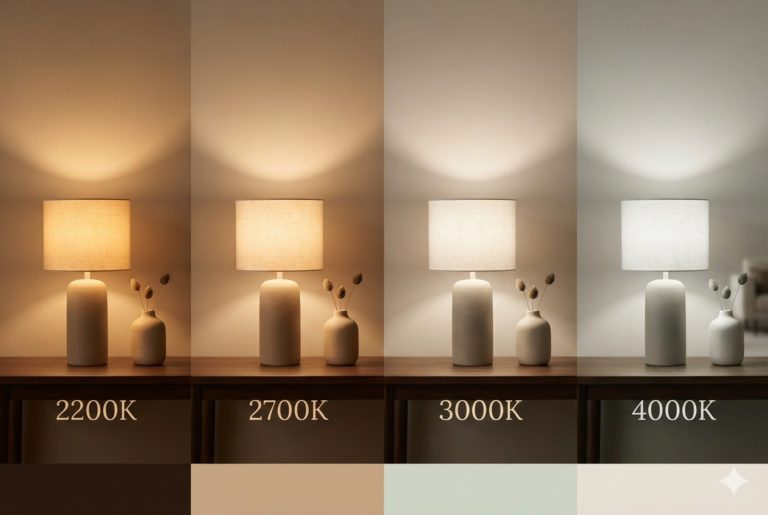
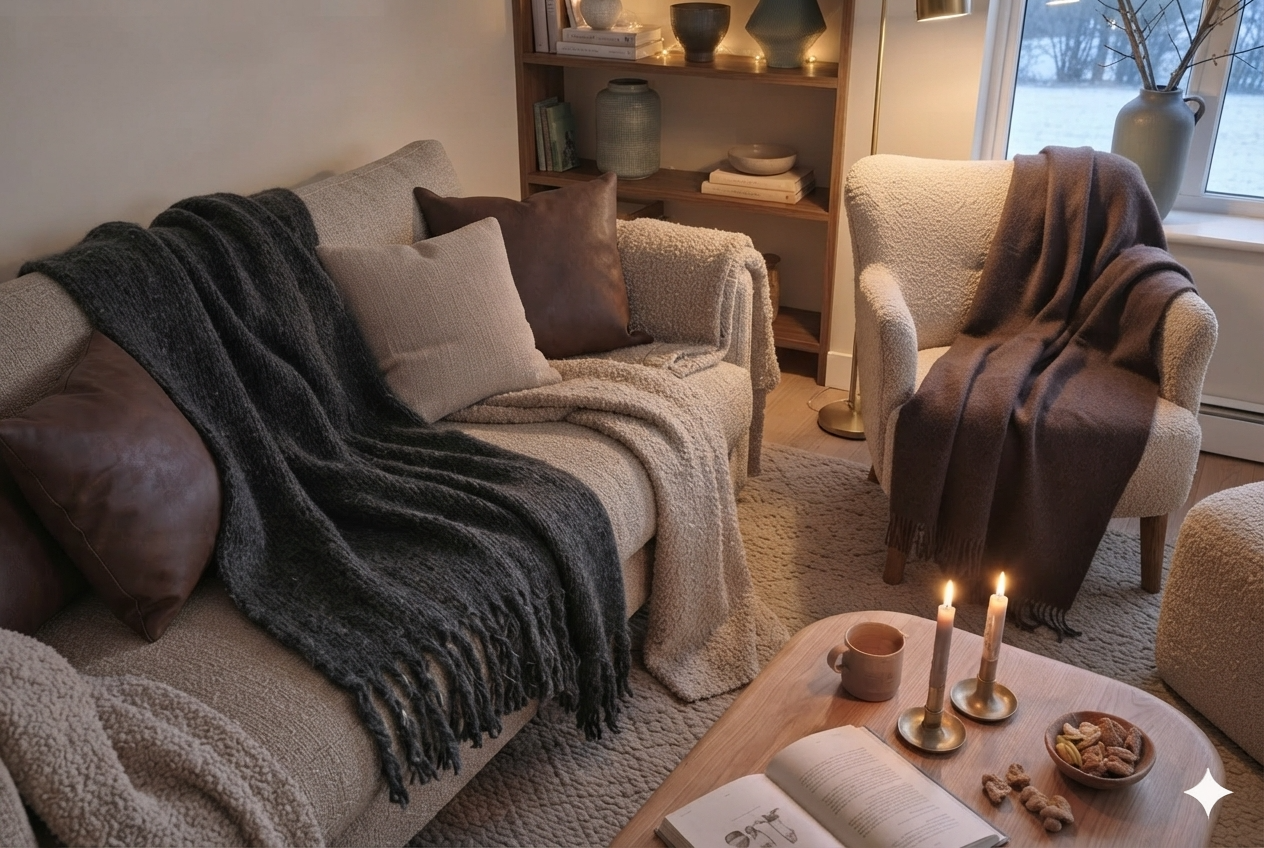
On the main sofa, where the 2700K lamps were starting to push back the 4:00 p.m. dusk, the heavy lambswool throws were casually folded over the arms. This is where Henrik and I sit with our coffee when Astrid comes over.
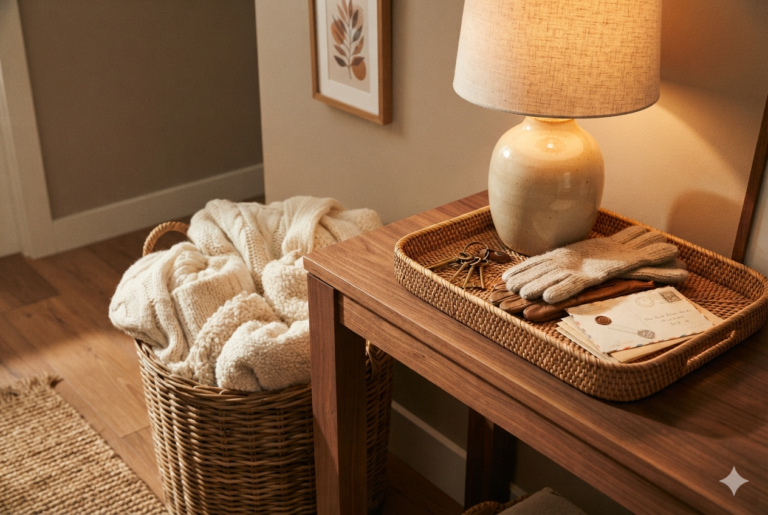
But tucked in the wicker basket by the hearth, waiting for the girls to drag them onto the rug, were the slightly pilled fleece throws. Those throws have survived apple juice spills, driveway mud, and a dropped bowl of pasta.
When a fleece throw gets dirty, it goes straight into the washing machine without a second thought.
When people ask me to choose between wool and fleece, I tell them I really don’t. I use both. The hygge home isn’t a museum of pristine, expensive natural fibers. It’s a working house in Minneapolis with two kids, a husband, and a lot of snow during winter.
The throw is the most-touched textile in the house, and the fiber it’s made of dictates where it lives. Here is the honest guide to the wool vs fleece debate, and why your home probably needs both.
This website participates in the Amazon Associates program. As an Amazon Associate, I earn from qualifying purchases. It also participates in the Impact and AWIN affiliate programs. If you buy through links on this site, I may earn a small commission at no extra cost to you. Thank you for supporting The Hugged Home.
The Physics of Sweat (Why One Clings and the Other Sleeps)
The answer to why fleece makes you sweat comes down to the difference between heat trapping and moisture management.
Wool can absorb roughly thirty percent of its own weight in moisture vapor before it feels wet. Polyester—which is what fleece is, however softly it’s marketed—absorbs less than a percent. That gap is the whole argument.
Fleece is highly breathable, but its synthetic fibers are hydrophobic. They refuse to absorb water.
So here is the trap: fleece traps your body heat brilliantly. Your skin responds to that trapped heat by releasing moisture vapor. The air passes through the blanket, but the fibers cannot buffer that vapor the way wool does.
Instead, the vapor travels outward, hits the cooler room air, condenses into microscopic droplets, and settles back on your skin.
That condensation is the clamminess. You aren’t just hot; you are damp. Then you kick the throw off, the damp layer meets the cold air, and you shiver. The fleece isn’t failing at warmth. It’s failing at water vapor management.
Wool is natural and behaves differently. The fiber is hygroscopic keratin—the same protein as your hair. It pulls vapor away from your skin, absorbs it into the fiber itself, and releases it slowly.
Wool buffers in both directions: warm when you’re cold, dry when you’re hot. One fiber manages a microclimate. The other traps one. It’s the same thermoregulation argument as in the Why Your Feet Are Cold in Bed article.
Wool vs Fleece Throws: What Belongs Where?
As I wrote in the Hygge Textiles guide, a true hygge home isn’t testing for stain resistance; it’s testing for what a blanket still feels like after the fiftieth wash. By that metric, wool wins every time.
Natural fibers soften and develop character. Synthetics pill, flatten, and degrade. They don’t age gracefully; they just get old.
So why do we have fleece in the living room at all? Because a hygge home is still a working house. Fleece isn’t a hygge throw. It’s a utility blanket. Here is how we resolve the wool vs fleece argument in our home:
The Adult Zones: Wool
The sacred spaces get the natural fibers. The heavy lambswool twill lives on the back of the reading chair and the main sofa arms.
My Faribault Mill wool throw keeps me cozy and warm, as I sip hot coffee and read in my hyggekrog. Faribault Mill — a Minnesota mill has been weaving since 1865.
I’d never replace it. It doesn’t snap with static when I reach for my mug, and it will last a decade. This is the arv throw—the one you steward.
When Astrid visits, she always reaches for one of the wool throws on the sofa. She says synthetic fibers “feel like sleeping in a plastic bag.”
The Pendleton Eco-Wise Washable Throw is the workhorse of the sofa: 100% wool, a plaid that forgives pilling, and a weight that says stay.
It’s the only wool throw I trust to the washing machine — which is exactly why it earns a spot on a sofa that hosts tomato soup.
The Kid Zones & Utility: Fleece
This is where the utility throws come in handy. The fleece throws in the living room wicker basket are for the girls’ forts or curling up on the rug with their homework.
The emergency blanket in the car trunk? Fleece. The throw draped over the mudroom bench for snow-caked snow pants? Fleece.
We use fleece in these zones precisely because it is sacrificial. When a kid drops a bowl of pasta on a $30 fleece throw, it goes in the wash.
When it inevitably pills and flattens after a year or two of hard use, we don’t mourn it the way we would a $200 lambswool throw. We just replace it. It is a tool for survival, not a textile for arv.
The Bed: Never Fleece
Fleece has no business in a Minneapolis bed. The thermoregulation you need for deep sleep requires a natural fiber. We use wool or heavy cotton waffle weaves. If you wake up sweating, check your throw.
The Eco-Friendliness Argument: Material Honesty
This is where we have to talk about the planet, and it ties directly into one of the five hygge essentials covered in our philosophy on hygge natural materials.
Wool is a renewable, biodegradable protein fiber. A good wool throw is an investment in arv (legacy); it will outlive the sofa it rests on and eventually return to the earth.
Fleece is petroleum-based polyester. It is essentially woven plastic. And here is the quiet cost: every time you wash a fleece blanket, it sheds thousands of microplastics into the water system.
Because we treat fleece as a utility blanket rather than a hygge textile, we contain it. We wash the girls’ playroom throws inside a microfiber-catching laundry bag to keep the plastic out of the lakes.
And we don’t buy new fleece every season just because it comes in a trendy color. We use the ones we have until they fall apart, and then we recycle them. Practice over purchase applies to the synthetic stuff, too.
The Spec Sheet: Reading a Throw Label
Whether you are buying wool or fleece, forget the top-ten list. Read the label.
The Fiber Line
The Wool Specs
Know your wool because you want wool to be the whole story.
Lambswool is the soft default for the sofa; merino is finer still, for the throw that touches bare skin. Shetland is the rustic one, loftier and warmer for its weight.
Recycled wool — “shoddy” in the trade, a good word, not an insult — is the arv-friendly pick: old blankets reborn, denser and heavier, often at half the price. A little nylon in a sofa throw is fine; it’s the spine.
What you don’t want is “wool blend” at twenty percent, with polyester doing the rest of the talking.
The Fleece Specs
If you are buying fleece, look for “anti-pill” treatments.
Look for a high GSM microfleece or a dense sherpa backing for actual insulation. Avoid “minky” or ultra-plush synthetics for winter warmth—they trap static and heat without offering real breathability.
Check the edges: a blanket-stitched or bound edge will stop a fleece throw from fraying when the kids drag it across the floor.
Weight and Weave
Weight is what decides how a throw behaves, but American tags are a mess. The global textile standard is GSM (grams per square meter), which you’ll see on modern bedding brands.
But traditional US mills still use ounces per square yard (oz). Here is the cheat sheet for both:
The Layering Throw: 300 to 450 GSM (roughly 9 to 13 oz). Light enough to drape, heavy enough to mean it.
The Sofa Winter Throw: 450 to 600 GSM (roughly 13 to 20 oz). The workhorse. It has enough weight to stay put when Henrik steals the corner.
The Bed Blanket: 600+ GSM (20+ oz).
Weave changes the feel: waffle breathes and drapes, twill wears like armor, knit is the chunky one you see on every pin, and felted or boiled wool is the dense, wind-breaking one that sheds rain off a porch bench.
Bound edges — a stitched or fringed finish — are the difference between a throw that lasts and a throw that frays by March.
The Hand Test
Press it to your cheek, not your palm. The cheek is the honest tester; the palm forgives.
If it’s merino, the micron count tells you the rest — under twenty feels like cashmere, over twenty-five announces itself. If the throw is already pilled on the shelf, walk away.
If it pills at home in year two, that’s different. Pilled means used. A cashmere comb fixes it in a minute, which is also how you stop wool blanket shedding before it starts. Used means loved.
The Care Guide: Arv vs. The Workhorse
In Danish, there is a word, arv—inheritance, the things you steward rather than replace. A wool throw is arv. A fleece throw is a workhorse. They require entirely different care.
Caring for Wool
Wool cleans itself. The fiber’s structure shrugs off odor, so most “washing” is really just airing it out over a chair overnight.
When you must wash it: cold water, wool cycle, wool-specific wash. Never fabric softener—it coats the keratin and kills the very wicking you paid for.
Dry flat, reshaped, away from the radiator. De-pill it once a season with a cashmere comb. Store it with cedar, not mothballs.
Caring for Fleece
Fleece is machine-proof, but it has two enemies: heat and fabric softener.
Wash it in cold water. High heat melts the synthetic fibers slightly, the cause of permanent pilling and the stiff, scratchy texture.
Never use fabric softener or dryer sheets; they leave a waxy residue that ruins the fleece’s loft and traps odors. And always use that microplastic-catching wash bag.
The Throw at the End of the Evening
It’s eight o’clock. The house is finally quiet. The fleece throws are crumpled in a heap on the rug where the girls left them, waiting for the morning.
On the sofa, the wool throw is loosely folded over the arm, still holding the day’s warmth. Henrik is reading, his glasses sliding down his nose.
I run my hand over the lambswool. It’s slightly pilled at the corner where he always grabs it. Pilled means used. Used means loved.
The right throw isn’t about the price tag, or being purely organic. It’s about knowing which one to reach for when the snow starts falling.
P.S. If you’re building out your reading nook this winter, read the Reading Nook guide next to see how the throw anchors the whole space. And for the full philosophy on natural fibers, the Hygge Natural Materials guide is the mother ship.
Light a candle. Slow down. Hygge.
— Elise