How to Light a Room Without Overhead Lighting (And Why You Should)
There’s a switch by the living room door that my hand still finds out of habit.
But now, I almost never press it, because I know what will happen. The ceiling will blaze, every corner revealed, shadows erased, and the gentle pools of light we’ve built gone.
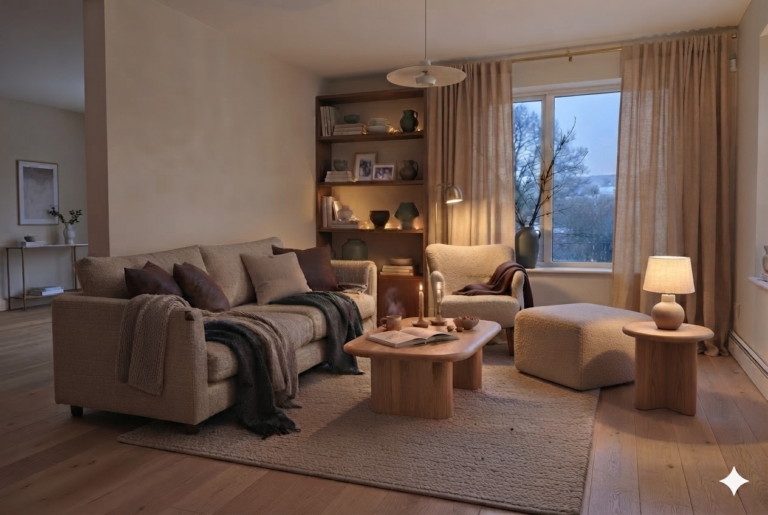
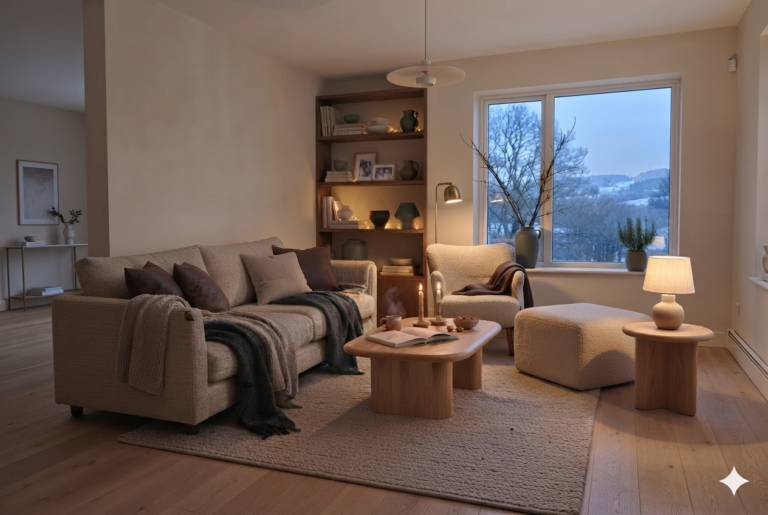
So I leave it off. Instead, the table lamp by the sofa glows, the console adds its welcome, and Henrik settles with a book in his armchair with a floor lamp beside it.
By the time dinner ends, the room is alive without a single bulb overhead. It took me longer than it should to realize—this isn’t a compromise.
A room does not need to be evenly lit. It needs to be lit where life happens.
This website participates in the Amazon Associates program. As an Amazon Associate, I earn from qualifying purchases. It also participates in the Impact and AWIN affiliate programs. If you buy through links on this site, I may earn a small commission at no extra cost to you. Thank you for supporting The Hugged Home.
Stop Trying to Replace the Ceiling Light
The most common mistake when living without overhead fixtures is searching for one lamp bright enough to replace them. But uniform brightness is the silent killer of comfort and relaxation.
No one sits in the middle of the room doing nothing. We read in chairs, gather on the sofa, or talk across the coffee table. Those are the places that need light. The rest can remain quieter.
A single powerful floor lamp simply recreates the ceiling light from a corner, flooding the space without nuance. The hygge approach is layering—several smaller sources, each with a clear role.
One lamp brightens a corner. Several lamps create a room.
This is the foundation of layered lighting. Instead of asking one fixture to do everything, you allow different lights to perform different jobs.
Start Where People Actually Live
Best room lighting plans begin with the furniture and the people who use it. Walk into the room after dark and notice where life gathers.
In our living room, Henrik’s armchair asks for focused light so he can read without strain. The sofa calls for a softer pool of glow where the girls and I settle in the evening.
The console near the entrance needs only a gentle welcome, a small point of warmth that eases the transition from hallway to living room.
Once I began thinking this way, choosing lamps became simpler. I wasn’t asking, Where can I squeeze another fixture? I was asking, What happens here after dark?
That shift changes everything. A desk signals clarity for work. A chair signals intimacy for reading. A sofa signals conversation without the glare of office lights.
Furniture becomes the map, and light follows life. A floor lamp beside a chair, a table lamp near the sofa, a smaller accent across the room—three lamps, three roles, one living room that finally feels whole after dark.
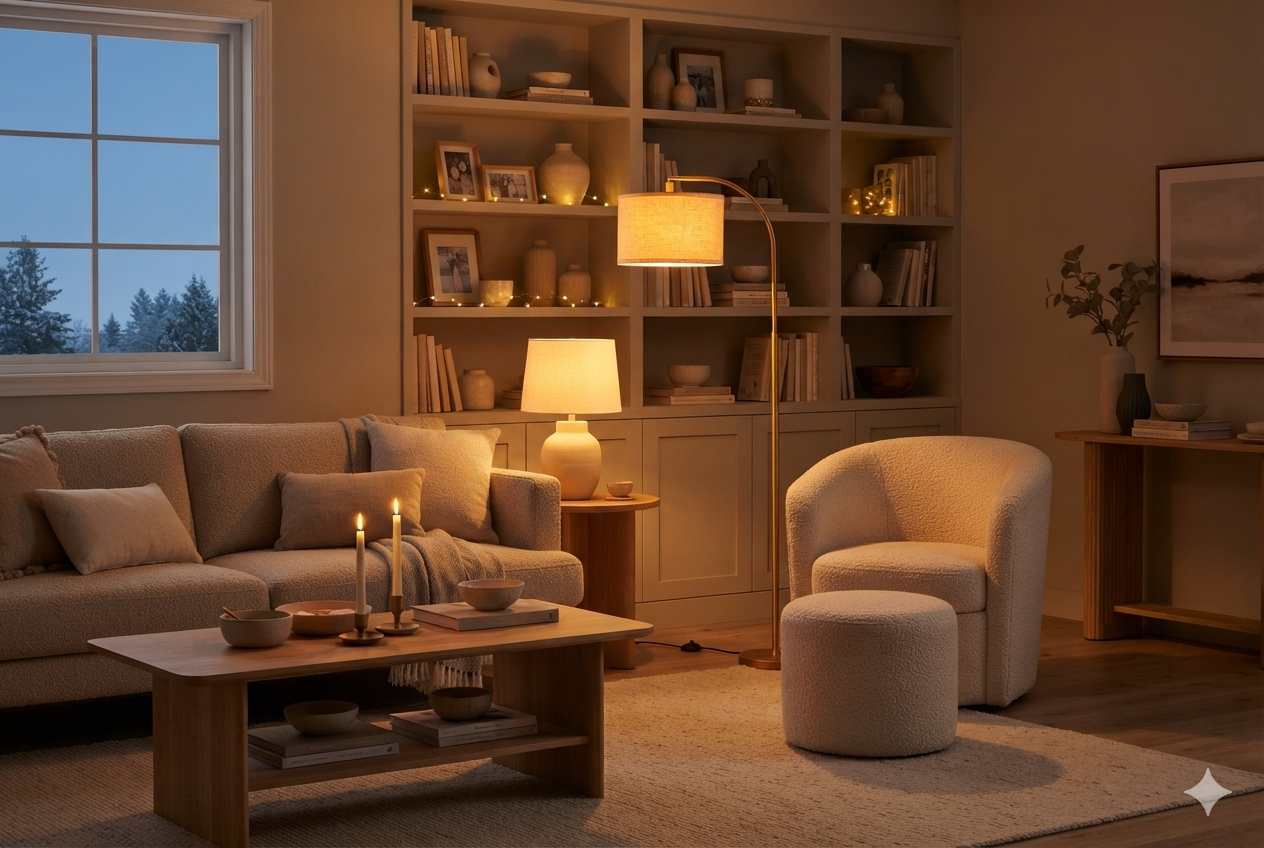
Both, Henrik and I now have the EDISHINE 78.3″ Modern Arc Floor Lamp with Remote for our hyggekrogs. The base remains behind the chair while the arm reaches the light outward over the seating area.
Build the Room from Different Heights
Knowing where light must fall is only half the story. You also need to consider where it comes from. A room with every lamp at the same height feels flat—your eye drifts along one horizontal line.
Floor lamps and table lamps together create rhythm. A tall source, a lower glow, a smaller lamp tucked on a console or shelf.
The result isn’t just more light—it’s dimension. Your eye moves from one pool to another, with shadowed spaces in between giving each lamp room to breathe.
The lamps don’t need to match. What matters is that they belong in the same conversation. A brass floor lamp can sit beside a ceramic table lamp if both carry warmth and weight. Proportion and placement matter more than uniformity.
Do check out my guides on selecting table lamps and floor lamps for reading.
Give Every Light a Purpose
To light a room without overhead lighting you need to layer lighting and think of each lamp or candle as having a distinct role.
Ambient Light: The Background Layer
Ambient light is the gentle wash that lets a room breathe after dark. It might come from a table lamp by the sofa, a floor lamp with a linen shade, or several fixtures scattered across the space.
None of them needs to carry the whole burden alone.
Together, they create enough illumination to move comfortably, hold a conversation, and feel at ease without flattening the atmosphere.
Think of ambient light as the backdrop—it should support the evening, not steal the scene.
The Ambient Pick: Nourison Home 23″ Ceramic Jar Table Lamp. The distressed cream ceramic carries the visual weight the sofa corner asks for, and the ivory linen drum shade diffuses heavily to create the ambient pool itself.
Task Light: When Focus is Critical
Task lighting is sharper, more deliberate. It belongs exactly where clarity is needed. A reading chair is the classic example: the floor lamp must light the page sufficiently. It may have a secondary role of ambient lighting too.
You need task lighting in the kitchen when you work with a sharp knife on the chopping board. Soft ambient lighting will not do. Safety is at stake here.
However, task lighting does not require light bulbs with high temperature. Task lighting needs to be bright. Lumens is the measure of brightness, not Kelvin.
Philips Hue Essential Smart LED A19 Bulbs work for us. These smart bulbs are perfect, as you can vary the temperature from 2200K to 6500K.
I love these bulbs! They are easy to install and give the desired lighting for any room. When dinner is ready to be served, I dial everything down to a low amber hum.
500-800 lumens at 2700K is usually perfect for task lighting, whether you are chopping onions in the kitchen or reading a book in your hyggekrog.
Accent Light: The Finishing Touch
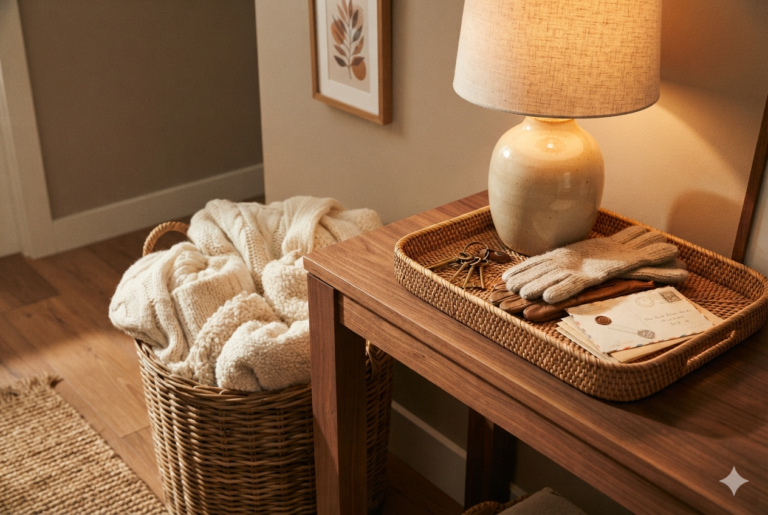
Accent lighting is the smallest layer, yet it often makes the biggest difference. A small lamp on the entryway console table doesn’t need to brighten the room—it simply adds a point of warmth near the entrance.
Another accent lamp might sit on a bookshelf in your home office, highlighting your graduation certificate. It creates interest in objects that are dear to you.
Candles burn at a much deeper, primal amber hue between 1800 and 2200 Kelvin, the flame pulls the eye inward. A lamp gives you enough light to read a book, but a candle gives the room its heartbeat.
A cluster of ivory taper candles on a dining table do not draw any attention until they are lit, and even when they are, the flickering flame draws the attention while the candle itself is content to bask in its glow. A true hyggelig spirit!
Such touches create rhythm. They prevent the space from feeling lopsided, with all the light clustered around one activity while the rest fades into obscurity.
Accent lights are what transform a room from merely lit to truly settled for the evening.
My Taper Candle Pick: The Bluecorn Beeswax 12-Inch Ivory Taper Candles are my go-to when I want the holder and the room to remain visually important during the day and the flame to become the focus at night.
Spread the Light Across the Room
When building a cozy corner, it’s tempting to cluster every lamp near the sofa. One looks good, so you add another, then a floor lamp. Soon one side of the living room glows beautifully while the other fades into obscurity.
What the room needs is balance—not symmetry, but a sense of rhythm. Place your first lamp where it’s most useful, then look across the space.
Where does darkness feel accidental rather than intentional? Perhaps a console table needs a glow. Perhaps a reading chair deserves its own pool of light. Or maybe a shadowed corner is fine left alone.
Lighting decisions aren’t formulas; they come from noticing the room itself. Turn the lamps on after dusk. Sit in different positions and survey the room. Stand up and walk through the space.
If it feels right, it is right. If it does not, your primal instinct will tell you what needs to be added, where. Or what needs to be turned off or even removed.
But Keep The Shadows Too
This was the hardest lesson for me. For years, I believed a well‑lit room meant banishing every shadow. If a corner looked dim, I reached for another lamp.
But the rooms I loved most in the evening were never fully illuminated. Shadows lingered behind furniture. Walls softened into the background. A far corner remained visible but quiet, not demanding attention.
A cozy room needs contrast. Pools of light only feel warm when darkness surrounds them.
Of course, practical areas—stairs, hallways—require proper illumination. But a living room doesn’t need to mimic a showroom.
The quiet spaces between the lamps are part of the design. They let the eye rest, calm the atmosphere, and remind you that light is most beautiful when it shares the stage with shadow.
Make Each Evening Feel Warm & Cozy
The number of lamps matters less than the quality of their glow. A beautifully layered room can be undone by a single harsh bulb.
For evenings, I follow the 2700K rule: warm light around 2700 Kelvin gives living rooms that soft, golden tone we instinctively link to the close of day.
The real issue is inconsistency. One lamp at 2700K, another at 3000K, and a stray fixture blazing at 4000K—individually harmless, together unsettling.
Keep the visible bulbs aligned. Change one and the difference is subtle. Change them all and the room transforms.
How to Light a Room Without Overhead Lighting: By Room Size
There’s no single formula for how many lamps a room needs, but size offers a useful starting point.
A Small Room: Begin with Two Sources Place one lamp where people naturally gather, then add another across the space to balance the light.
An Average Living Room: Build Three Layers Combine a taller floor lamp, a lower table lamp, and one smaller accent light. The mix of heights creates depth and keeps the room lively after dark.
A Larger Room: Create Pools of Light Don’t chase brightness with oversized bulbs. Instead, think about activities.
A reading chair deserves its own task lamp. The sofa benefits from a softer ambient layer. A console or distant corner may need a supporting glow.
The goal isn’t one giant source—it’s several comfortable pools where the evening can unfold.
The Mistakes That Make a Room Feel Wrong
Most missteps aren’t about buying the wrong lamp. They come from asking a lamp to do the wrong job.
Buying One Overly Bright Lamp A single powerful fixture creates glare and harsh shadows. It may brighten the room, but it rarely makes it inviting. Layers are better.
Putting Every Lamp on One Side If all the light sits near the sofa, the rest of the room feels disconnected. Spread it out.
Mixing Bulb Temperatures A warm room interrupted by one cold‑white bulb feels jarring. Keep visible evening lighting consistent.
Expecting Candles to Do the Work Candles add atmosphere and movement, but they aren’t functional. Let them complement lamps, not try to replace them.
Why You Should Stop Using the Overhead Light
There’s nothing wrong with an overhead fixture—it has its moments. Cleaning, searching under the sofa, or any task that demands full brightness makes it useful.
The difference is that an overhead light treats the room as architecture; lamps treat it as lived‑in space.
That’s why our living room feels different now: the sofa has its glow, Henrik reads without strain, the console offers a gentle welcome. The corners stay uneven, and that’s exactly how they should be.
The overhead light is almost never turned on.
For the complete system behind this approach, begin with The Complete Guide to Layered Lighting and let each layer do its own job. For a broader look at creating the room itself, continue with Hygge Living Room.
Light a candle. Slow down. Hygge.
— Elise