What is a Hyggekrog? (And How to Create it in Your Home)
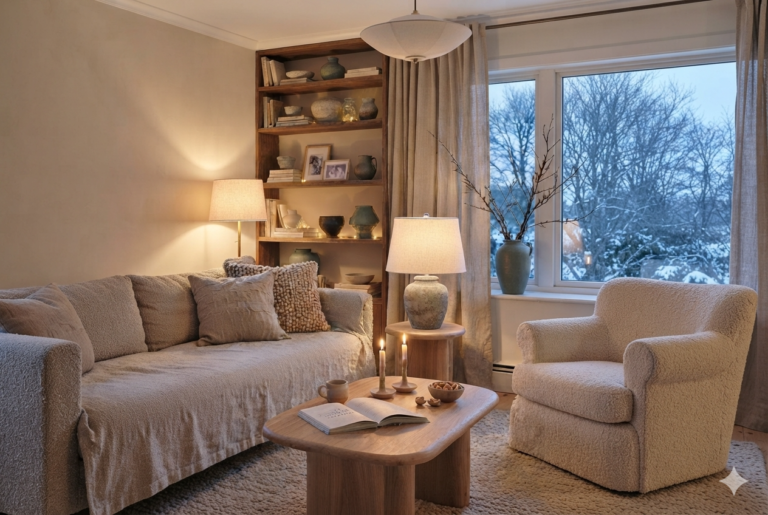
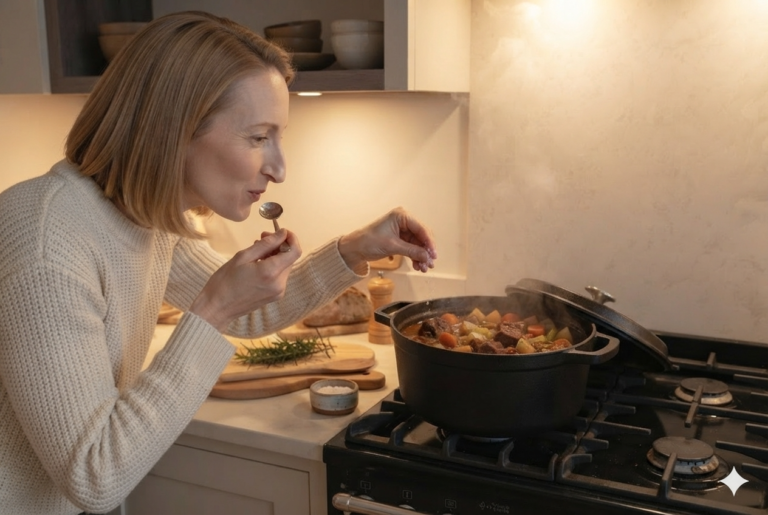
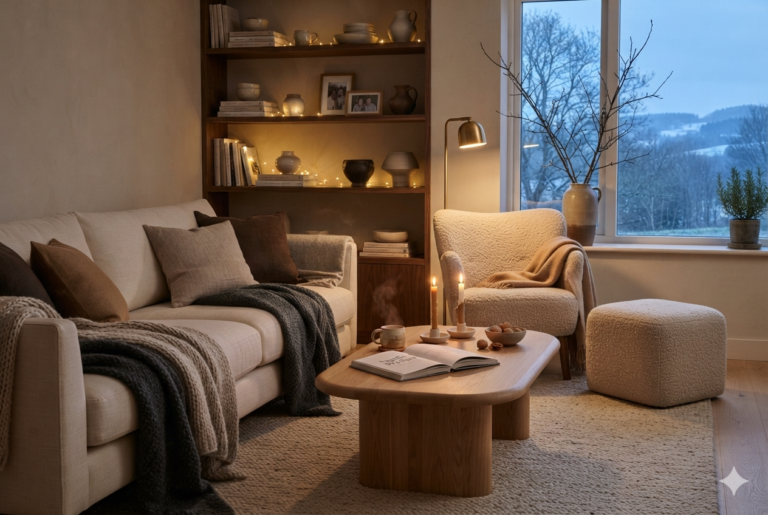
A hyggekrog (pronounced hoo-gah-krog) is a dedicated, cozy corner in a Danish home designed for quiet reflection and comfort. It is not just a reading nook; it is a psychological sanctuary built with warm lighting, soft textiles, and a sense of enclosure to help you disconnect and recharge.
How to Pronounce Hyggekrog
Pronunciation: hoo-gah-krog
Pronunciation by native Danish speaker (source: Forvo.com)
This website participates in the Amazon Associates program. As an Amazon Associate, I earn from qualifying purchases. It also participates in the Impact and AWIN affiliate programs. If you buy through links on this site, I may earn a small commission at no extra cost to you. Thank you for supporting The Hugged Home.
Hyggekrog vs. Reading Nook: What’s the Difference?
While they share similarities, a standard reading nook and a Danish hyggekrog serve slightly different purposes. Here is how they compare:
| Feature | Standard Reading Nook | Danish Hyggekrog |
|---|---|---|
| Primary Purpose | Focused activity (reading, working) | Psychological refuge and sensory comfort |
| Lighting | Bright, focused task lighting | Low-level, indirect ambient lighting (2700K) |
| Layout | Often requires a dedicated corner or window seat | Can be created in any small zone or alcove |
| Atmosphere | Productive and quiet | Deeply relaxing, tactile, and candlelit |
If you are looking to build a space specifically for books, check out our guide to creating the perfect reading nook. But if you want a true sanctuary for your nervous system, you are building a hyggekrog. Read on.
It was a Monday in January. Still dark at seven in the morning. The girls weren’t up yet. Henrik was still asleep. I came downstairs, made coffee, and walked to my hyggekrog.
I found Björn already in his hyggekrog, a cushion on the floor, beside my chair. He had arranged himself with considerable satisfaction. Paws tucked. Eyes closed. Not moving for anyone.
Of course, I didn’t move him. I sat in my chair, held my coffee with both hands, and watched him. And I thought: he knows something I didn’t figure out until my mid-thirties.
This corner, this chair — it isn’t just furniture. It’s my cozy nook. It’s where I sit before anyone else wakes up. It’s where I have my coffee. It’s where I read. It’s where I often nap.
I didn’t have a word for it until my Danish friend Astrid gave me one. “It’s your hyggekrog,” she said.
What is a Hyggekrog? (And How to Pronounce Hyggekrog?)
People always ask me, “What is a hyggekrog?” or “How to pronounce hyggekrog?”
Well, in short, hyggekrog means a cozy nook in your home, and it is pronounced “hoo-guh-kro”. The final g in krog is soft in Danish — closer to a gentle w sound that disappears almost before you make it.
Many English sources pronounce it with a hard g, the way you’d say frog or dog. This is sure to make Danes wince.
The word is a compound: hygge — that untranslatable Danish concept of warmth, coziness, and deliberate well-being — plus krog, meaning a nook, a corner, a hook
But the etymology of krog goes deeper than a simple corner. The word traces back to Old Norse krókr — a sheltered bend in a river, a protected corner of land, the safest place in the landscape.
In medieval Scandinavia, finding the krog wasn’t a preference. It was survival.
So a hyggekrog isn’t just a cozy corner. It’s a wellbeing-bend — a sheltered place within the landscape of your home. The word has been used to describe exactly this kind of refuge for nearly a thousand years.
Why Your Brain Already Knows What a Hyggekrog Is
I’m not someone who usually goes looking for the science behind things I already feel. But when Astrid told me about hyggekrog, I kept wondering why my corner chair always beckoned me. Why does Björn always end up on that specific cushion?
I had a strong urge to dive deeper and do some research. So, I looked it up.
It turns out human aesthetic preferences are evolutionary. For millions of years on the African savanna, survival depended on finding a position where you could see without being seen.
Jay Appleton, a geographer, proposed in 1975 what he called the Prospect-Refuge Theory.
The ideal position wasn’t the middle of the open plain. It was the cave mouth. The tree line. The sheltered bend in the landscape. The spot where you had a full view of what was coming — and nothing could approach from behind.
The corner chair is the cave mouth.
This isn’t a metaphor. When you sit in a corner facing the room, your nervous system responds differently than when you sit in the center with your back exposed.
Neuroscience research into our spatial navigation systems — the hippocampal-entorhinal networks that map our surroundings — confirms that corner positions activate a measurable sense of safety that open positions don’t.
The animal kingdom has always understood this. Laying hens instinctively choose the most secluded corner nests available. Chimpanzees and gorillas seek a structural corner before exploring open space when placed in a new enclosure.
Björn instinctively understood this before I did.
What makes the hyggekrog culturally specific to Denmark isn’t the instinct — we all have that. It’s that the Danes gave it a name. They formalized something our nervous system already knew.
Do You Already Have a Hyggekrog?
Here’s the thing about hyggekrog. Most people already have one. They’ve just never called it that. And they’ve never quite permitted themselves to protect it.
Ask yourself:
- Is there a chair in your home that you always sit in?
- Is there a corner of the sofa that feels different from the rest of it — more settled, more claimed?
- Is there a spot you are drawn to when you need to decompress, even if you can’t explain why?
- Does your cat or dog have a favorite corner?
If you answered yes to any — that’s your hyggekrog. Or the foundation of one.
Mine had been there for six years before I understood what it was. I just knew I always sat in that chair. I knew it faced the room. I knew the wall was behind me. I felt relaxed, both physically and mentally, whenever I was in that chair.
I didn’t know that was prospect-refuge theory. I just knew it was mine.
And in summer, the hyggekrog doesn’t have to be indoors. In Denmark, the concept extends naturally outside — a garden chair in a sheltered corner, a porch seat facing the yard.
The Danes call this the hyggekrog i haven: the cozy nook in the garden. The instinct is the same. The setting just changes with the season.
How to Build Your Hyggekrog: The Seven Elements
When selecting your danish hygge corner essentials, the goal is to prioritize deep, tactile comfort over formal design.
Building a hyggekrog isn’t a renovation project. It doesn’t require a dedicated room, a particular aesthetic, or a huge budget. It requires just seven elements to come together — and the most important one you probably already have.
Here they are in a nutshell.
- The Anchor Chair
- The Side Table
- A Floor Lamp
- A Candle on the Side Table
- A Warm Wool Throw
- Any Personal Object
- A Desire to Slow Down
Hyggekrog Furniture and Layout Essentials
When selecting your hyggekrog furniture, the goal is to prioritize deep, tactile comfort over formal design. You also need to give preference to natural materials such as real wood and linen over plastics and synthetics.
The Anchor Chair: The One Thing You Cannot Compromise On
Everything else is secondary to the chair. It needs to be deep enough to tuck your legs under, with arms wide enough to rest a mug on and a back high enough to feel gently enclosed.
It should feel like the chair is doing some of the work of holding you. Second-hand or inherited chairs often make better hyggekrogs than new ones — worn upholstery carries a kind of permission that tells your body it’s safe to rest.
If you are looking for a new piece, prioritize natural materials like a solid wood frame that will age beautifully and ground the space alongside you.
Position matters too: corner of the room, facing outward, back to the wall. Your nervous system prefers it.
The Side Table: For the Few Essentials to Anchor the Sanctuary
Within reach without leaning forward. That’s the only requirement for your side table. It holds a mug, a candle, one book, and one personal object — nothing else.
The moment you start storing other things on it, the hyggekrog begins to dissolve. It becomes a surface. A surface is not a sanctuary. The side table must say: this place is permanent. I intend to return here.
The Throw — Not for Display, For Use
And then, the throw. The throw lives on the chair. Not folded neatly for decoration — draped, slightly crumpled, always accessible. A throw that’s too perfect to touch has failed at its only job.
Wool or a chunky knit over synthetic: weight creates comfort in a way that lighter fabrics don’t. Mine is a Faribault Mill wool throw, slightly pilled now from years of use. I’d never replace it. The pilling is the proof it works.
If you are sourcing your own, look for authentic wool throw blankets that only get softer with time.
Hyggekrog Lighting Ideas for the Perfect Ambiance
Once your hyggekrog furniture is in place, the atmosphere is entirely dictated by the light.
Ditching the Overhead Light for Layered Warmth
The hyggekrog must have its own light source entirely separate from the room’s main ceiling light. Overhead lighting signals work and alertness — the opposite of what you need here.
True hyggekrog lighting ideas rely on indirect ambient layering; they are about learning how to light a room without overhead lighting.
You need a floor lamp with a warm bulb (2700K or lower), positioned to cast light downward and inward. This specific color temperature mimics the setting sun, signaling to your brain that it is time to wind down.
I use Philips Warm Glow dimmable 2700K A19 light bulbs in almost every light source in our house.
Both, Henrik and I have the EDISHINE 78.3″ Modern Arc Floor Lamp with Remote for our hyggekrogs. The base remains behind the chair while the arm reaches the light outward over the seating area.
Lighting is such an important part of a hygge home that I have got a dedicated Full guide to Hygge Lighting. Check it out.
The Role of Candlelight in a Danish Nook
And a candle on the side table. Always a candle. Even in summer. One candle changes the quality of the air around you in a way that’s difficult to explain but felt immediately.
You can choose either a pillar or a jar candle. A pillar stands on its own and holds up on a side table without any container around it. A jar candle throws scent more evenly and won’t drip onto furniture.
I keep this set of three wood wick soy candles and use the one that matches my winter candle scents routine. They have Canadian Cedar, Black Amber, and Sandalwood in this set. You get the glow, the crackle, and the scent; all in one candle.
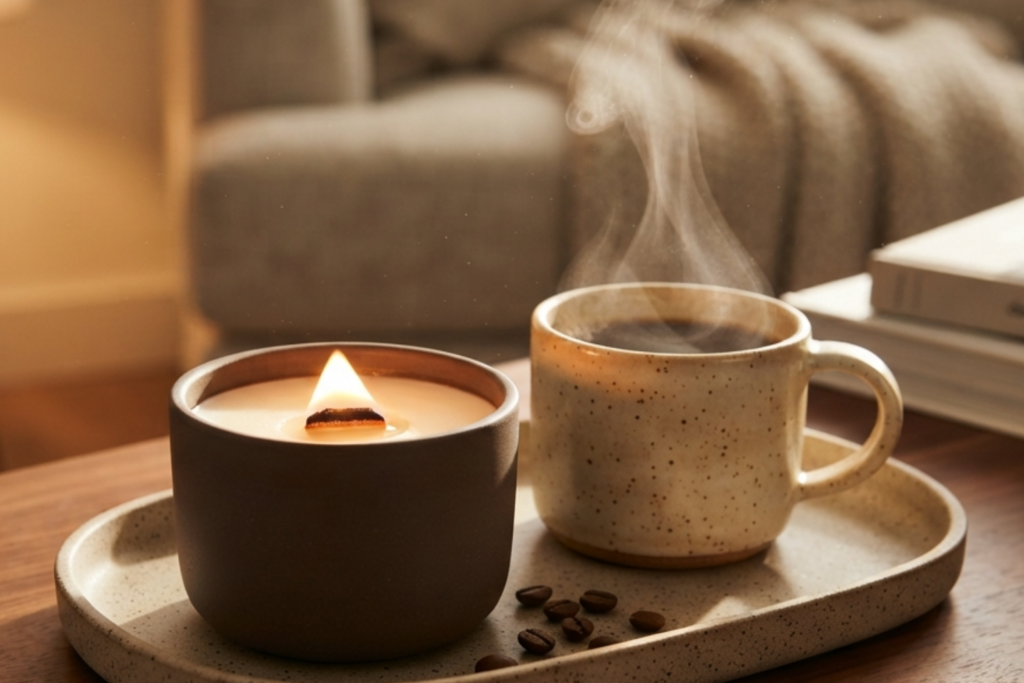
For the cleanest burn that won’t interfere with your evening tea, explore my guide to hygge candles.
Hygge Lifestyle Tips: Turning Your Nook into a Daily Ritual
But a hyggekrog is more than just a physical arrangement of chairs and lamps. It is a behavioral shift.
The Power of a Personal Object
One object that means something — not because it’s decorative, but because it’s yours.
Mine is the ceramic mug Henrik brought back from Copenhagen three years ago. Slightly too large, slightly irregular glaze. It is almost always on the side table. Using another mug in my hyggekrog would feel wrong in a way I can’t explain.
This personal object is the signal to your own brain: I am allowed to slow down here. A small act of self-permission, repeated every day.
Slow Mornings and Evening Wind-Downs
To truly hygge, you must pair the creation of your hyggekrog by intentionally changing some of your daily habits.
One of the most effective hygge lifestyle tips is to make your hyggekrog a deliberate digital detox sanctuary. Leave your phone or laptop in another room.
Instead, engage your senses: the weight of the wool, the flicker of the candle, the warmth of the mug.
Dedicate just twenty minutes a day to this space. Whether it’s sipping your morning coffee in silence or winding down with a book before bed, consistency is what turns a corner of a room into a true sanctuary.
Want the full breakdown — specific product recommendations, room-by-room examples, and everything I’ve learned from four winters of getting this right?
Explore my complete guide to hygge home decor or learn how to build the perfect reading nook.
Creating a Small Apartment Hyggekrog
You do not need a sprawling farmhouse or a dedicated window seat to achieve this. A small apartment hyggekrog is about creating a “zone” rather than a physical corner.
Pull an armchair slightly away from the wall and place a tall bookshelf or a large potted plant behind it to create a psychological boundary. Use a small area rug to anchor the space visually.
By controlling the lighting and textiles in that specific 4×4 foot zone, you create a sanctuary without sacrificing valuable floor space.
What Your Hyggekrog Doesn’t Need
Your hyggekrog does not need:
- A dedicated room — a specific chair anywhere will do
- New furniture — older and more worn is often better
- A window — beautiful if you have one, entirely optional
- A specific color palette or Scandi aesthetic
- Matching cushions
- An Instagram-worthy arrangement
- Permission from anyone
The hyggekrog is not an aesthetic. It is a practice.
Hyggekrog FAQ
What does hyggekrog mean?
Hyggekrog translates to “cozy nook” or “cozy corner” in Danish. It is a dedicated, intimate space in a home designed for quiet reflection, comfort, and disconnecting from the outside world.
How do you pronounce hyggekrog?
Hyggekrog is pronounced “hoo-gah-krog”. The “g” in the middle is a soft, guttural sound typical of the Danish language, similar to the “g” in hygge. Listen to the pronunciation at the article begining.
What is the difference between a hyggekrog and a reading nook?
A reading nook is designed primarily for reading. A hyggekrog is a psychological sanctuary focused on sensory comfort and deep relaxation.
My Hyggekrog
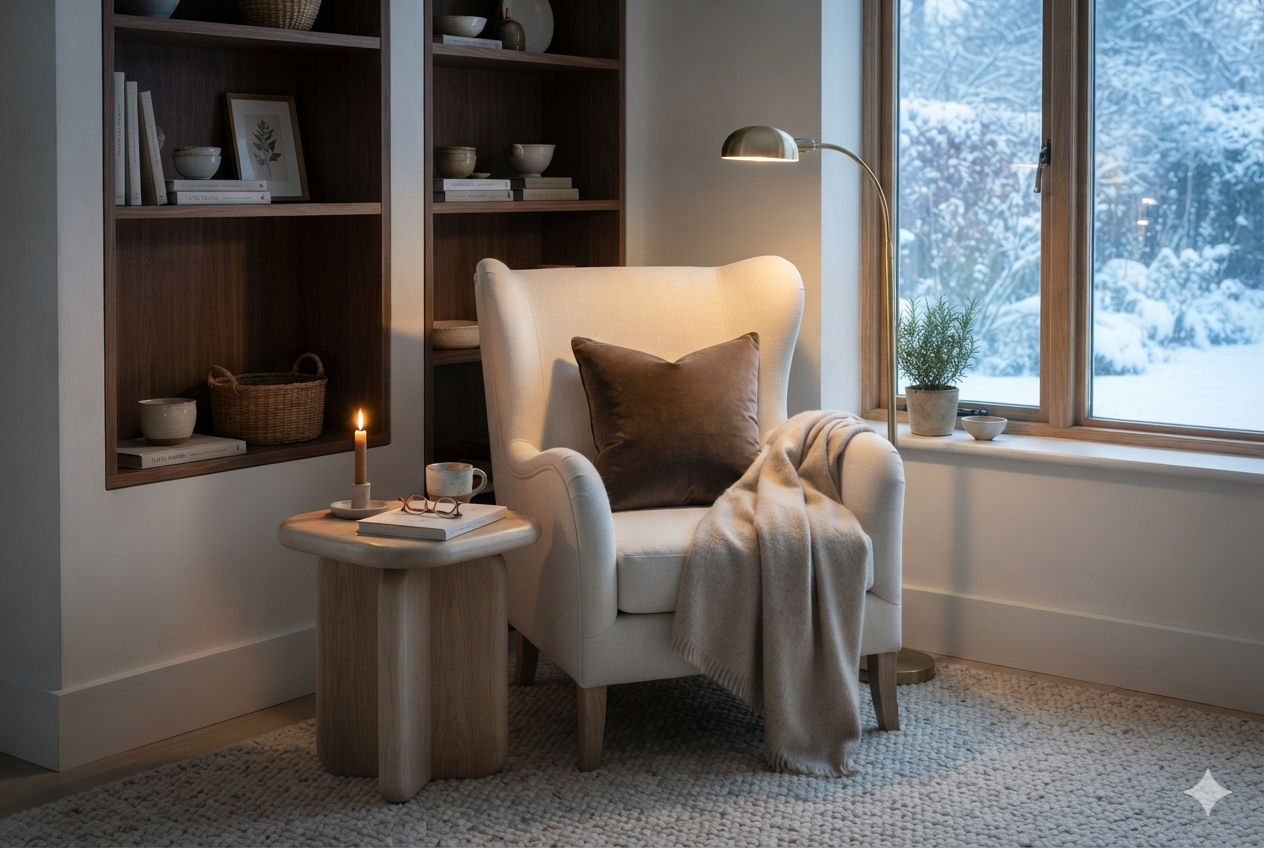
I found this chair about three years ago — a beautifully upholstered cream Belgian linen wingback chair with gently curved arms. It’s the kind of chair you sink into rather than perch on. [→ Similar chairs on The Nest List]
An elegant brushed-brass floor lamp arches gracefully over the chair, casting a warm 2700K pool of light that defines my hyggekrog.
The floor lamp took three months to find. I bought and returned two others. Too bright. Too white. Too modern, somehow.
Beside the chair stands a sculptural, solid white oak pedestal side table with softly rounded edges and impeccable craftsmanship. Styled with elegant restraint, it always holds a handmade ceramic mug, a book, and a single beeswax candle in a handcrafted stoneware holder.
I rearrange the room at times, but the chair never moves. Everything else works around it. The hyggekrog is the fixed point. The room serves it, not the other way around.
And Björn, every morning without fail, arrives there before I do.
That’s the thing about hyggekrog.
The instinct is ancient. The word is Danish. The chair is yours.
Go build your cozy corner.
Once yours is built, it becomes the fixed point for the rest of the house too — the place everything else gets arranged around.
If you’re curious how the other rooms handle their own version of this, I’ve walked through each one the same way. [→ The Complete Guide to Hygge Home Decor]
Light a candle. Slow down. Hygge.
— Elise