The Hygge Bedroom: Built for Sleep, Not for Show
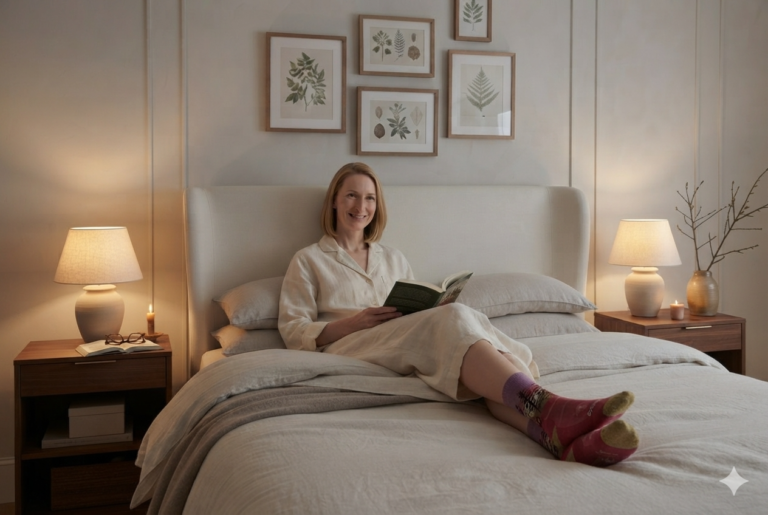
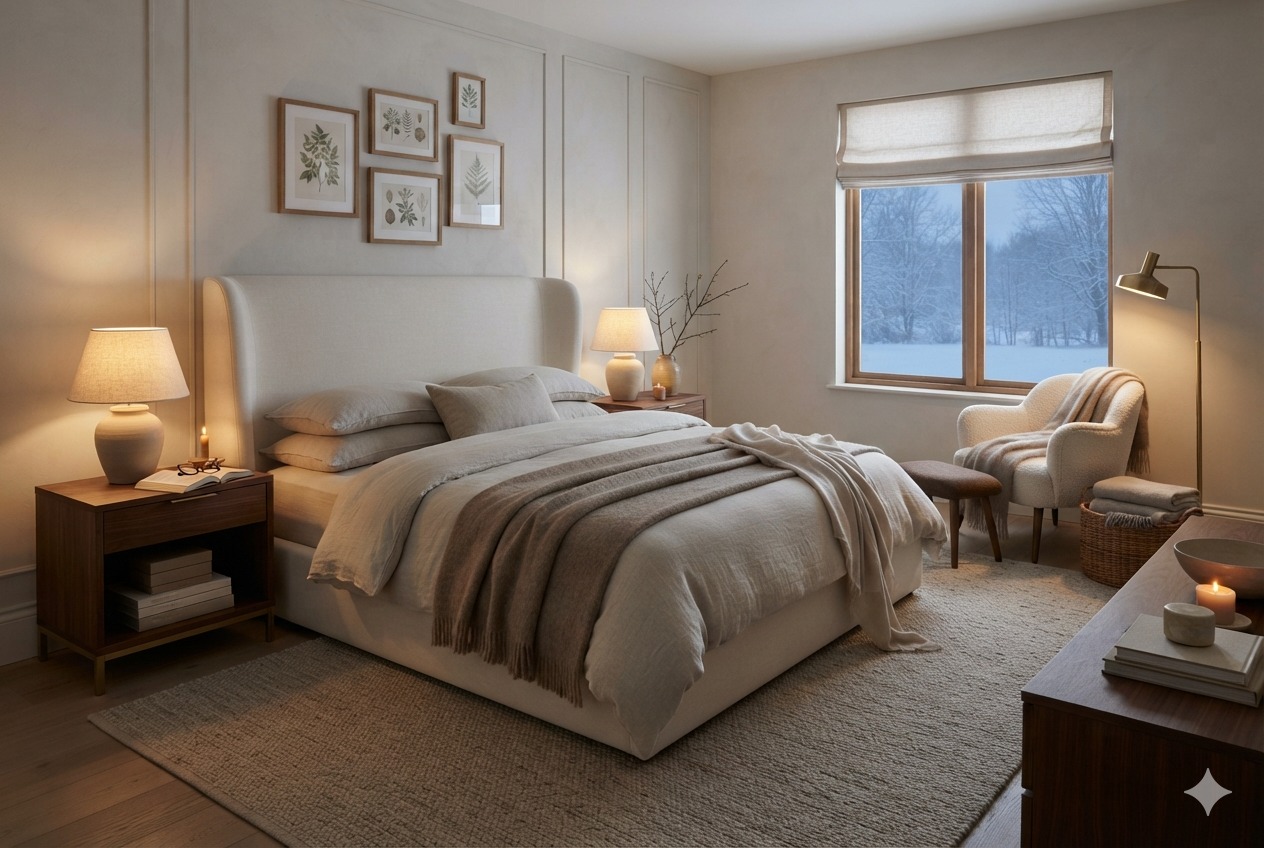
Henrik’s half‑reading, half‑dozing, glasses sliding down his nose while the book keeps slipping. He’s got two pillows stacked behind him. He looks comfortable, cozy, and settled.
I’m under the heavier blanket now; the lighter one stopped being enough sometime back in November, though I keep it folded at the foot of the bed.
The lamps throw a warm glow, not too bright, just enough to soften the corners. It’s quiet, not empty — just quiet, more like today has come to an end and tomorrow can wait.
This is our hygge bedroom. Nothing fancy, no big design tricks. Just a space that makes sleep easy, and that’s all there is to it.
This website participates in the Amazon Associates program. As an Amazon Associate, I earn from qualifying purchases. It also participates in the Impact and AWIN affiliate programs. If you buy through links on this site, I may earn a small commission at no extra cost to you. Thank you for supporting The Hugged Home.
What Astrid Told Me
Astrid came over for coffee one cold afternoon, and I was grumbling once again about not sleeping well. Third time that month, I think.
I expected her to ask about stress or maybe tell me to stop scrolling my phone at midnight. Instead, she squinted at my lamp and asked what kind of bulb I had in it.
I laughed because—who even knows that? I’d never checked. She shrugged in that very Astrid way, like it was obvious, and said the number on the box mattered more than I thought.
Something about how certain light feels like daylight to your body, and that’s the last thing you want when you’re trying to convince yourself it’s bedtime.
She suggested Philips, and I thought, well, why not? I swapped the bulbs a few days later. Honestly, the bedroom light seemed softer and warmer. It was the first time in years that we not only started sleeping better, but we also started feeling calmer.
Later, I googled it, and sure enough, she was right: light above about 2700 Kelvin messes with melatonin, the hormone that tells your body it’s time to sleep. Same deal with phone screens, just smaller scale.
Astrid didn’t know the word melatonin—she just knew the feeling. That’s her thing, somehow. She always knows the feeling before anyone explains the science.
So now my bedroom isn’t styled for Pinterest. It’s styled for sleep. The palette, the lamp, all of it—it’s less about how it looks and more about what our mind and body need when the day is over.
Hygge Bedroom Decor Essentials
True hygge bedroom decor isn’t just about buying a matching bedroom set. It’s about curating a space that feels tactile, grounded, and deeply comforting.
When I step into my bedroom, I want to feel instantly wrapped in warmth. Here are the foundational elements that make that happen:
Layered Textiles: The bed is the heart of the room. Start with breathable linen vs flannel sheets depending on the season, and always keep a heavy wool throw blanket folded at the foot of the bed for extra warmth.
Natural Materials: Swap synthetic rugs for natural fibers. A soft wool rug for the bedroom ensures that your first step out of bed in the morning is on something warm, not cold hardwood.
Soft, Organic Shapes: Incorporate hygge textiles like chunky knit pillows or a faux sheepskin draped over a reading chair. The goal is to invite touch.
Three New Habits That Made This Room Hygge
I haven’t repainted the walls or replaced any furniture in three years. What changed was how the room gets run after six in the evening.
The Overhead Light Never Gets Used After Six
We use it to clean, to find a dropped earring, nothing past that. Every evening after six, it’s just the two bedside lamps, the floor lamp behind the reading chair, and a candle or two.
Meik Wiking, who’s written more on hygge lighting than most people ever will, argues two warm bedside lamps are close to plenty for a room this size. I now totally agree.
Bedding Gets Layered in Winter
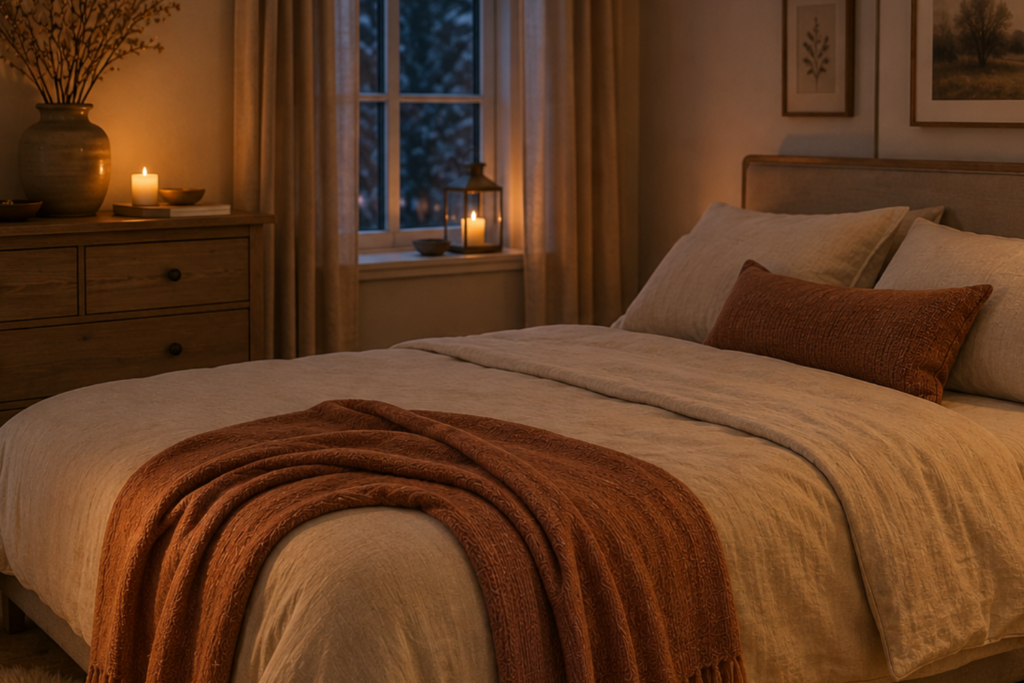
The duvet doesn’t change with the season. What sits on top of it does — a wool throw across the foot of the bed by October, a second blanket within reach by December.
Nothing gets stored away and reintroduced later. It gets layered once and stays until spring makes it too warm.
Just One Book on Each Nightstand, Never a Stack
Henrik’s is whatever he’s currently reading, always marked with a receipt or a train ticket rather than a bookmark.
Mine rotates more, but there’s still only one on any given night. A single book waiting says come read a bit and fall asleep when you will. A pile of books seems like you are on a mission.
The Same Rules, Down the Hall
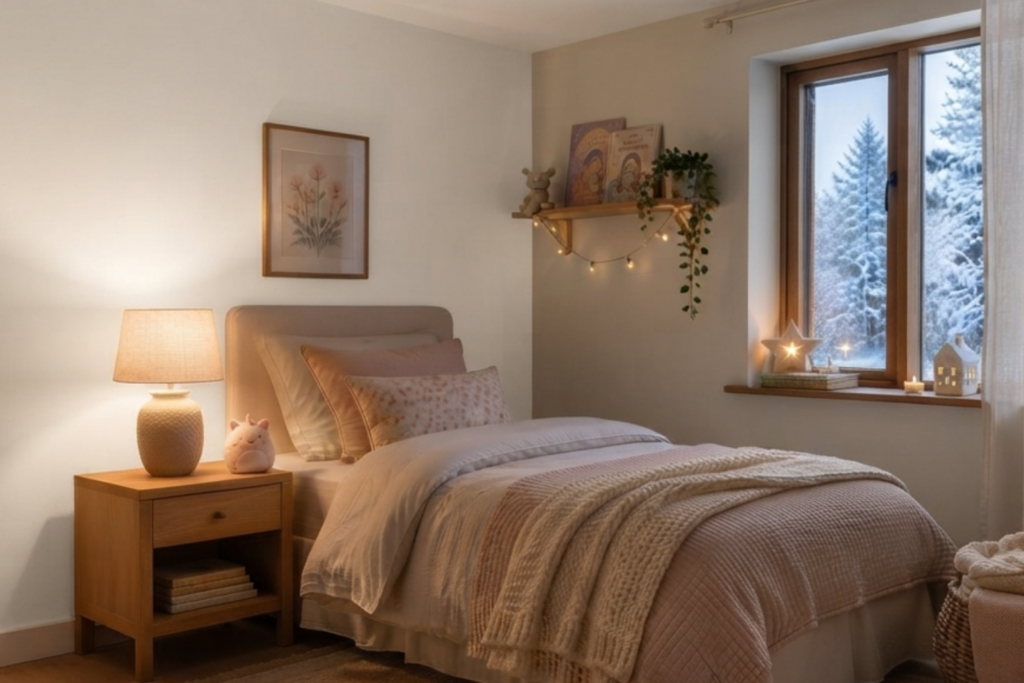
Maja and Freya’s rooms follow the same rule about light, just simpler. No overhead glare, only nightlights for now — mostly because neither of them has decided on a lamp yet.
Freya’s is shaped like a little moon and glows until she’s fully asleep. Maja’s nightlight is voice-activated and turns on and off at command. Easy to use, check it out!
Most evenings, I walk down the hall before heading to my own room. Blankets pulled up, a stuffed rabbit rescued from the floor, the usual quick exchange about tomorrow’s weather.
Sometimes there’s a third question I don’t have a neat answer for, so I give the honest one. Their rooms are smaller versions of mine — not styled, not perfect. Just warm first, everything else second.
Creating a Minimalist Hygge Bedroom with the Right Color Palette
It is a common misconception that hygge means clutter. In reality, a minimalist hygge bedroom is about removing visual noise so your mind can finally rest.
A cluttered nightstand leads to a cluttered mind. Keep surfaces clear, leaving room only for a lamp, a book, and a glass of water.
To achieve this calm, your hygge color palette must promote relaxation. Avoid stark, bright whites or jarring contrasts. Instead, lean into:
- Warm Neutrals: Soft creams, oatmeals, and warm greiges that reflect lamp light beautifully.
- Earthy Accents: Muted terracottas, sage greens, or deep charcoals to ground the space.
If you are repainting or choosing new bedding, our guide to a neutral bedroom color palette breaks down exactly which tones create the most serene, cocoon-like effect.
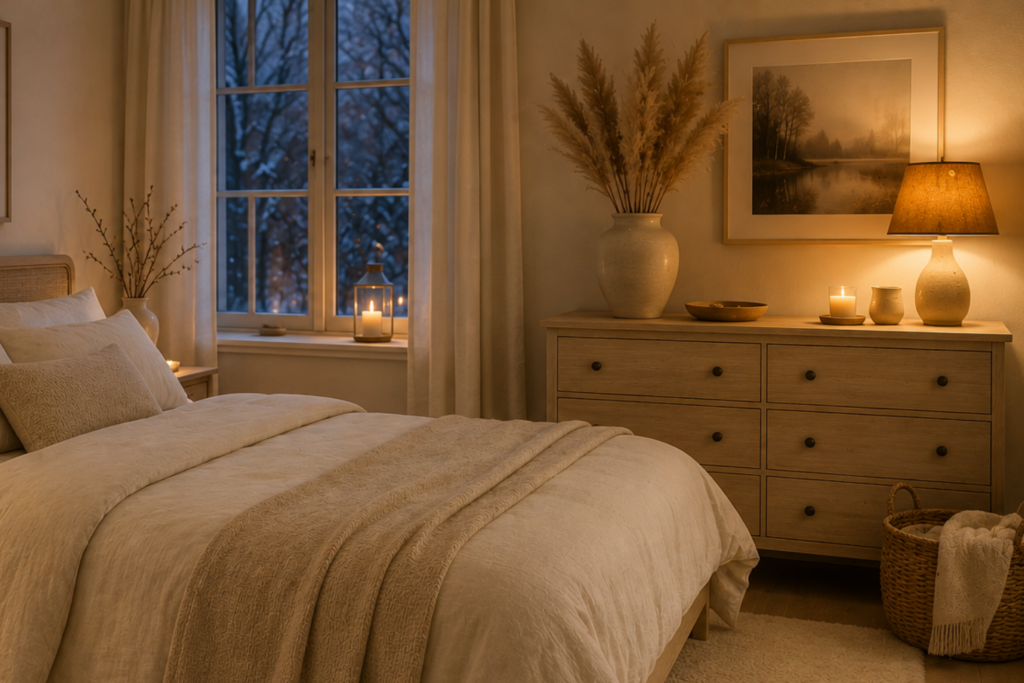
Pair these colors with natural solid wood furniture to keep the room feeling organic and unpretentious.
Cozy Bedroom Aesthetics That Actually Help You Sleep Better
The most popular home decor magazines may suggest that a cozy bedroom aesthetic is the one that looking stunning in a photograph.
But true hygge is deeply functional. The rituals we use to make a bedroom cozy are the exact same rituals that signal to our nervous system that it is time to sleep.
The Magic of 2700K Lighting
Overhead lighting is the enemy of both hygge and good sleep. Blue-rich, bright light suppresses melatonin.
Instead, rely on layered lighting for the bedroom. Use bedside lamps with warm, 2700K bulbs to mimic the setting sun. This isn’t just an aesthetic choice; it’s a biological one that prepares your brain for rest.
The Scandinavian Sleep Method
Part of making a bedroom truly hygge is optimizing it for rest. This is where the Scandinavian sleep method comes in.
By using two separate twin duvets on a shared bed, you eliminate the nighttime tug-of-war, keeping both partners perfectly covered and at their ideal temperature.
Combine this with understanding why your feet are cold in bed (and how to fix it with the right socks or blankets), and you transform your bedroom from a pretty space into a true sleep sanctuary.
Nine Little Changes to Make a Bedroom Restful
If you want to try a few changes, start small. Most of these cost less than new sheets, and none involve repainting a wall.
1. Swap Every Bulb
Astrid was the one who convinced me — I thought it was silly until the room felt softer that very first night.
The easiest lighting change in the house is to swap all bulbs in lamps to ones under 2700K. Warm light under 2700K makes a huge difference.
There’s real science behind it — light past a certain warmth reads to your body as daylight and holds back the release of melatonin, the hormone that tells you it’s time to sleep. [→ Full hygge lighting guide]
2. Keep the Overhead for Cleaning Days Only
Overhead lights are good for chores, such as vacuuming or folding laundry. They should not be used past six on most nights. All you need is two bedside lamps.
3. Layer the Bedding
Adding or removing layers one at a time beats a single heavy comforter that’s either too much or not enough.
A duvet, then a throw at the foot of the bed, then a second blanket within reach for the coldest nights. Nothing has to go back in a closet until the winter season is over.
Layering is one of those hygge bedroom tricks that makes the space feel both cozy and practical.
4. One Book Per Nightstand, Not More
A stack says unfinished business, all of it staring back at you before you’ve even turned off the light. One book, partway through, with something handy marking the page, puts no stress, no pressure.
5. Keep a Throw Within Easy Reach
You’ll likely want it at two in the morning without fully waking up. You want it within reach, not neatly stored on a shelf across the room.
6. Charge Phones Outside the Bedroom
A charging spot in the hallway outside the bedroom door makes total sense. The temptation to scroll (or check the email first thing in the morning) is eliminated. But the phone is still there in case of an emergency.
You don’t need the alarm function on your phone. Get an alarm clock. Actually, now we don’t even need that. Our “body clock” works just fine.
7. Add Another Texture
A linen pillowcase, a wool throw, something with a bit more texture to feel and touch, is a small luxury. Small cost, big returns. Even scientific research supports it.
Touching the earthy, textured weave of raw linen gently stimulates tactile nerves, shifting your nervous system out of ‘fight-or-flight’ and into the parasympathetic ‘rest-and-digest’ mode.
8. Pick a Scent for This Room Only
Not the same candle as the kitchen or the living room. Pick a scented candle specifically for your bedroom. Over time, the smell becomes a cue to your brain that the day is closing and it’s time to sleep.
Lavender, Bergamot, Cedarwood, and Roman Chamomile are known to help sleep. I would even recommend using a natural material diffuser.
9. Leave One Wall Bare
Not every wall needs to hold something. A blank wall opposite the bed gives the eye a place to rest and relax. It can be very soothing and meditative.
Frequently Asked Questions About Hygge Bedrooms
What are important elements of a hygge bedroom?
Layered warm lighting and tactile textiles: swap harsh overhead bulbs for 2700K lamps, add chunky throws, and the room shifts from sterile to sanctuary.
Can a hygge bedroom be minimalist?
Absolutely. Hygge is about comfort, not clutter. A minimalist bedroom uses natural materials, soft neutrals, and clear surfaces to invite rest.
How to make it feel warmer without turning up the heat?
Lean on textiles and light. Flannel or linen sheets, a wool rug by the bed, and warm‑toned lamps create visual and physical coziness.
All That a Hygge Bedroom Needs to Do
Henrik’s lamp clicks off first, like it usually does. Mine stays on just long enough to finish a page. Then the room settles into dark and quiet. That’s the moment I feel today is over and tomorrow can wait.
A hygge bedroom doesn’t have to impress anyone. It just has to be a place for you to rest, relax, and fall into deep sleep. Everything else is extra.
Every room in this house is trying to do one job well, the same way the bedroom does. If you want to see what that looks like in the kitchen, the living room, and everywhere else, I’ve mapped it all out here. [→ The Complete Guide to Hygge Home Decor]
Light a candle. Slow down. Hygge.
— Elise