Hygge Textiles & Layering: Cozy Secrets Danes Swear By
What Are Hygge Textiles?
Hygge textiles are natural, tactile fabrics—such as wool, linen, and boucle—intentionally layered to create a warm, inviting, comforting atmosphere. They are a foundational element of Danish coziness, designed to engage the senses and make any space feel like a safe, restorative sanctuary.
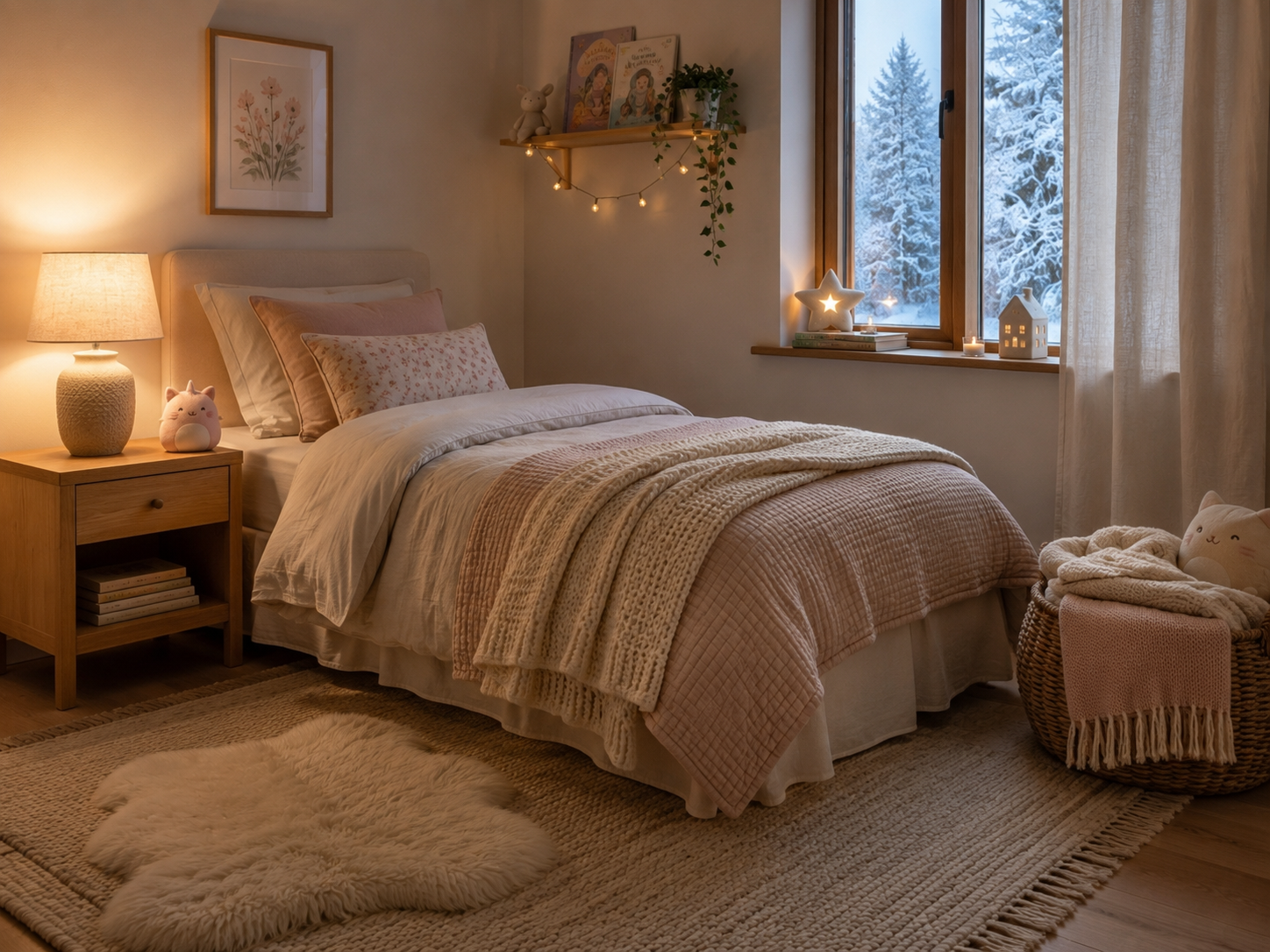
The room was already tidy. Maja had made her bed before leaving for school.
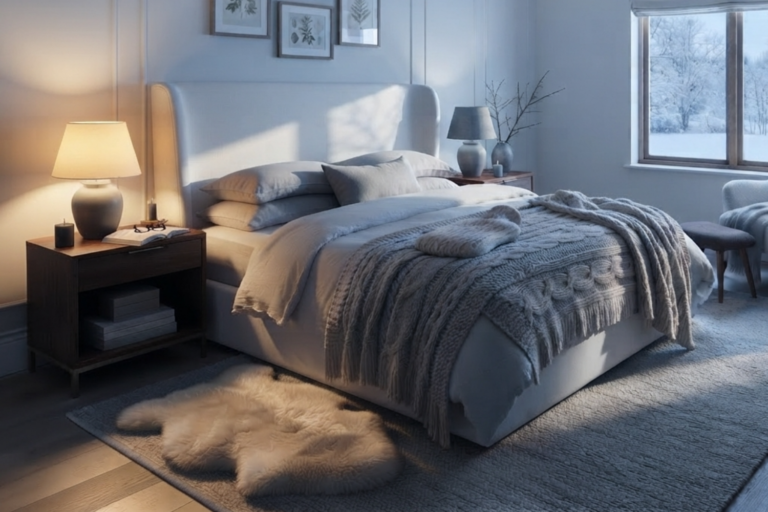
But being a mom, I couldn’t resist making a few tweaks. I folded the duvet back a little farther, straightened the knit blanket at the foot of the bed, and added the brushed wool throw she always pulls over herself when she reads before sleeping.
It took less than a minute. Yet somehow the whole room felt warmer.
Not warmer in temperature, of course. Warmer in the way a room can quietly promise comfort before you’ve even sat down.
That is something Danish homes understand remarkably well. Cozy rooms are rarely built around a single beautiful blanket or one expensive rug. They are built in layers.
A wool rug over timber floors. Linen sheets beneath a soft duvet. A chunky knit throw within easy reach. Cushions that invite you to settle in rather than sit up straight.
Each layer contributes a little on its own. Together, they create something far greater: a room that feels ready for you before you even arrive.
Textiles, textures, and layering are among the five essentials of hygge home decor.
This website participates in the Amazon Associates program. As an Amazon Associate, I earn from qualifying purchases. It also participates in the Impact and AWIN affiliate programs. If you buy through links on this site, I may earn a small commission at no extra cost to you. Thank you for supporting The Hugged Home.
Danes, Hygge, and the Habit of Layering
When Astrid first came to my house, she was quite surprised at how few blankets I owned. I thought we had enough; she felt we needed more.
“A cup of tea, a blanket, and good company — that’s Hygge.” is a popular Danish proverb, according to my friend Astrid, and she is quick to add, “The more you have of each, the more the Hygge.”
A year later, after several shopping trips with Astrid, the collection of throws, blankets, cushions, and pillows in my living room (not to mention bedroom and other rooms) will make any Dane proud.
What is the Danish Layering Technique for Hygge?
In Denmark, textiles are never an afterthought; they are the primary tool for regulating a room’s temperature and mood. Mastering the danish layering technique for blankets is about building depth, not just piling on fabric.
Follow these three essential steps to layer like a Dane:
- Start with a breathable base: Begin with a lightweight, natural fiber like a cotton or linen coverlet to regulate body temperature.
- Add a mid-weight insulator: Drape a medium-weight wool throw blanket or a chunky knit over the base. Wool is naturally temperature-regulating and adds crucial tactile weight.
- Finish with a textural accent: Top the arrangement with a smaller, highly textured piece, like a faux sheepskin or a velvet cushion, to invite touch and complete the visual depth.
For a deeper dive into this philosophy, explore our complete guide to layering home textiles.
Danish homes lean hard into the idea of layering rather than selecting — a rug over the hardwood, a smaller one where feet land, a knit throw, and a heavier wool one within reach of the same chair.
It’s less a look and more an insurance policy against any evening feeling too cold, or too bare, to snuggle in.
Natural Fibers vs. Synthetics
Hygge favors natural fiber-based textiles for tactile reasons. Cotton, linen, and wool hold warmth and soften with age. We all know that a pure wool sweater feels cozier the more it’s worn.
Synthetic blends mostly just pill and flatten. A hygge home isn’t testing for stain resistance. It’s testing for what a blanket still feels like after the fiftieth wash. [→ The Complete Guide to Hygge Home Decor]
Why Your Hands Know Before Your Eyes Do
A room can look warm and still feel wrong the moment you sit down in it. That gap — between how a room photographs and how it feels against skin — is where textiles and texture make all the difference.
A landmark study by researchers Lawrence Williams and John Bargh demonstrated that experiencing physical warmth unconsciously promotes interpersonal warmth.
A wool throw pulled up to your chin isn’t just insulation. At a primal level, the body associates it with being hugged, just as babies feel when held by their mothers. This is hard-wired in our brains since infancy.
No doubt the Danish concept of hygge draws on this!
The interplay of textures adds another dimension. A rough linen tablecloth under a smooth ceramic mug, a nubby wool throw against bare feet on a soft rug — the more textures a room offers, the more of your attention it holds.
Neuroscience literature explains a “cozy” experience as a multisensory state of warmth, safety, and psychological restoration. It isn’t a look. It’s a room giving your nervous system more than one thing to touch.
Essential Hygge Fabric Types
Not all fabrics are created equal when it comes to creating a cozy home. The best hygge fabric types are always natural, breathable, and rich in texture.
- Wool: The undisputed king of hygge. It is durable, naturally moisture-wicking, and provides unparalleled warmth without feeling heavy.
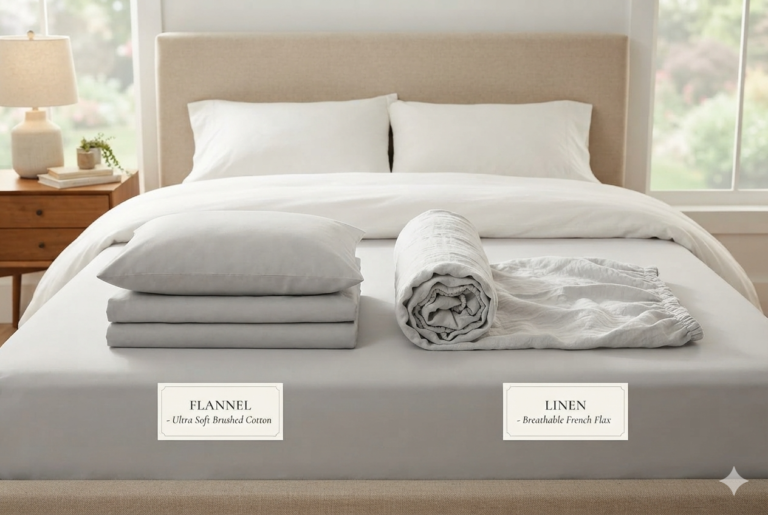
- Linen: Perfect for year-round comfort. It feels crisp and cool in the summer but softens beautifully over time, making it a staple in linen vs flannel sheets discussions.
- Boucle & Shearling: These looped or curled fibers add incredible visual and tactile interest, perfect for accent pillows or a small accent chair.
- Fleece: While synthetic, a high-quality fleece is a practical, lightweight, and affordable option for adding a soft layer to a child’s room or a casual reading nook.
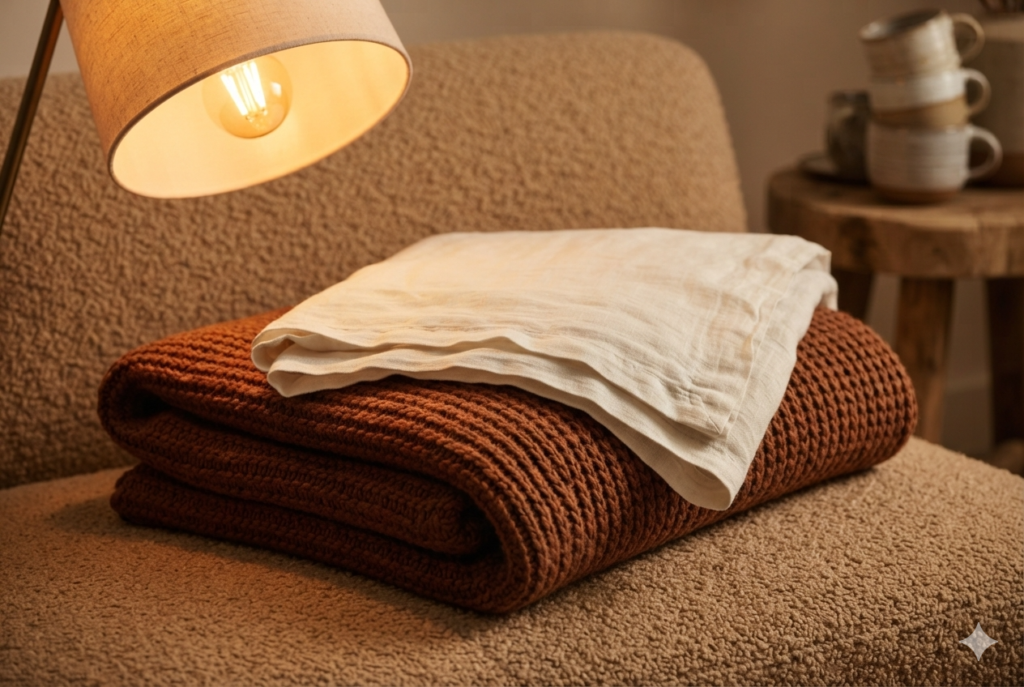
Wool vs Linen for Hygge Styling
Choosing between these two natural powerhouses depends on the season and the specific room. Here is how they compare:
| Feature | Wool Textiles | Linen Textiles |
|---|---|---|
| Best Season | Autumn and Winter | Spring and Summer (year-round in mild climates) |
| Touch & Feel | Soft, heavy, deeply insulating | Crisp, breathable, softens with every wash |
| Hygge Function | Provides enveloping warmth and weight | Offers relaxed, effortless elegance and temperature control |
| Best Used For | Throw blankets, area rugs, heavy cushions | Duvet covers, curtains, lightweight table runners |
Two Hygge Habits That Changed How Our Home Feels
Layer Comfort, Don’t Replace
The principle of layering is simple: don’t swap things out for the season—add to them. Check out my hygge bedroom guide, [→ The Hygge Bedroom]
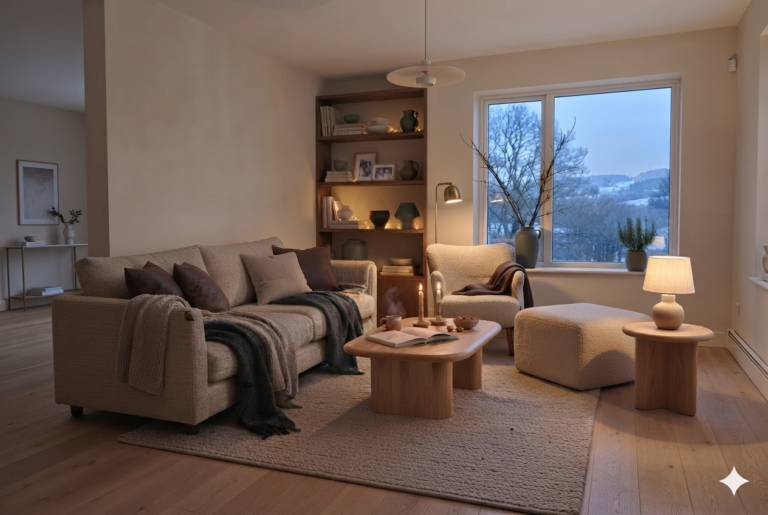
The living room rug doesn’t change from October to March. What changes is what’s on top of it and what and how many throws are draped over the arms of sofas and chairs. One becomes two, and then three as winter advances.
A smaller flat-weave rug comes out once the big rug alone starts to feel cold underfoot. Cushions and pillows, always within reach, are added.
Nothing disappears into storage until spring; instead, the layers build warmth and texture. The room feels lived‑in, not staged. Comfort is ensured, always visible, always ready.
Mix Textures, Not Just Colors
A room can have all the right colours and still feel flat. What makes you want to stay is usually texture, specifically the interplay between textures.
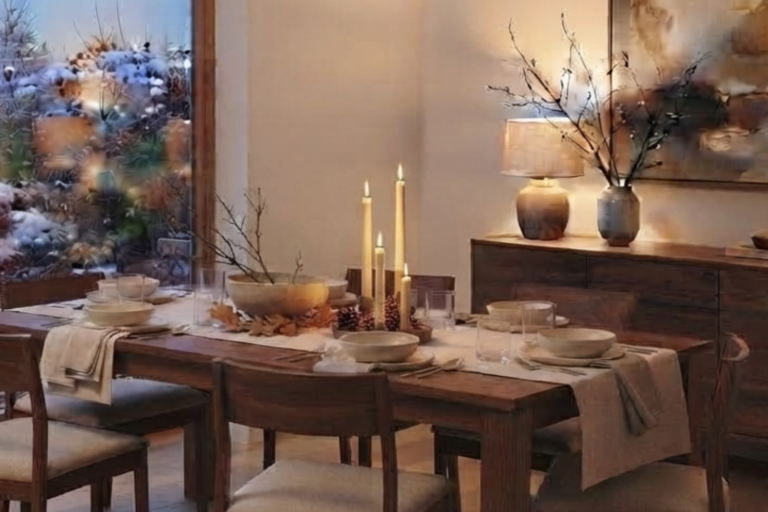
The smoothness of a ceramic mug stands out when it rests on a crisp linen table runner. A chunky knit wool throw draped over a velvety corduroy sofa catches your eye long before you reach for it.
Bare feet notice the difference between grainy oak flooring, a nubby woven rug, and a plush sheepskin long before your mind does.
That contrast is part of the comfort.
Danish homes rarely rely on only one texture. Linen, wool, wood, wicker, stone, and ceramic all sit comfortably beside one another.
Each material reflects light differently and invites a different kind of touch, giving the room warmth that goes beyond appearance.
When every surface is a different tactile experience your hands or feet want to linger on, the room begins to feel cozy.
The Complete Guide to Buying Hygge Textiles
Too often, home décor and textile guides fixate on color palettes — and stop there.
Here’s the fuller picture. What to layer. Which fibers truly last. How to care for pieces so they age gracefully, developing character instead of simply wearing out.
Throws and Blankets: Everyday Warmth and Seasonal Layers
1. Wool for the Coldest Nights.
Heavier, warmer, and slower to wear out than almost anything else you’ll layer with — a genuinely good wool throw can outlast the sofa it’s draped over. It costs more, but it’s certainly worth it. [→ Nest List: wool throw picks]
2. Cotton Knit for Everyday Reach.
Lighter, easier to wash weekly, and the throw that gets grabbed on an ordinary Tuesday, when wool feels like slightly too much commitment for the couch.
3. One Per Person, Minimum.
A single shared throw is never a good idea. It gets tugged, and someone always ends up without adequate cover. Always have more than you need, more than the number of people in the room.
It is best to have at least one per person and three or four in a basket by the living room sofa, ensuring there is enough to go around, no matter how cold the evening gets.
The Best Rugs for Hygge Layering
Bare timber floors are beautiful, but they can feel cold and echoey. The secret to grounding a room is rug layering.
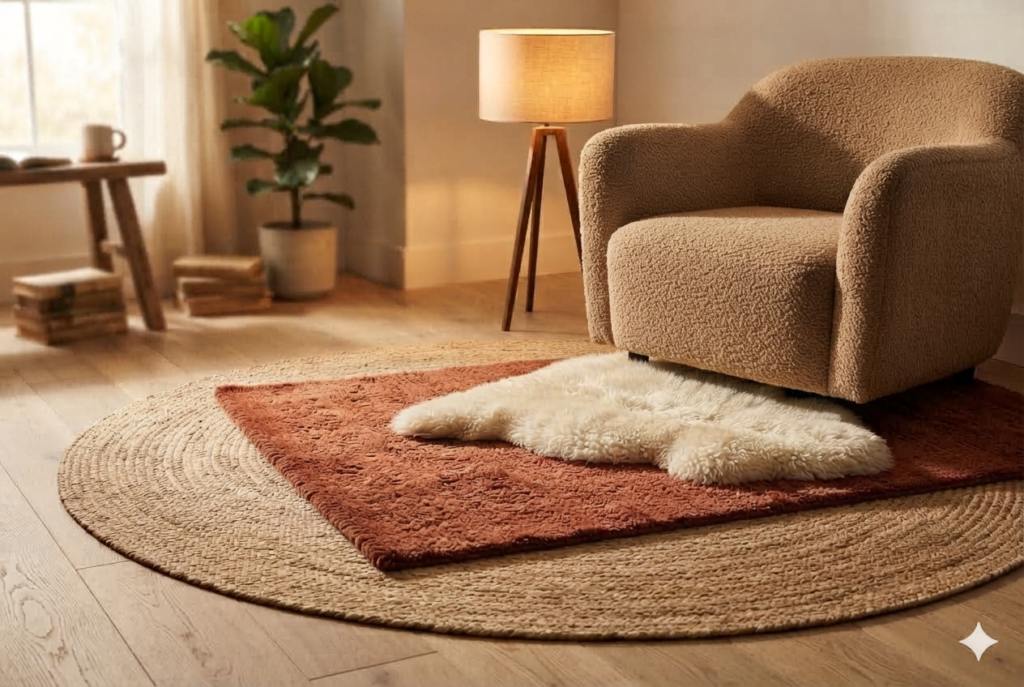
When considering the best rugs for hygge layering, start with a large, flat-weave natural fiber rug (like jute or sisal) as your durable base. Then, layer a smaller, plush wool rug for the bedroom or living room on top, slightly off-center.
This rug-on-rug technique adds instant warmth, defines the seating or sleeping zone, and introduces beautiful textural contrast. Learn more in our guide on how to layer rugs.
4. A Large Rug Sets the Tone.
Wool or a wool blend holds up best against foot traffic, and it actually gets warmer underfoot than it looks like it should. This is the rug that sets the warmth level for the whole room. [→ Nest List: living room rug picks]
5. Smaller Rugs Where Feet Land.
In front of the sink, beside the bed, in the hyggekrog itself — a second, smaller layer wherever bare feet touch down first thing in the morning. [→ What Is a Hyggekrog?]
Cushions and Pillows: Texture, Comfort, and Authenticity
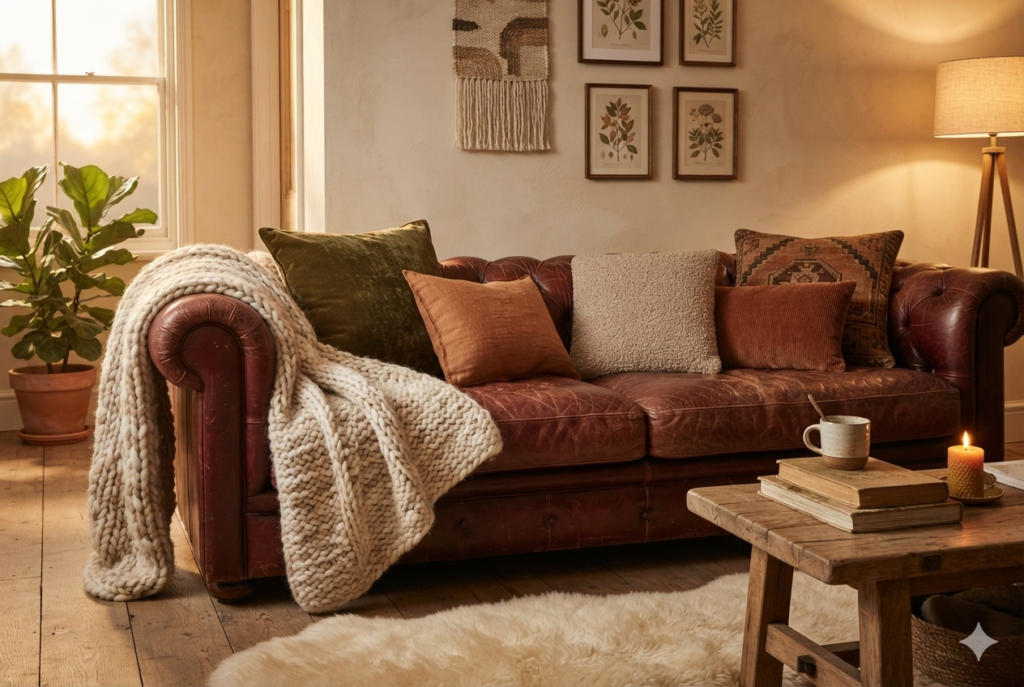
6. Mix Textures on Every Sofa.
The slightly stiff and distinctively textured linen cover next to a nubby wool or bouclé one lets your hands explore textures, no matter where you sit. Variations in texture make a sofa feel authentic, not one straight out of a showroom.
7. Down or Down-Alternative Inserts, Not Foam.
Foam holds its shape a little too well and never softens and molds itself to your body the way a down does.
A down or down-alternative insert, on the other hand, collapses the right way when you lean into it, which feels cozy and comfortable instantly. [→ Nest List: cushion insert picks]
Care and Longevity: Tips that Extend Life
8. Wash Wool Cold, and Rarely.
Wool is naturally resistant to odor and dirt, so it needs far less washing than cotton — over-washing is what shortens a good wool throw’s life more than daily use ever does.
9. Rotate Rugs Twice a Year.
Turning a rug a half-turn each season evens out sun fading and foot-traffic wear, so it ages as one piece instead of fading unevenly on one side.
10. Air Out Before Storing.
Natural fibers should be as dry as possible before they are packed and stored. If stored even slightly damp, they will hold that smell until the next time you need them.
An afternoon on the line or over a chair back before a throw goes into a drawer for summer prevents it from smelling stale in October.
FAQ for Hygge Textiles
What are the best hygge fabric types for a cozy home?
Natural, breathable, textured fabrics. Wool gives warmth and weight, linen offers airy elegance, while boucle, shearling, and quality fleece add tactile depth.
What is the Danish layering technique for blankets?
Three steps: 1) Start with a cotton or linen base. 2) Add a mid‑weight wool throw for insulation. 3) Finish with a textured accent like faux sheepskin or velvet.
Should I choose wool or linen for a hygge home?
Wool suits autumn and winter with insulating warmth. Linen works best in spring, summer, or year‑round bedding because it is soft and breathable.
What the Extra Blanket Is Really For
When I walk past Maja’s room later that evening, the bed no longer looks quite as tidy as it did that afternoon.
The brushed wool throw is folded back. One cushion is on the floor. The duvet has already been turned down, ready for another chapter before sleep.
I could straighten everything again. Instead, I smile and keep walking. Why? Because those layers were never there to be admired. They were there to be used.
That’s the quiet genius of hygge. Blankets aren’t folded to impress visitors. Cushions aren’t arranged for photographs. Rugs aren’t layered because a designer said they should be.
They’re there to make it easier to settle in, to stay a little longer, to feel a little warmer. A home begins to feel truly cozy when every room quietly says the same thing:
“Come in. You are sure to feel cozy, comfortable, and warm here.”
Textiles, textures, and layering are essential elements, not just the finishing touches of any hygge home. [→ The Complete Guide to Hygge Home Decor]
Light a candle. Slow down. Hygge.
— Elise