How to Care for Wood Furniture in Winter (7 Simple Rules)
It was a crisp Tuesday morning in mid-January. The furnace had been running hard all night, and the house felt dry, the kind of dry that makes your skin feel tight before you even get out of bed.
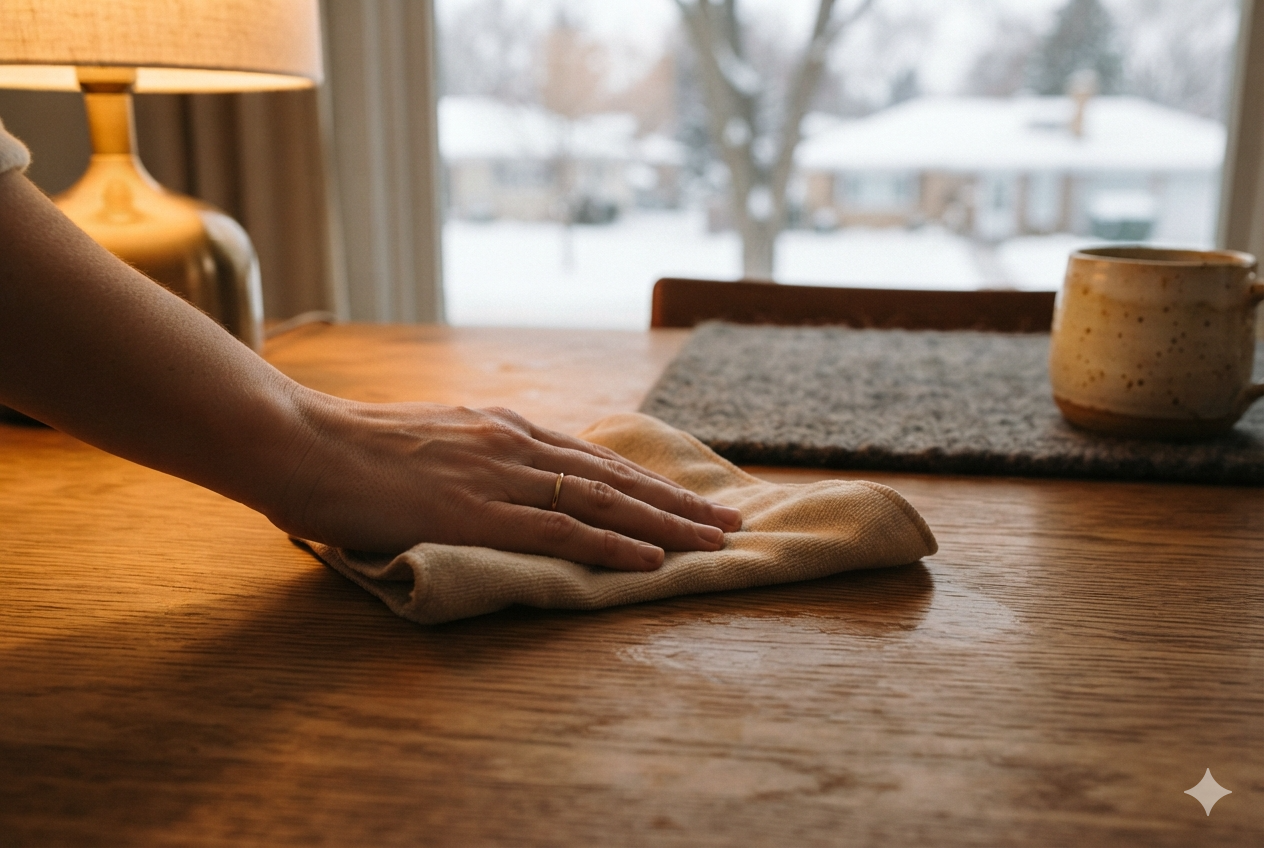
I was wiping down the solid oak dining table with a microfiber cloth when I noticed it: a tiny, new hairline gap between two boards near the edge.
My immediate reaction was a familiar, quiet panic. Had I ruined it? Was the wood drying out and splitting?
I stood there staring at the gap in the wood. But then I realized this wood came from a tree. The tree may have been cut, but the wood still lives and breathes.
This website participates in the Amazon Associates program. As an Amazon Associate, I earn from qualifying purchases. It also participates in the Impact and AWIN affiliate programs. If you buy through links on this site, I may earn a small commission at no extra cost to you. Thank you for supporting The Hugged Home.
The Physics of Breathing Wood
Wood is hygroscopic. This means it constantly absorbs and releases moisture from the air, a bit like a sponge, though on a much slower, more rigid scale.
In the summer, when the windows are open and the humidity is high, the wood cells swell. In the winter, when the central heating system drops the indoor humidity well below 35%, those same cells shrink.
That tiny gap I saw was not a structural failure. It was the table exhaling.
Astrid watched me fretting over the oak table a few years ago, running her hand over the grain.
“Wood is from a tree, Elise,” she said gently. “It breathes. A small mark or a seasonal gap is not a failure. It is the table remembering the winter we spent together.”
She was also introducing me to the concept of arv, the Danish idea of inheritance or legacy. Furniture is meant to be used, passed down, and gently worn. To really understand arv, read my article on solid wood furniture.
The goal of wood care can not be to freeze the furniture in a pristine, showroom state. Winter wood care must provide a stable, comfortable environment so the wood can survive the season gracefully.
How to Care for Wood Furniture in Winter (7 Must-dos)
You do not need to treat your furniture like a museum exhibit. A well-lived home requires a practical, gentle approach on how to care for wood furniture in winter.
Here is how to keep your wood comfortable when the air turns dry and cold.
1. Monitor the Humidity (The 40% Rule)
One of the most effective ways to prevent winter wood shrinkage is to manage the air it lives in. Keep your indoor humidity between 35% and 55%. Place a small digital hygrometer nearby to accurately read the room’s environment.
If your furnace is drying out the house, a simple room humidifier is the best insurance policy for your wood. When the air is stable, the wood remains stable.
2. Create Distance from Heat
Direct, dry heat is wood’s worst enemy. Keep your furniture at least a few inches away from radiators, baseboard heaters, and forced-air vents. If you cannot move the piece, use a thick rug or a physical barrier to deflect the direct blast of hot air.
3. Use Soft, Insulating Barriers
Hot dishes and cold drinks cause rapid, localized expansion and contraction in the wood. Wool placemats and coasters are not just decorative; they are essential thermal buffers.
They provide a soft, insulating layer between a hot Dutch oven and the dining table, protecting the finish from sudden temperature shocks.
4. Clean with a Barely Damp Cloth
Avoid harsh chemical cleaners or soaking the wood. Water becomes the enemy of a good finish if left to pool. A microfiber cloth, barely dampened with warm water, is almost always enough to wipe away crumbs and daily dust.
5. Nourish, Don’t Coat
Avoid silicone-based sprays that build up a sticky, unnatural film over time. You want to feed the wood, not paint it.
My Pick: I use Howard Feed-N-Wax Wood Polish & Conditioner. It is a simple blend of beeswax and orange oil that nourishes the wood and protects it from drying out, without leaving a synthetic residue.
For the best results, wipe a thin layer onto the table, let it sit for 20 minutes to absorb, and then thoroughly buff away the excess with a clean cloth.
6. Blot Spills Immediately
If water or wine lands on the table, do not rub. Rubbing pushes moisture deeper into the grain and can damage the finish. Just press a dry cloth down firmly and lift.
7. Accept the Patina
A tiny scratch from a fork, a faint ring from a mug, or a seasonal gap is not a failure. It is evidence of a home that is actually being lived in.
Wood Care Working Right
It is now evening, and the dining room is quiet. The table is cleared of dinner plates, wiped down, and ready for tomorrow.
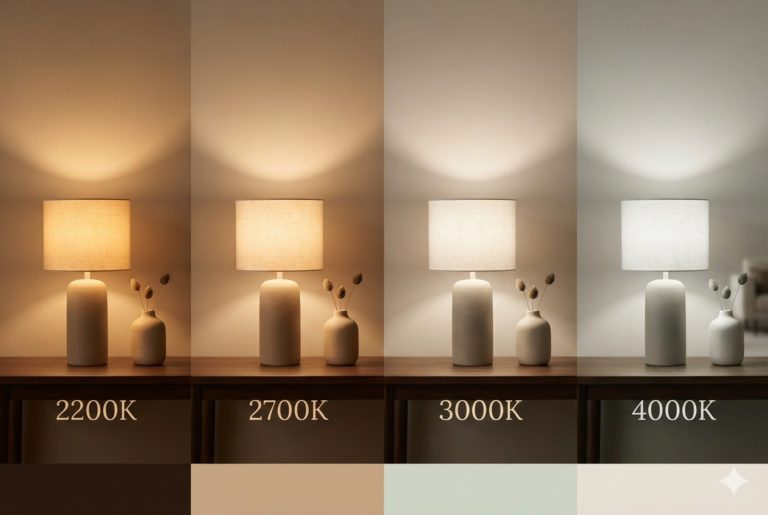
I reach over and run my hand over the spot where I saw the gap that morning. In the warm, low light of the 2700K table lamp, it is barely visible.
The wood feels smooth, solid, and warm under my palm. It is not a museum piece. It is the center of the home, holding the weight of the day, ready for tomorrow.
Light a candle. Slow down. Hygge.
— Elise