Wood Wick vs Cotton Wick: Why Wood Wicks Feel So Hygge
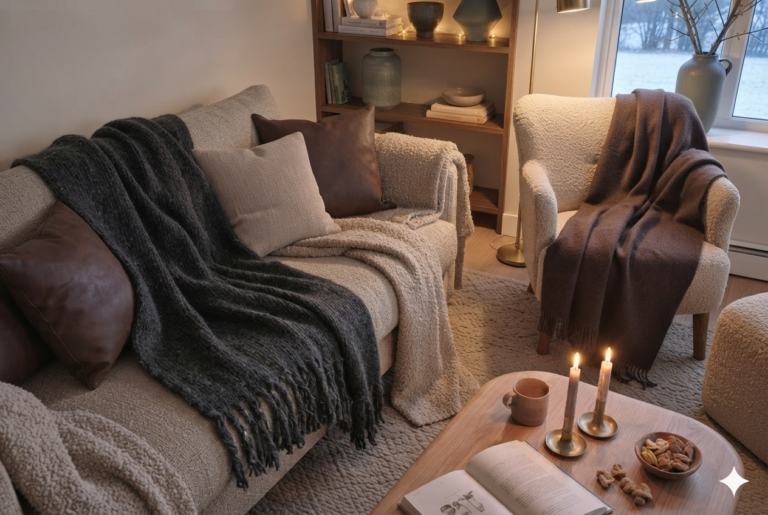
It was a brutally cold Tuesday afternoon in late January. The girls were at school, Henrik was at work, and the house was quiet. I made a cup of herbal tea, settled in my hyggekrog, a book resting on my lap.
Then I lit the candle on the side table. The house was quiet no more. The soft, rhythmic crackle of the wood wick candle broke the silence. It sounded like a distant, miniature fireplace.
I have been reaching for them more and more often as the days grew shorter. It wasn’t just about the light anymore. It was also about the sound.
This website participates in the Amazon Associates program. As an Amazon Associate, I earn from qualifying purchases. It also participates in the Impact and AWIN affiliate programs. If you buy through links on this site, I may earn a small commission at no extra cost to you. Thank you for supporting The Hugged Home.
Can You Hear the Crackle?
A standard cotton wick is made of braided or twisted fibers. It burns cleanly and silently, producing a steady, tall flame at the tip.
A wood wick, on the other hand, is a thin strip of natural wood—often cherry, maple, or cedar. When it burns, the trapped air and moisture in the wood combust in tiny, rapid bursts.
This is exactly why a log pops in a hearth. Think of the burning wood wick as a miniature version of a camp fire.
We are naturally drawn to the sound of a crackling fire. The sound is deeply hardwired into our brains to signal warmth, safety, and community.
A wood‑wick candle does more than glow. Its soft crackle becomes a gentle soundtrack, masking the hum of the refrigerator or the creak of the floorboards. That subtle rhythm tells the mind to let go, that the evening is safe and settled.
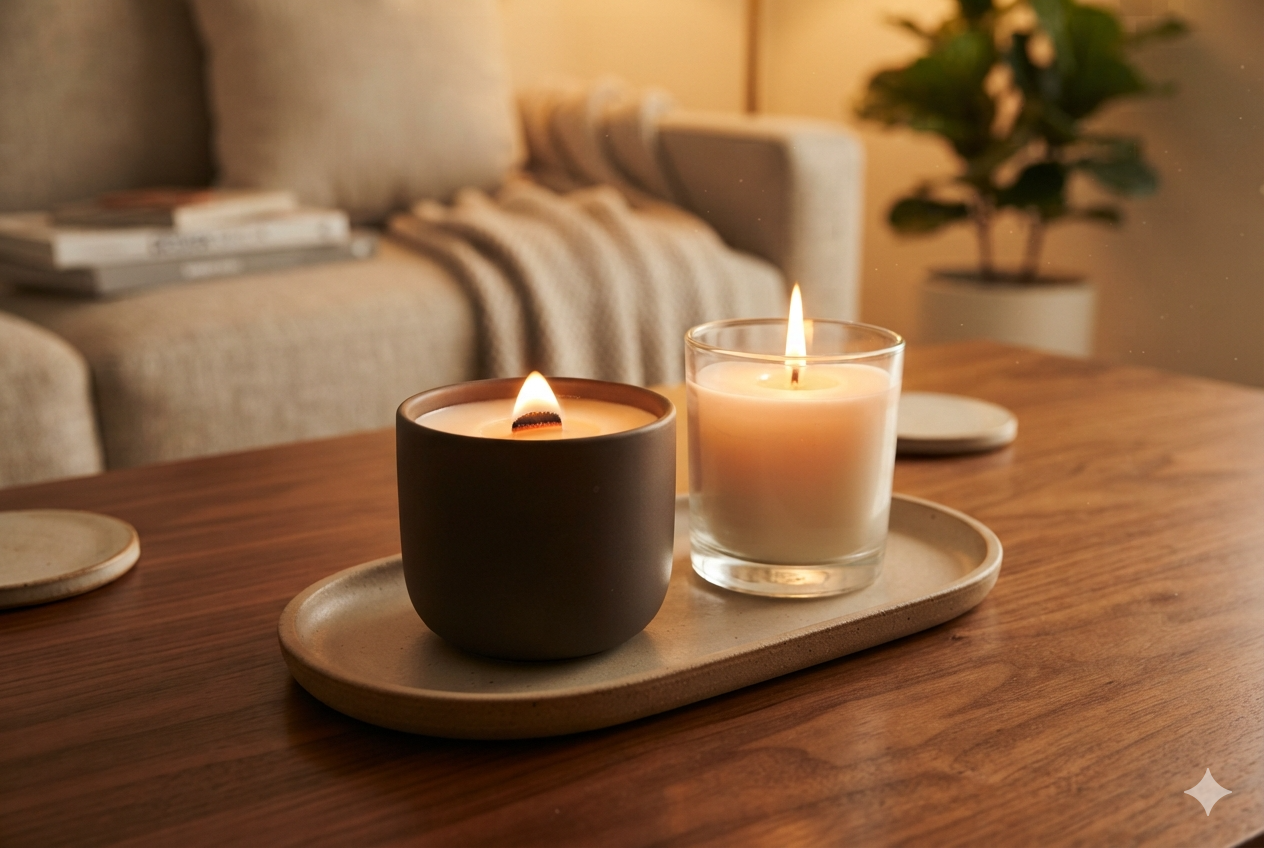
Astrid once sat with me as a wood‑wick candle burned low on the coffee table. “In Denmark, we don’t have fireplaces in every room,” she said, listening to the faint crackle. “A wood wick candle is the next best thing.”
That is the essence of levende lys—living light. The flame glows, the wick crackles, and the candle feels more alive.
Wood Wick vs Cotton Wick Candles: How to Choose?
You do not need to choose one wick and banish the other from your home. A well-lived house uses both, depending on the room and the time of day.
Here is how to match the wick to the moment.
1. Understand the Burn Characteristics
Pound for pound, wood wicks tend to burn slower and more evenly than cotton wicks. The flame sits lower and wider, helping to melt the wax pool across the entire surface and reducing the risk of tunneling.
Cotton wicks are highly reliable and predictable, but they require a bit more attention to ensure an even melt.
In the wood wick vs cotton wick debate, the wood wick scores as it is more effective in preventing tunneling and wasted wax.
2. Consider the Sound
This is the most obvious difference. A wood wick creates a soft, continuous crackling sound reminiscent of a fireplace. A cotton wick is completely silent.
Ask yourself what the room needs. If you are reading or trying to fall asleep, the gentle white noise of a wood wick is incredibly soothing.
If you are hosting a dinner party where conversation is the focus, a silent cotton wick might be less distracting.
3. Evaluate the Flame
A cotton wick typically produces a taller, more concentrated flame at the very tip. A wood wick burns lower, with the flame licking across the top edge of the wooden strip.
Compared to the cotton wick, a wood wick creates a wider, softer glow that feels less like a spotlight and more like a hearth.
4. Maintenance Matters
Both wicks require care, but the type of care differs.
Cotton wicks must be trimmed to a quarter-inch before every burn to prevent “mushrooming”—that ugly, carbon-heavy bulb that forms at the tip and creates soot.
Wood wicks also need trimming, but in this case you are actually clipping away the charred, blackened wood from the previous burn to expose fresh wood.
Always trim your wick before lighting. It is essential for both types, but especially for wood wicks, which need the charred wood clipped away to maintain a clean, consistent crackle.
I recently bought a Foton Candles Care Kit that has a luxury candle kit featuring a USB-rechargeable electric lighter, a wick cutter, flame snuffer, and wick dipper. Love it, its really a all-in-one tool!
5. Fragrance Throw
Because a wood wick produces a wider, flatter flame, it heats a larger surface area of the wax pool. This can push up to 35% more fragrance into a room compared to a concentrated cotton flame.
A wood wick can help maximize the scent distribution of a high-quality soy blend. Keep that in mind when picking a soy candle over beeswax candle primarily for the scent.
I keep this set of three wood wick soy candles and use one or the other most evenings. The Canadian Cedar is bright enough for a crisp afternoon, while the Black Amber and Sandalwood provide the deep, woody scent for a quiet evening.
They have many other scent choices too. Most importantly, the natural wood wicks deliver that gentle, consistent crackle that makes a room feel instantly grounded.
6. Soot and Cleanliness
A properly trimmed wood wick produces minimal soot and does not suffer from the mushrooming effect that plagues neglected cotton wicks.
However, neither wax nor wick is immune to black smoke if the flame is starved of oxygen or the wick is too long. A well-trimmed wick makes any candle clean.
7. Match the Wick to the Room
I tend to use wood wick candles in the living room, the reading nook, and the bedroom—spaces where I want ambiance and a sense of quiet refuge.
If you are creating layers of warmth in a dark room, the wood wick adds an auditory layer that a light bulb can never do.
I reserve cotton wick candles for the kitchen, the dining room, and the entryway, where I need reliable, straightforward light without the extra sensory input.
8. The Hygge Factor
Do not underestimate the auditory layer when building a home for the Dark Season.
A wood wick candle is not a replacement for a real fireplace, but it surely comes a close second. It is a promise that warmth can be created anywhere, even in a room with no hearth.
The Crackling Sound of Warmth
It is now deep winter, and the sun sets long before dinner is finished. The living room is lit by the warm glow of a few table lamps and the wood wick candle on the coffee table.
Henrik is reading in his chair, turning a page every few minutes. Maja and Freya are building a fort out of sofa cushions and wool blankets.
The wood wick has burned down an inch, and the crackle is steady, soothing, and rhythmic.
We don’t have a fireplace yet. But the wood wick candle sounds like a pretty good substitute.
Light a candle. Slow down. Hygge.
— Elise