Hygge Candles: The Ultimate Symbol of Coziness & Contentment
What Are Hygge Candles?
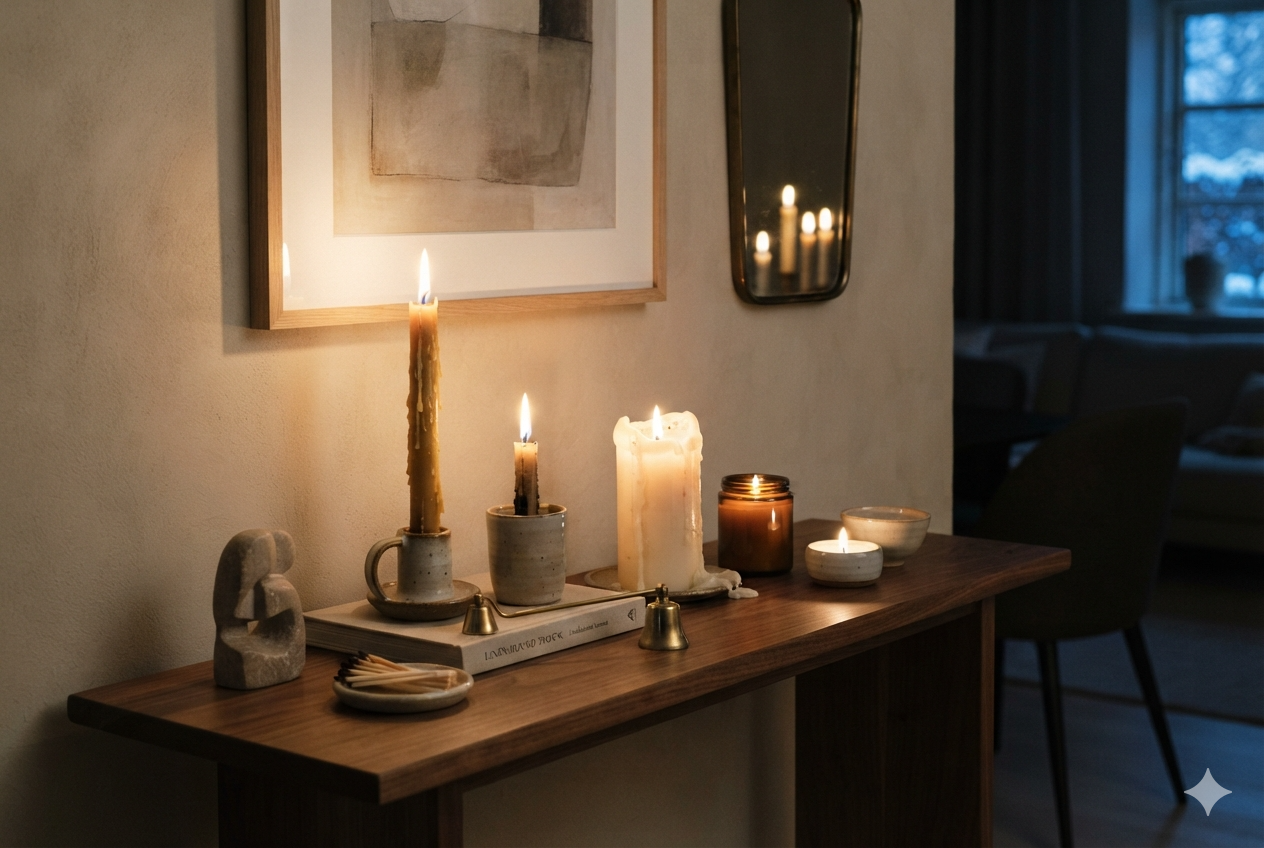
Hygge candles aren’t defined by a particular wax or wick. How you use them is what turns them into a ritual. Typically made from beeswax or soy wax, with cotton or wood wicks and a gentle scent, they cast a soft, flickering glow. That living light — levende lys in Danish — signals the brain to relax, rest, and reconnect with the present.
This website participates in the Amazon Associates program. As an Amazon Associate, I earn from qualifying purchases. It also participates in the Impact and AWIN affiliate programs. If you buy through links on this site, I may earn a small commission at no extra cost to you. Thank you for supporting The Hugged Home.
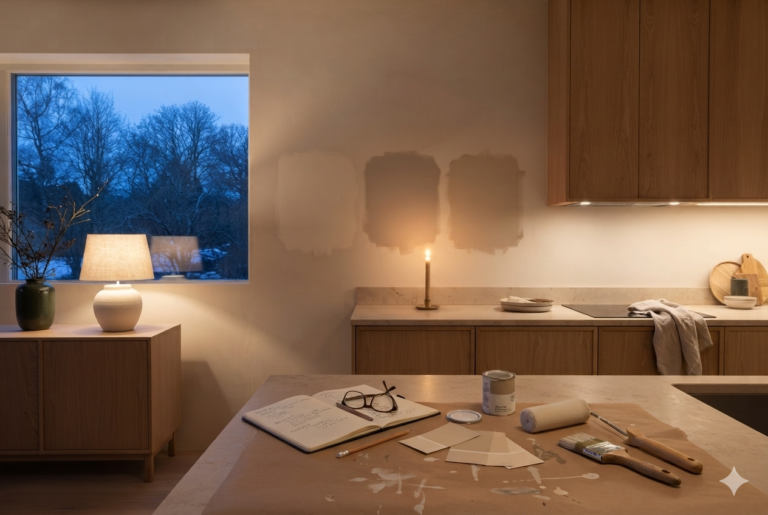
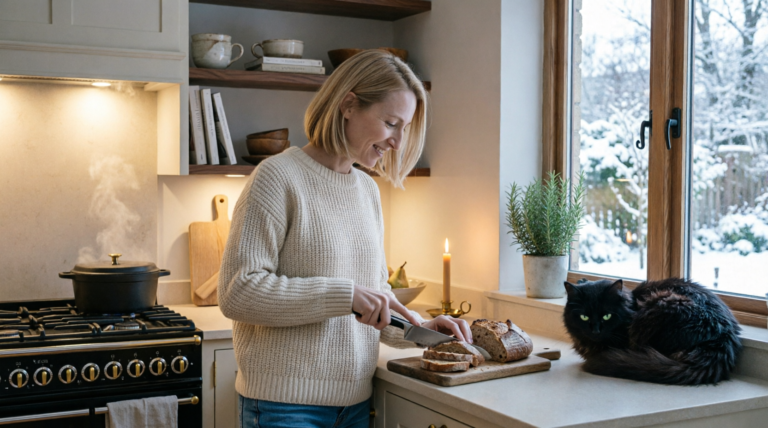
The candle on the kitchen counter gets lit before the onions get chopped. Not after, not while I am cooking — before, same as it’s been since I wrote about it in the hygge kitchen article.
By the time Henrik is home, and the girls are arguing over who sets the table, it’s already going.
Another one flickers in the living room by then, on the side table Henrik built. It sits next to the lamp that’s usually the only other light we bother with at that hour.
Two small flames that set the tone. At this point, it isn’t a choice we think about — it’s just how evenings feel in our house.
What Does “Levende Lys” Mean?
Danes have a word for candles: levende lys, literally “living light.” Not a mood. Not a setting on a dimmer. Light that behaves like it’s alive — it flickers, it leans, it asks, in its own small way, to be tended, not turned on.
How to Pronounce Levende Lys
Pronunciation: leh-ven-deh lühs
Pronunciation by native speaker (source: Forvo.com)
Meik Wiking, who has spent more time studying Danish happiness than most, puts it rather succinctly.
“No recipe for hygge is complete without candles. When Danes are asked what they most associate with hygge, an overwhelming 85 percent will mention candles.”
― Meik Wiking, The Little Book of Hygge: Danish Secrets to Happy Living
Hygge Candle Scents Profile
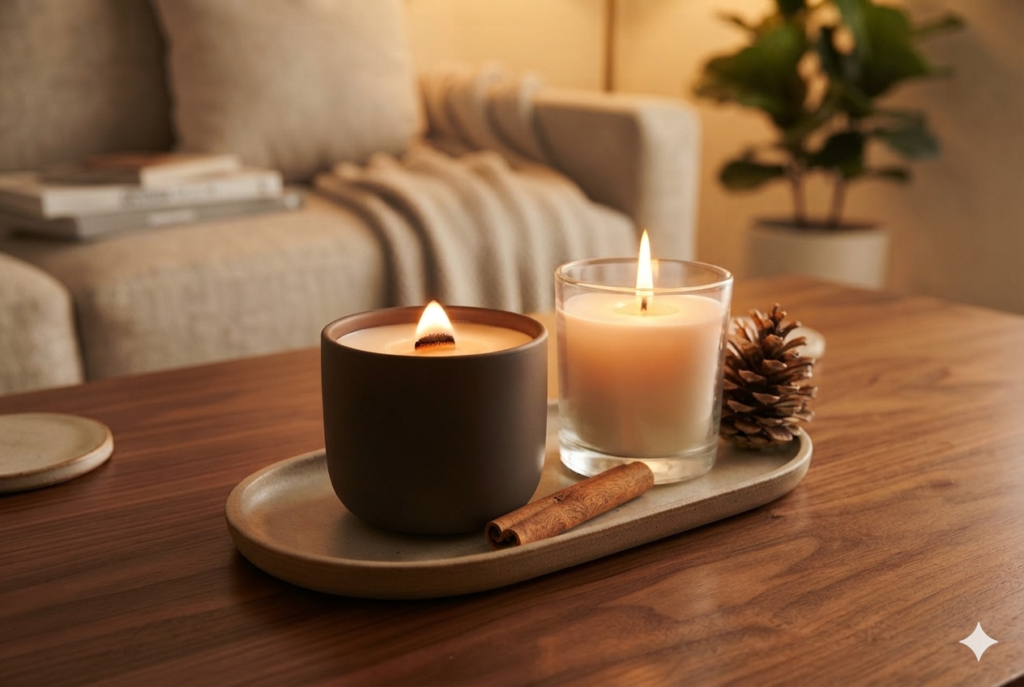
Most “hygge candles” you’ll find in stores lean into fragrance — vanilla, amber, spiced pine, the whole seasonal aisle. There’s nothing wrong with any of it.
But the candles that seem to appear most often in Danish homes are more likely to be unscented or barely scented, chosen for the glow rather than the smell.
Ours is a mix. An unscented pillar for the kitchen, since I’d rather smell dinner than vanilla. Something soft and woody for the living room once the sun’s down.
Scent isn’t the point of the hygge candles. It’s just one more layer, not the prime reason for lighting a candle.
While unscented or naturally scented candles are a staple for dining and cooking, seasonal scents can elevate the atmosphere. Here is a guide to traditional Scandi aromas:
| Scent Profile | The Hygge Vibe | Best Used For |
|---|---|---|
| Unscented / Pure Beeswax | Pure, clean, authentic levende lys | Dining tables, kitchens, and those sensitive to fragrance |
| Spruce & Pine | Crisp, forest-like, grounding | Early winter and welcoming guests in the entryway |
| Amber & Vanilla | Warm, sweet, enveloping | Deep winter evenings, bedrooms, and relaxing in the living room |
| Cinnamon & Clove | Spicy, festive, nostalgic | Holiday gatherings and cozy evenings in the living room |
For more seasonal inspiration, explore our favorite winter candle scents.
Two Habits That Made Candles Part of My Day
Lit Before, Not After
I light a candle before the task begins, not after, to celebrate finishing it; before chopping onions, setting out plates, or reading a book.
I now think that lighting a candle triggers my brain, in a way I do not fully understand, that I am about to do something good for myself, my family, and my home. Maybe this is what hygge is all about.
Layered With the Lamps, Not Instead of Them
In our home, candles don’t replace lamps; they join them. We already layer light by height and warmth — a floor lamp, a table lamp, something softer by the bed. Candles slot into that same layer as the smallest, warmest rung underneath it. [→ Hygge Living Room]
A room with three lamps and one candle does not feel as cozy as a room with three lamps and three candles. The glow multiplies, and the home feels hugged, not just lit. [→ Full hygge lighting guide]
The Complete Guide to Buying Hygge Candles
Quite often, the candle aisle in a store is more confusing than it needs to be. Most of what’s written about hygge candles either oversimplifies or tries to upsell.
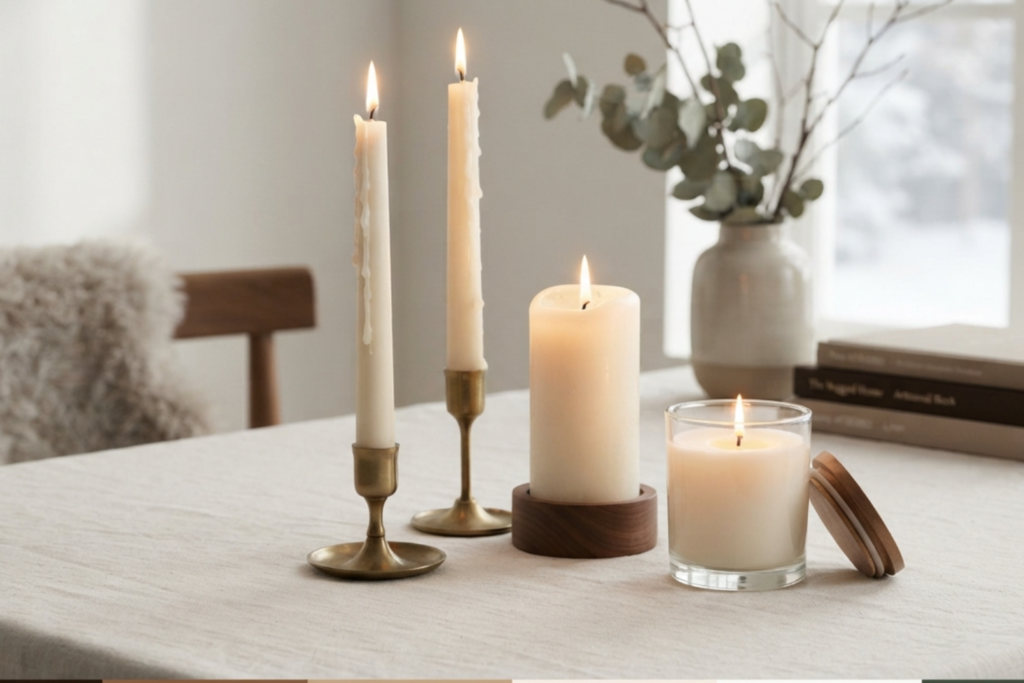
Here’s the complete picture — what it’s made of, what shape to buy for which room, and how to keep it burning the way it’s supposed to.
The Best Types of Hygge Candles for a Clean Burn
When curating your collection, the wax and wick matter just as much as the vessel. Non-toxic hygge candles are essential for maintaining good indoor air quality, especially when you are burning them for hours in a closed-up winter home.
1. Soy Wax for Everyday Burning — Cleaner-burning than paraffin, and it holds scent well without needing much of it. It’s the wax in most of what we burn through a normal week, and it’s usually the easiest to find at a reasonable price. [→ Nest List: soy candle picks]
2. Beeswax for the Ones You Notice Burning — Beeswax burns longer and cleaner than soy, with a faint natural honey note even in an unscented one. I typically use it in the living room and the master bedroom.
It costs more, but then superior quality always does. [→ Nest List: beeswax picks]
3. Coconut Wax for a Slower Burn — Softer and slower-burning than either soy or beeswax, which means less refilling the holder over a season. Worth it for a room that gets used every evening. For me, that is the kitchen.
4. Skip Paraffin if You Can — Paraffin candles are the cheapest and the most common, but they burn faster, release more soot, and carry less scent nuance than the alternatives.
Not a failing to own one — just worth knowing what the trade-off is. For a deeper dive into clean burning, explore my guide on beeswax vs. soy candles to find the perfect match for your home.
Choose the Right Candle Shape for the Room
5. Pillars and Jars for Most Rooms — A pillar stands on its own and holds up on a mantel or side table without any container around it.
A jar candle throws scent more evenly and won’t drip onto furniture, which matters more in a house with two kids and a cat.
Most of what we burn is one or the other, chosen by room rather than habit.
6. Tealights and Votives for Clusters — Small, cheap, and made to be grouped rather than admired alone. Five tealights in a shallow dish do more for a table at dinner than one large candle ever will.
They’re the easiest way to get suggested in the lighting guide without committing to anything bigger. [→ Full hygge lighting guide]
7. Tapers for the Occasions — Tall, a little formal, and not something we light on an ordinary Tuesday. Tapers earn their place at a table set for an occasion — a birthday, a holiday, a dinner where guests are invited.
I always keep some in our house for those special evenings. But remember placing them on the dining table is an art. Master it by reading my article on how to style taper candles?
The Bluecorn Beeswax 12-Inch Ivory Taper Candles are my go-to when I want the holder and the room to remain visually important during the day and the flame to become the focus at night.
Choose the Right Wick and Learn How to Burn It Well
8. A Cotton or Wood Wick — Cotton wicks burn clean and predictably. Wood wicks add a faint crackle that’s genuinely lovely in a quiet room, though they need to be trimmed more carefully than cotton wicks.
Either beats a synthetic wick, which tends to smoke more and burn less evenly. If you are curious about the auditory experience, read my comparison of wood wick vs. cotton wick.
I keep this set of three wood wick soy candles and use one or the other most evenings. The Canadian Cedar is bright enough for a crisp afternoon, while the Black Amber and Sandalwood provide the deep, woody scent for a quiet evening.
They have many other scent choices too. Most importantly, the natural wood wicks deliver that gentle, consistent crackle that makes a room feel instantly grounded.
9. Trim the Wick Before Every Burn — A quarter inch, every time, before you light it. It sounds fussy until you notice how much less soot a freshly trimmed wick puts out, and how much more evenly the wax pool spreads across the top.
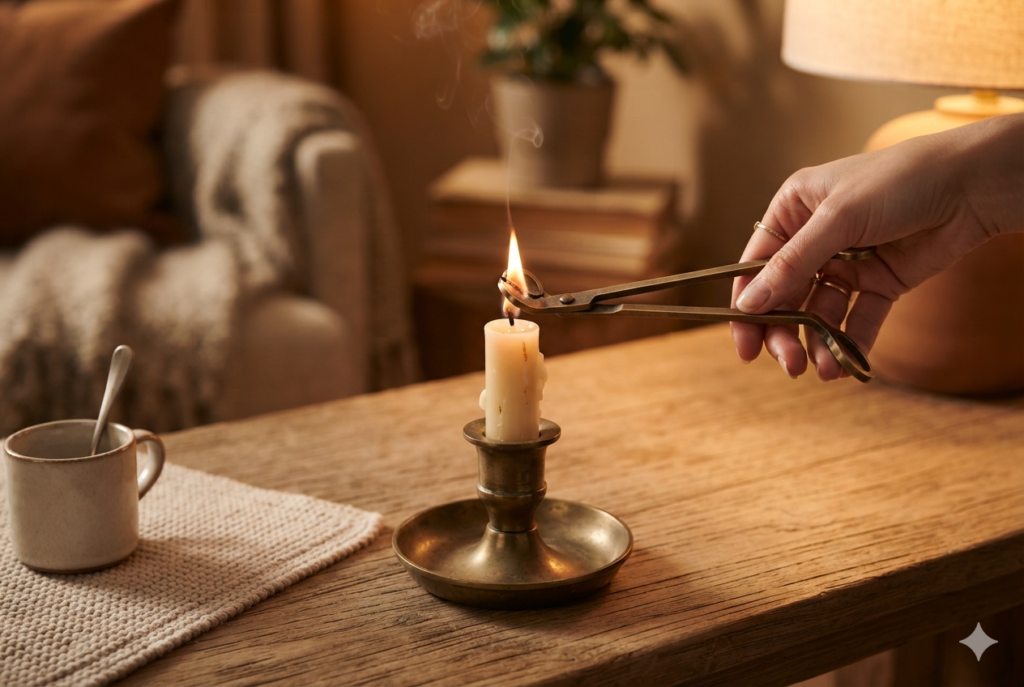
I recently bought a Foton Candles Care Kit that has a luxury candle kit featuring a USB-rechargeable electric lighter, a wick cutter, flame snuffer, and wick dipper. Love it, its really a all-in-one tool!
10. Let the First Burn Go the Distance — The first time you light any candle, let it burn until the melted wax reaches the edge of the container, even if that takes a couple of hours.
Stop early, and the candle remembers that smaller circle, tunneling down the middle for the rest of its life instead of burning evenly. Here is how to prevent and fix candle tunneling.
Essential Hygge Candle Safety Tips
11. Match the Holder to the Room — A brass holder for the living room, something plain and heatproof for the kitchen counter, nothing breakable anywhere. Björn can reach with his tail.
The holder is used far longer than any single candle, so it’s worth choosing for the room rather than for what happens to be burning in it this month. [→ Nest List: candle holder picks]
12. Keep Unlit Candles Out of Direct Sun — Sunlight fades color and softens wax enough to warp a candle before it’s ever been lit. A drawer or a shaded shelf keeps one looking the way it did the day it was bought.
13. Snuff It, Don’t Blow It Out — Blowing a candle out sends a puff of smoke and scattered wax across whatever’s nearby.
A snuffer, or even the lid the candle came in, puts it out cleanly and quietly — a small tool that earns its keep in the first week you own it. [→ Nest List: wick trimmer and snuffer sets]
14. Never Leave One Burning in an Empty Room — The simplest rule and the easiest one to forget on a busy evening. If everyone’s left the room, the candle goes out with them, even if it means relighting it five minutes later.
FAQ About Hygge Candles
What does levende lys mean?
In Danish, it means “living light” — the warm, shifting glow of a candle flame, valued as a daily ritual for calm and warmth in winter.
What is the best wax for hygge candles?
Natural waxes like beeswax or soy. Beeswax burns cleanly and slowly, carries a soft honey scent, and helps purify the air — unlike paraffin, which can release toxins.
How do I make hygge candles burn safely and evenly?
Trim the wick to ¼ inch, limit burns to under 4 hours, avoid drafts, and place candles in sturdy, heat‑safe holders.
Why We Keep Lighting Them
By the time dinner was cleared, the kitchen candle was nearly gone. Henrik lit the one in the living room without thinking twice. It’s become his habit. Neither of us said a word. We didn’t need to.
A candle lit at the right time, in a room with people, signals the start of a new phase of coziness and warmth.
It’s a small thing that makes the evening feel complete. Not fancy, not dramatic — just finished in the way we like it.
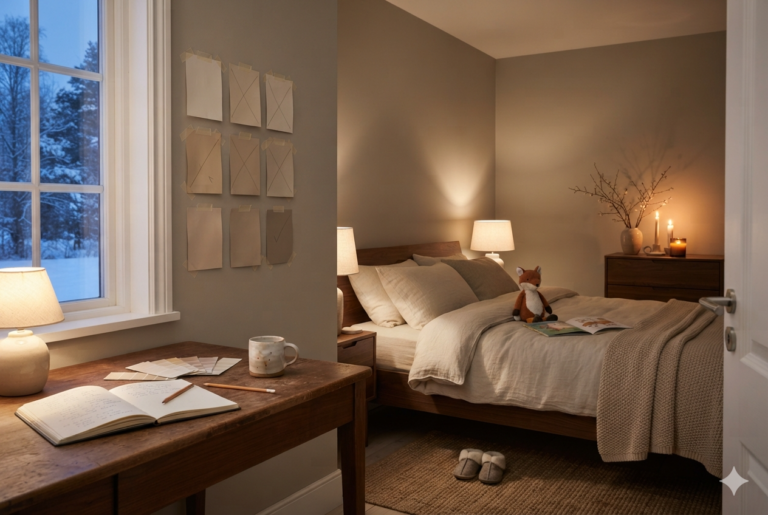
A candle in the kitchen, another in the living room, one for the bedroom — none of it complicated on its own, but it adds up to a whole house that feels a certain way. See how all the pieces fit together here. [→ The Complete Guide to Hygge Home Decor]
Light a candle. Slow down. Hygge.
— Elise