Winter Candle Scents to Cozy Up Your Home This Cold Season
It was a Tuesday evening in mid-December, and the wind had pushed snow against the front door. I stood in the entryway, shaking the cold from my coat.
Then the cedar smell from the candle on the entryway console table hugged me. After the sharp bite of the wind and the weight of grocery bags, the familiar fragrance put me at ease.
Henrik, home before me, had already lit it—our long established custom.
The sharp chill of the outside world now felt irrelevant. The candle had already declared: you are home and you are safe.
This website participates in the Amazon Associates program. As an Amazon Associate, I earn from qualifying purchases. It also participates in the Impact and AWIN affiliate programs. If you buy through links on this site, I may earn a small commission at no extra cost to you. Thank you for supporting The Hugged Home.
The Architecture of Scent
Smell works differently from other senses. It does not get sorted by the brain’s “logic center.” Instead, scent travels straight to the limbic system—the part that handles memory and emotion.
That’s why a fragrance can pull you instantly back to your grandmother’s kitchen or shift your mood before you’ve even think about it.
In Denmark, this invisible layer of a room is taken seriously. Astrid once walked into my house during holiday chaos and, before noticing the candle itself, said:
“I smell pine. Pine belongs to the forest. It is the perfect smell for a living room in January.”
She was pointing to stemning—the Danish idea of atmosphere. Scent isn’t decoration; it’s the architecture of mood.
In winter, heavier fragrances like vanilla, amber, musk, and wood linger longer in the dry air, wrapping a room in warmth and enclosure. Lighter notes—citrus, peppermint—can feel festive and summery.
Choosing the right candle isn’t about luxury. It’s about shaping how a home feels when the days are short and the nights are long.
How to Choose and Layer Winter Candle Scents
You do not need to buy a different candle for every day of the week. A well-lived home uses scent intentionally, matching the fragrance to the room’s function and the season’s rhythm.
Here is how to build a hyggelig winter candle scents strategy that actually feels like hygge.
1. First, Get to Know the Three Notes of a Candle
A candle’s fragrance profile is structured as an olfactory pyramid divided into three distinct tiers:
| Scent Layer | When You Smell It | Volatility / Lifespan | Typical Fragrance Families |
|---|---|---|---|
| Top Notes | Immediately (unlit or newly lit) | High (fades in 15–30 mins) | Citrus, Herbs, Light Fruits, Fresh Air |
| Middle Notes | 15–30 minutes into the burn | Medium (lasts hours while burning) | Florals, Heavy Spices, Deep Fruits |
| Base Notes | Later in the burn & after putting it out | Low (lingers for hours/days) | Woods, Vanilla, Musk, Amber, Resins |
Understanding these notes is highly practical. In the winter, the base notes become the most critical. These are the heavy, grounding scents that anchor the fragrance and linger in the room long after the flame is extinguished.
2. The Kitchen and Dining Room Rule
I am a stickler for this rule. The candles in the kitchen and dining room must be unscented. When you are cooking or eating, the aroma of the food should be the star of the room.
The Bluecorn Beeswax 12-Inch Ivory Taper Candles are my go-to, especially in the dining room. They provide a faint, natural honey note that complements the meal without ever competing with it.
3. Match the Scent to the Room
Different spaces have different atmospheric goals. I reserve woodsy scents like cedar, fir, and sandalwood for the living room and entryway, as they mimic the feeling of a sheltered cabin.
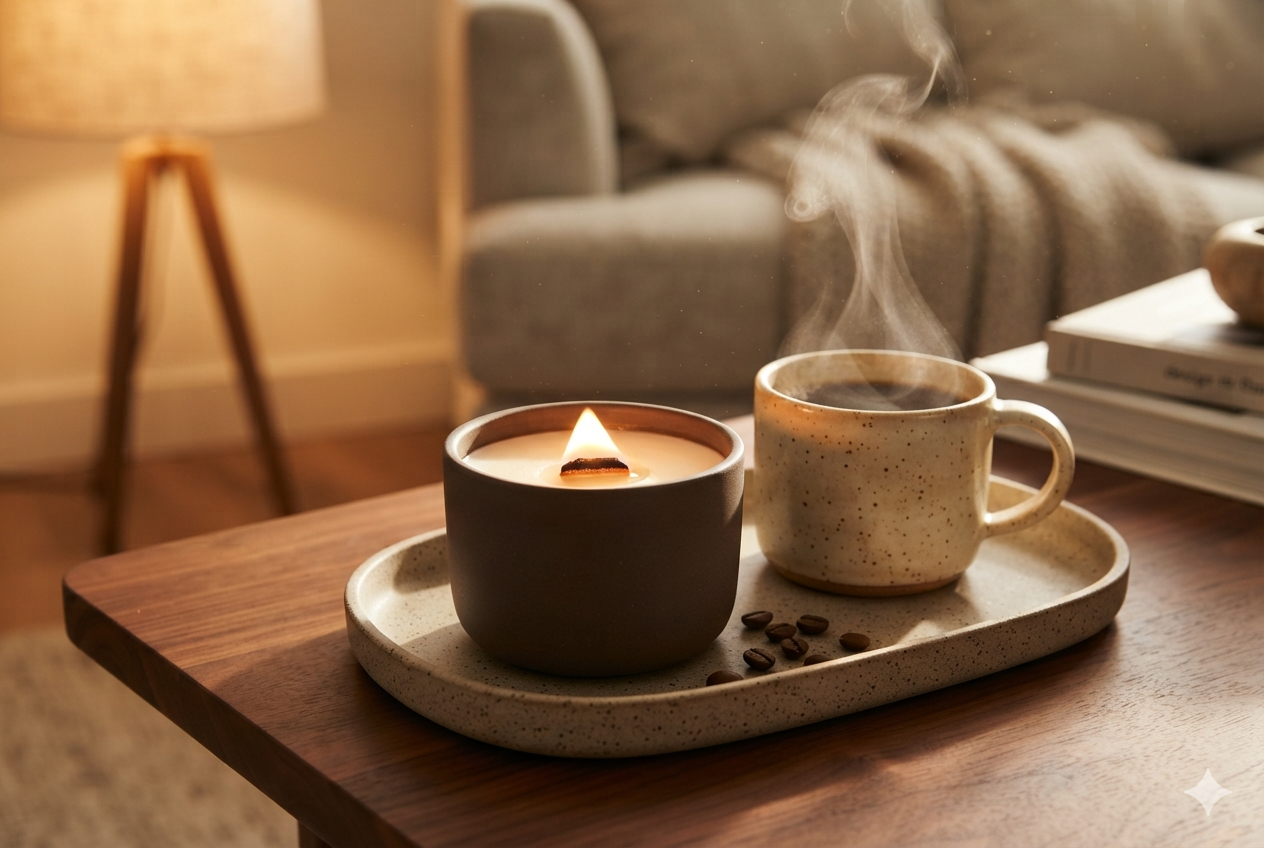
I keep this set of three wood wick soy candles and use the one that matches my winter candle scents routine. They have Canadian Cedar, Black Amber, and Sandalwood in this set. You get the glow, the crackle, and the scent; all in one candle.
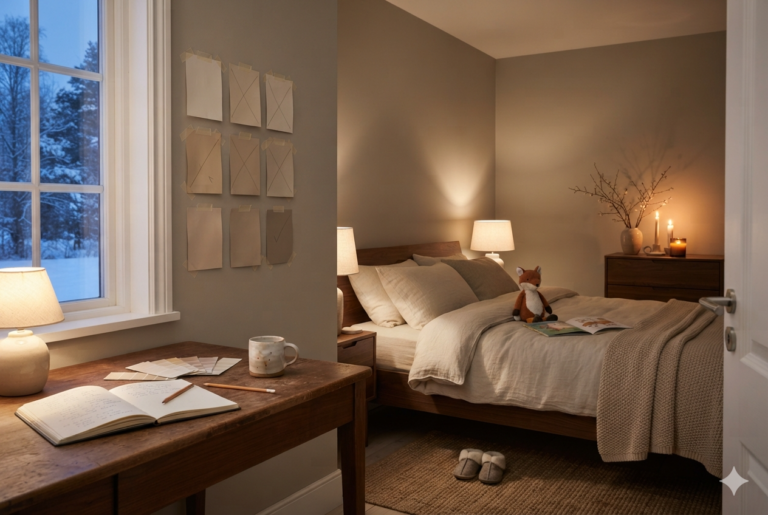
For the bedroom, I prefer Tranquility – Soothing Chamomile & Calming Lavender Essential Oils – Pure Beeswax Aromatherapy Candle. The gentle aroma encourages relaxation, sets the tone for restful sleep when you pull back the covers.
4. Layer with Your Wax and Wick Choice
The material of the candle changes how the scent behaves. As I explained in choosing the right wax for your ritual, soy wax is an excellent carrier for heavy fragrance oils, allowing them to throw well across a room.
Beeswax, on the other hand, has a natural honeyed aroma that pairs beautifully with light winter spices.
Furthermore, if you are adding auditory warmth with wood wicks, the subtle smokiness of the burning wood naturally enhances woodsy or spicy fragrances, while cotton wicks are better suited for delicate, sweet scents.
5. Avoid Scent Overload
In an open floor plan, it is tempting to light a candle in every corner. Resist the urge. The rule is one dominant scent per room.
If your living room smells like cedar and your adjacent kitchen smells like cinnamon, the fragrances will clash in the hallway, creating a muddy, headache-inducing atmosphere rather than a cohesive one.
6. Rotate by Month, Not by Week
The secret to a room feeling anchored to the season is consistency. Changing your candle scent every few days stops your brain from forming a deep olfactory association with the space.
Instead, pick one scent per room per month. Let the cedar candle define the living room for all of October. Let the light vanilla define the bedroom for all of November. This monthly rhythm allows the scent to become a reliable part of the atmosphere.
Dark Season Candle Scent Calendar
If you want to skip the guesswork, I’ve mapped out a Free Dark Season Candle Scent Calendar It breaks down exactly which scent profiles work best for each room and each month, right from October to March.
Click the button above · Enter your email · Check your inbox and confirm the verification email · Your calendar unlocks instantly · NOTE: Check your spam folder too!
7. Store Candles Properly
Fragrance oils degrade when exposed to heat and direct sunlight. Keep your winter candles in a cool, dark cupboard when they are not in use.
Cold storage is actually beneficial for preserving the integrity of the scent, ensuring that the candle you light in February smells just as potent as the one you opened in November.
8. Trust Your Nose, Not the Label
A candle labeled “Winter Pine” might smell like a sharp, artificial Christmas tree lot, or it might smell like a soft, damp forest walk after a snowfall.
The name is often clever marketing and tells you nothing about the actual experience. Always smell a candle in person before committing to a large, expensive vessel or go by trusted recommendations and brands.
The Scent of Being Home
By late evening, the cedar candle on the side table has burned low, its fragrance woven into the wool throws, the wooden coffee table, and the air itself.
Henrik behaves as if he is not even aware of the candle or the scent. He simply takes a deep breath, settles into his armchair, and opens his book. His relaxed mood tells it all.
The best winter candle scents are not the ones that demand attention. They are the ones that disappears into the rhythm of the house—so natural, so familiar—that they become inseparable from the feeling of being home.
Light a candle. Slow down. Hygge.
— Elise