Beeswax vs Soy Candles: Which Is Best for a Cozy Home?
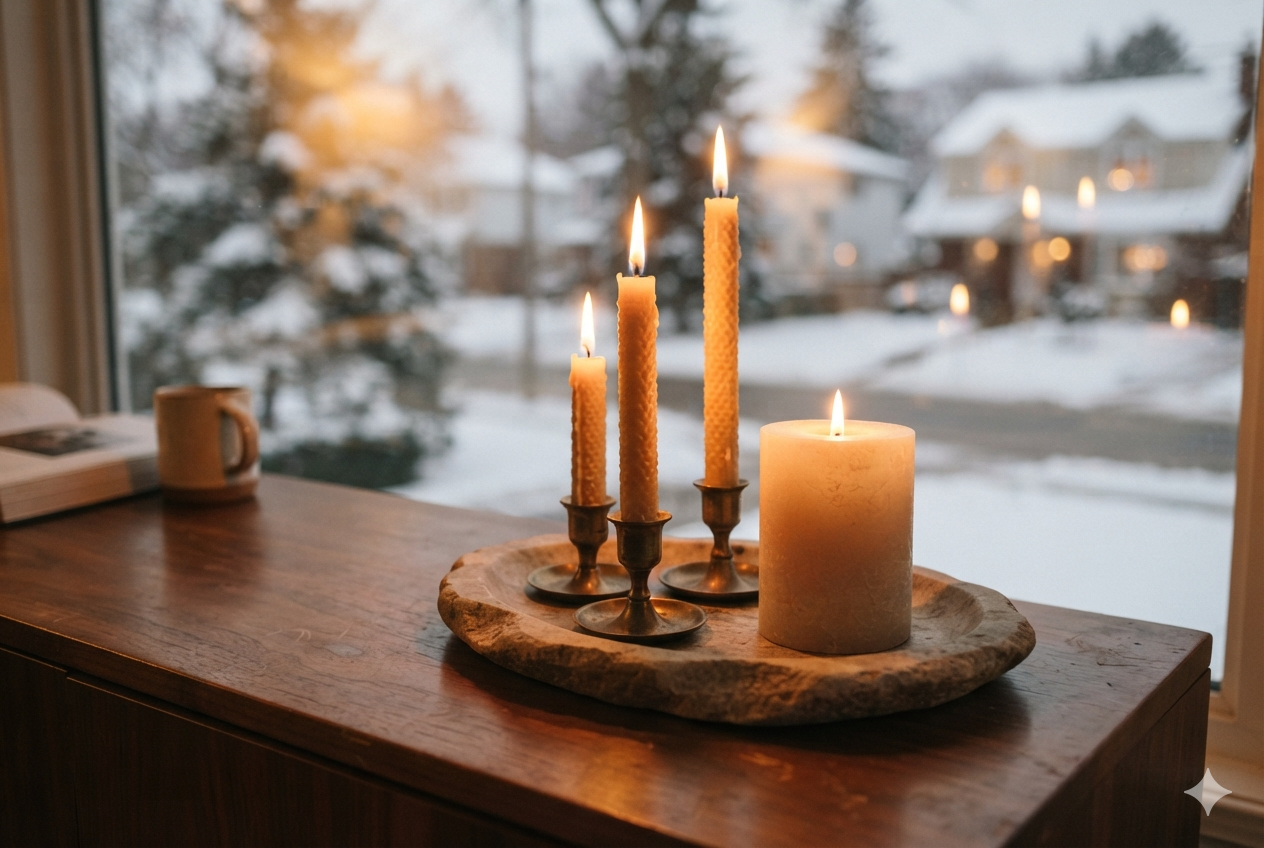
It was half past four on a late November Tuesday, and the kitchen was already sinking into winter shadows. I stood at the island debating which candle to light. There was a pair of beeswax tapers and a thick soy wax pillar candle to pick from.
The beeswax promised a bright, golden flame while the soy candle offered a softer pool of light.
The beeswax would burn slower but not last long enough as it was a slender taper. The soy wax candle might burn faster, yet last long for it was a thick pillar.
I checked the internet but got the usual confusing noise: soy wax condemned as synthetic and toxic, beeswax dismissed as overpriced and smoky. None of it felt useful, or even correct.
Then, I realized the choice wasn’t about chemistry or purity. A candle in a lived‑in home determines the architecture of the evening. The beeswax vs soy candles debate needs no winner.
Both work — it’s about pausing, noticing the room, and choosing the kind of glow the night calls for.
This website participates in the Amazon Associates program. As an Amazon Associate, I earn from qualifying purchases. It also participates in the Impact and AWIN affiliate programs. If you buy through links on this site, I may earn a small commission at no extra cost to you. Thank you for supporting The Hugged Home.
The Science Behind Candle Light
My Danish friend, Astrid, once watched me scrutinize the ingredient list on a new candle, muttering about paraffin blends and clean burns.
“Do not read the candle label like it was medicine, Elise,” she said. “We don’t buy candles to purify the air. We buy them to soften the edges of the room.”
She was right, of course. In our rush to optimize our homes, we sometimes forget the primary purpose of candle light.
The Danish word for candles is levende lys, which translates to “living light.” How true. A flickering flame breathes, moves, and behaves like it’s alive — it flickers, it leans, it asks, in its own small way, to be tended, not turned on.
Beeswax vs Soy Candles: The Science Simplified
However, not all living light is created equal. The wax itself dictates the physics of the flame.
Beeswax has a higher melting point than soy — pound for pound, it burns slower and longer. It also burns hotter and brighter, emitting a fuller spectrum of light that closely mimics natural sunlight. It is a joyful, active kind of light.
Soy wax, derived from hydrogenated soybean oil, has a much lower melting point. It burns cooler, slower, and softer. It is a quiet, resting kind of light.
Understanding this difference is the first step in moving past the anxiety of “right” and “wrong” candles, and instead choosing the right one for the ritual you are trying to build.
How to Choose the Right Wax for Your Ritual
You do not need to purge your home of one type of wax to make room for the other. A well-lived home uses both, depending on the room and the time of day.
Beeswax vs Soy Candles should never be a debate. Here is how to match the wax to the moment.
1. Understanding Burn Time
A thin beeswax taper will naturally burn down in an hour or two. This makes it perfect for a standard family dinner. For dinners with friends, that are likely to last longer, I will light new ones when the first lot is half way done burning.
The Bluecorn Beeswax 12-Inch Ivory Taper Candles are my go-to when I want the holder and the room to remain visually important during the day and the flame to become the focus at night.
In the kitchen or the living room a candle often needs to be burning for much longer. My choice then is Soy Wax Creamy White Pillar Candles.
They last longer, not because soy burns slower, but because a pillar candle has much more wax, allowing it to maintain a steady, even melt pool for dozens of hours.
2. Scented or Unscented?
Beeswax has a very subtle, natural fragrance. When it burns, it releases negative ions that can subtly freshen the air, and it carries a faint, sweet hint of honey.
It is ideal for spaces where you want the atmosphere to feel clean and unadulterated, but you don’t want the candle scent to overwhelm other smells, that of aromatic food, for instance.
Soy wax, in its raw state has a naturally mild, slightly sweet, and almost neutral smell. It is, however, an excellent carrier for fragrance oils.
This gives you a choice of an unscented soy wax candle for the kitchen and maybe a cedar scented one for the entryway.
If you want your hallway to smell like cedar and rain, or your bathroom to carry a hint of lavender, a high-quality soy blend will deliver that engineered scent throw far more effectively than beeswax ever could.
3. Match the Wax and the Scent to the Room
I keep beeswax tapers and pillars in the dining room. The dining table benefits from the golden-hour glow that makes even an ordinary Tuesday pasta feel like a feast.
I reserve soy wax pillar candles for most other rooms. It is always unscented in the kitchen as I would rather be smelling soup.
The bedroom gets the one with lavender or chamomile. I find the smell calming. I quite like the Bare Botanics Non Toxic Soy Candle Lavender Fields as it uses clean burning soy wax infused with 100% plant-based fragrance oils.
The entryway and living room need a bright, welcoming flare to cut through the winter gloom. My preference here is for grounding, woody scents like sandalwood and cedar, or crisp, uplifting notes like citrus and bergamot.
4. Do Not Ignore the Wick
The wax gets all the attention, but the wick controls the burn. A cotton wick is traditional and reliable for both waxes.
However, a flat wooden wick in a soy candle can be a secret weapon for hygge. The soft, intermittent crackle mimics a fireplace, adding an auditory layer of warmth that perfectly complements the cooler burn of the soy.
5. Trim the Wick to Prevent Soot
The fear of black soot is the main driver behind the anti-paraffin sentiment online. Pure beeswax, however, is renowned for being one of the cleanest-burning waxes available. Pure soy wax candles do soot, but it is minimal.
However, there is a catch: any candle will produce black smoke and carbon deposits if the wick is too long. A long wick drowns in the melt pool or flares up, creating smoke regardless of whether it is sitting in soy or beeswax
The secret to a clean burn isn’t just the wax you choose; it is the simple, non-negotiable habit of trimming the wick to a quarter-inch before every single light. A well-trimmed wick makes any wax clean.
Always trim your wick to a quarter-inch before lighting. I recently bought a Foton Candles Care Kit that has a luxury candle kit featuring a USB-rechargeable electric lighter, a wick cutter, flame snuffer, and wick dipper. Love it, its really a all-in-one tool!
6. Light Them to Reveal their Beauty
A candle in a store often looks exquisite because of what the marketing guys do to its packaging, color, styling, etc. No wonder, many never light them. But to me the true beauty of candles is revealed when it has burnt half way.
When beeswax taper candles are lit, the flickering flame draws the attention while the candle itself is content to drip softly and bask in its glow. A true hyggelig spirit!
I use simple brass catchers beneath my tapers to capture the golden runoff, which I later melt down for fire starters.
Soy candles, poured into vessels, offer a different kind of satisfaction. Once the wax is gone, a heavy ceramic or glass jar can be repurposed for holding wooden spoons in the kitchen or toothbrushes in the bathroom.
7. Why are Prices so Different?
Beeswax is undeniably more expensive. It is a natural product with a limited supply. Foraging or harvesting for beeswax is highly labor intensive. The bees need to work hard too! (They must consume 8 lbs of honey to produce 1 lb of wax.)
Soy wax is generally more affordable and widely available. Soybeans are mechanically harvested by combines over thousands of acres, and automatically crushed for oil in large plants. Soy wax is just the byproduct.
Do not feel pressured to buy expensive beeswax for every corner of your house.
Spend your budget on the beeswax tapers that will be the focal point of your dinner table rituals, and rely on affordable, high-quality soy blends for the background ambiance of styling your winter mantel.
The Light That Remains
I put my phone away that Tuesday evening. I chose the beeswax tapers for dinner. Their bright, clean light made the faces of my family look warm and present as we ate, and the faint scent of honey was refreshing.
Later, after the dishes were cleared and the house had settled into silence, Henrik lit the cluster of soy wax pillar candles in the living room. The slower, softer flame made our moods more relaxed.
An hour later, I walked past the living room door. Henrik was dozing in his cream armchair, a book resting open on his lap. The soy wax pillar candles were still burning, casting long, gentle shadows against the wall.
On the dining table, the beeswax tapers had been snuffed out long ago with a brass lyseslukker, leaving only a faint, sweet trace of honey in the air.
If you want to dive deeper, check out my article on hygge candles.
Light a candle. Slow down. Hygge.
— Elise