Winter Table Setting: 5 Hygge Tables for the Dark Season
It was a Tuesday night in late October, the kind where the dark presses against the windows by five o’clock. Henrik and I were eating Thai takeout over the kitchen island, balancing cardboard containers on our laps.
Behind us, the dining room was silent. Our solid walnut dining table was currently serving as a very expensive, very large landing strip for unfiled mail, Maja’s forgotten gym bag, and Henrik’s laptop.
This website participates in the Amazon Associates program. As an Amazon Associate, I earn from qualifying purchases. It also participates in the Impact and AWIN affiliate programs. If you buy through links on this site, I may earn a small commission at no extra cost to you. Thank you for supporting The Hugged Home.
The Science of the Shared Table
The dining table had not changed when Astrid came over for coffee the next morning. She walked past the island, looked at the buried dining table, and paused.
“The dining table is the only place you are forced to look at each other,” she said, moving a stack of catalogs to the sideboard. “Why are you not using it?”
She was right. Anthropologists have a word for the act of eating together at a dedicated table: commensality. It is one of the oldest human rituals we have.
Sharing a meal in a warmly lit, intentional space lowers cortisol, synchronizes our nervous systems, and builds the social bonds that get us through the long dark.
The dining table isn’t just a piece of furniture. In the Dark Season, it is an anchor.
A hygge dining room doesn’t require a renovation. It requires a cleared surface and a shift in how we dress it.
Here is how we now style our walnut table across the five months of the North American winter, moving from the first frost to the spring thaw.
The First Frost (Grounding & Gratitude)
November is a transitional month. The autumn leaves are gone, the snow hasn’t quite stuck, and the American holiday machinery is ramping up.
The goal for a November table setting is to strip away the commercial clutter and return to the earth.
The Base & Linens
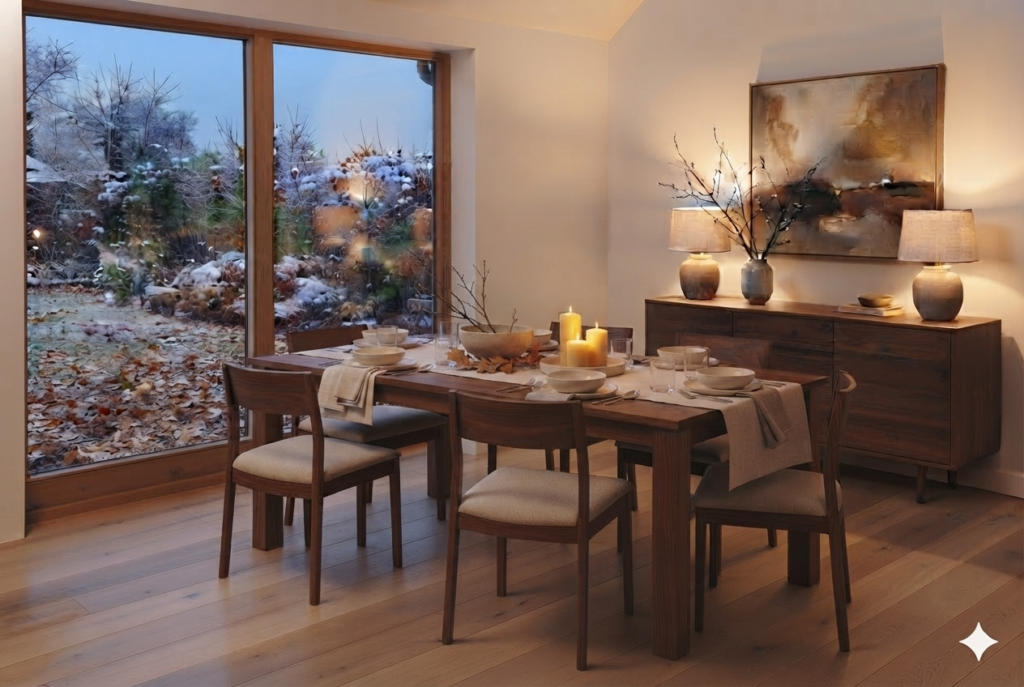
We leave the walnut wood mostly bare, protecting only the center with a washed, oat-colored linen runner. Linen softens beautifully with every wash, catching the low autumn light without reflecting it.
The Centerpiece
Foraged bare twigs and dried oak leaves gathered on a Sunday walk, arranged in a heavy, unglazed ceramic bowl. It is a hygge Thanksgiving table that honors the harvest without relying on plastic cornucopias or novelty gourds.
The Light
A cluster of three thick, unscented beeswax pillar candles at varying heights. We use Bluecorn Beeswax pillars because they burn cleanly, drip less than paraffin, and carry a faint, natural honey scent that doesn’t compete with the food.
The Solstice Table (Candlelight & Evergreen)
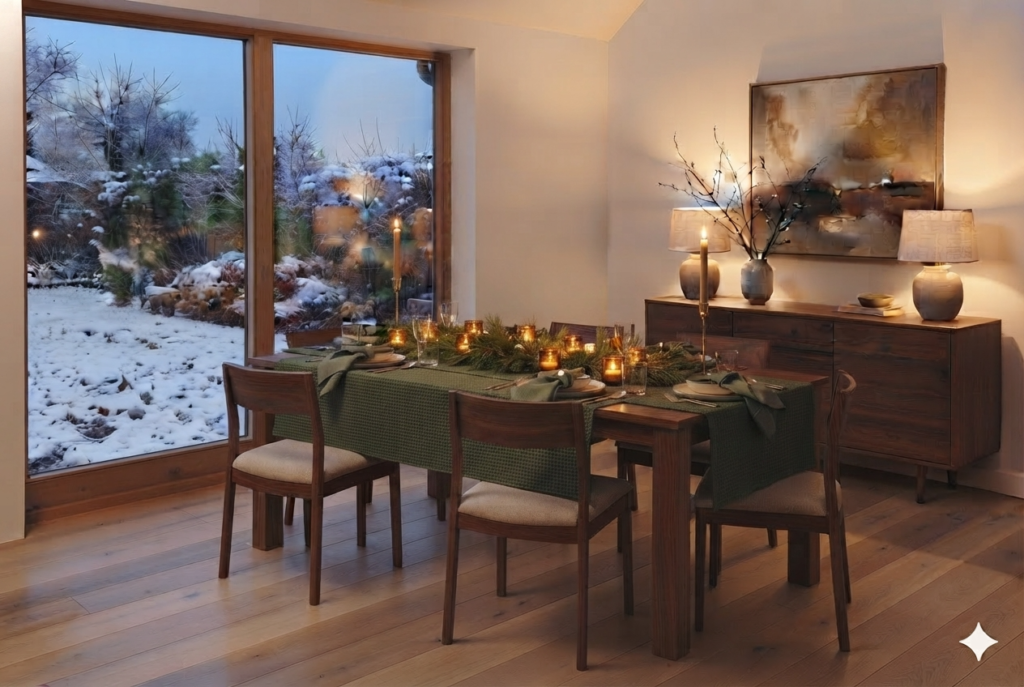
December is the peak of the Dark Season. The holidays are here, but a Scandinavian Christmas table focuses on warmth, light, and nature rather than flashing bulbs and synthetic red-and-green runners.
The Base & Linens
We swap the linen for a heavyweight, waffle-weave cotton runner in a deep charcoal or forest green. Heavier textiles absorb the sound of clinking silverware and echoing laughter, making the room feel instantly more intimate.
The Centerpiece
A low, living garland of pine and cedar weaving directly down the center of the table. No vases, no towering floral arrangements. Just greenery, dotted with small amber glass votives that catch the flame and cast a honeyed glow onto the wood.
The Light
Levende lys—living light. The overhead fixture stays strictly off. The only illumination comes from the garland votives and two tall taper candles at either end of the table. This is the ultimate holiday table setting idea: let the fire do the decorating.
The Deep Freeze (Texture & Hibernation)
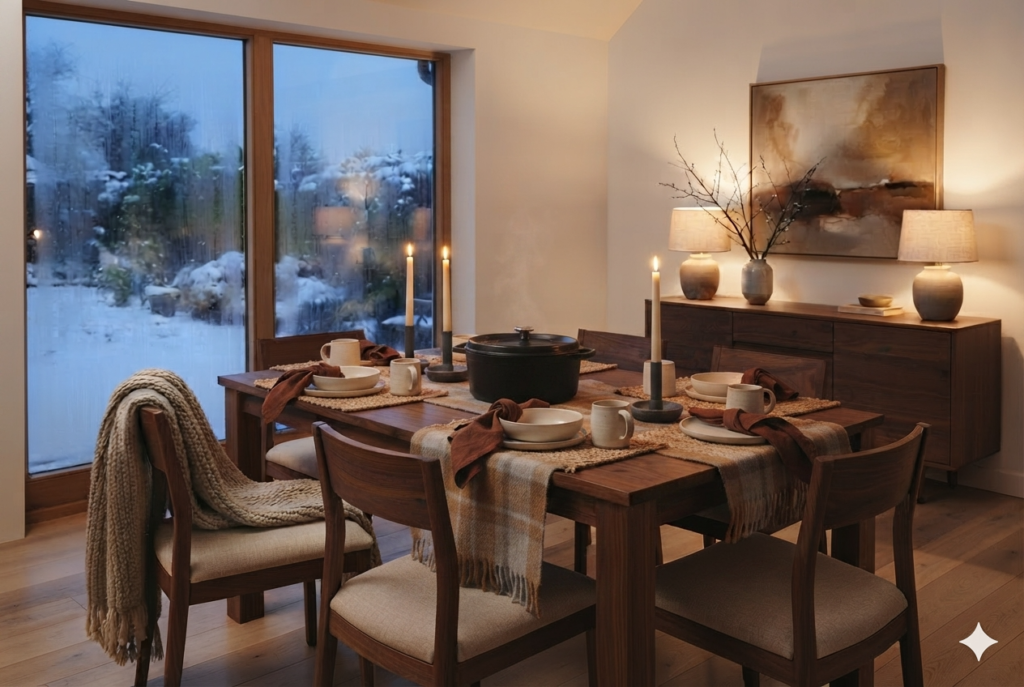
January is the coldest, darkest month. The holiday adrenaline has worn off, and winter fatigue sets in. The table needs to feel like a warm shelter. A cozy winter tablescape in January is all about maximum tactile comfort.
The Base & Linens
Layering is key. We place woven jute placemats at each setting, then run a slightly softened, heavy wool blanket down the center of the table as a runner. The texture invites you to rest your forearms and stay a while.
The Centerpiece
In January, the centerpiece is the food itself. We place a heavy, enameled cast-iron Dutch oven or a beautiful stoneware casserole dish directly in the center of the wool runner.
Family-style serving is the ultimate family-style hygge dining hack. Passing heavy, warm dishes across the table forces interaction and slows the meal down.
The Textiles
Mismatched, vintage linen napkins and heavy, hand-thrown stoneware mugs for hot cider or gløgg after the plates are cleared.
The Long Dark (Intimacy & Warmth)
By February, the novelty of winter has entirely worn off. It is the month of Valentine’s Day, but we skip the commercial red hearts and paper cutouts.
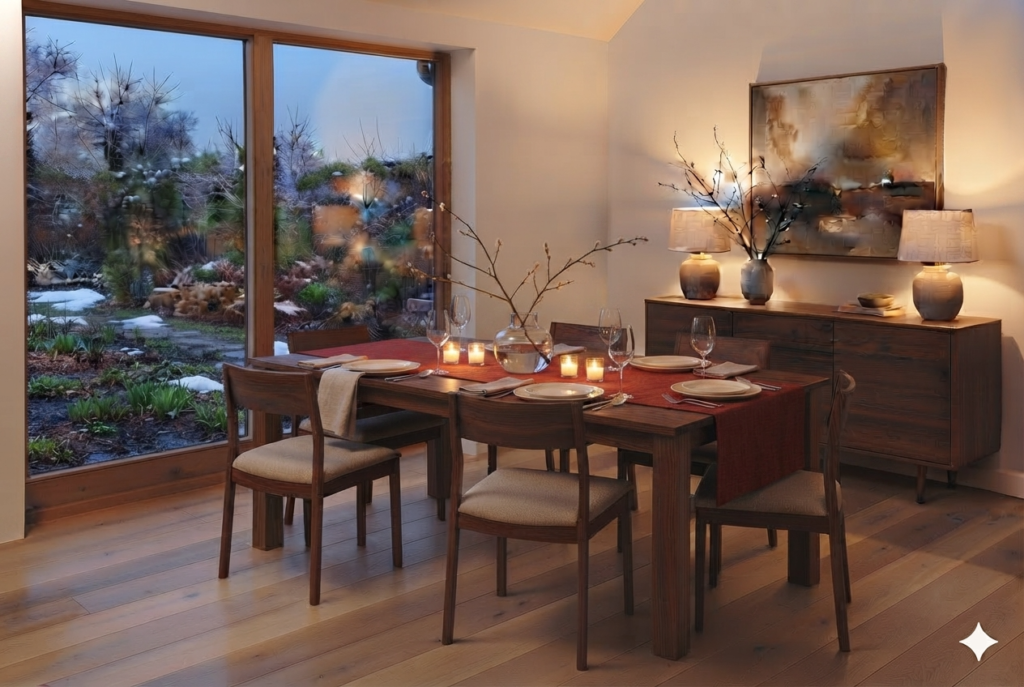
A romantic winter table in a hygge home relies on deep, moody warmth and quiet intimacy.
The Base & Linens
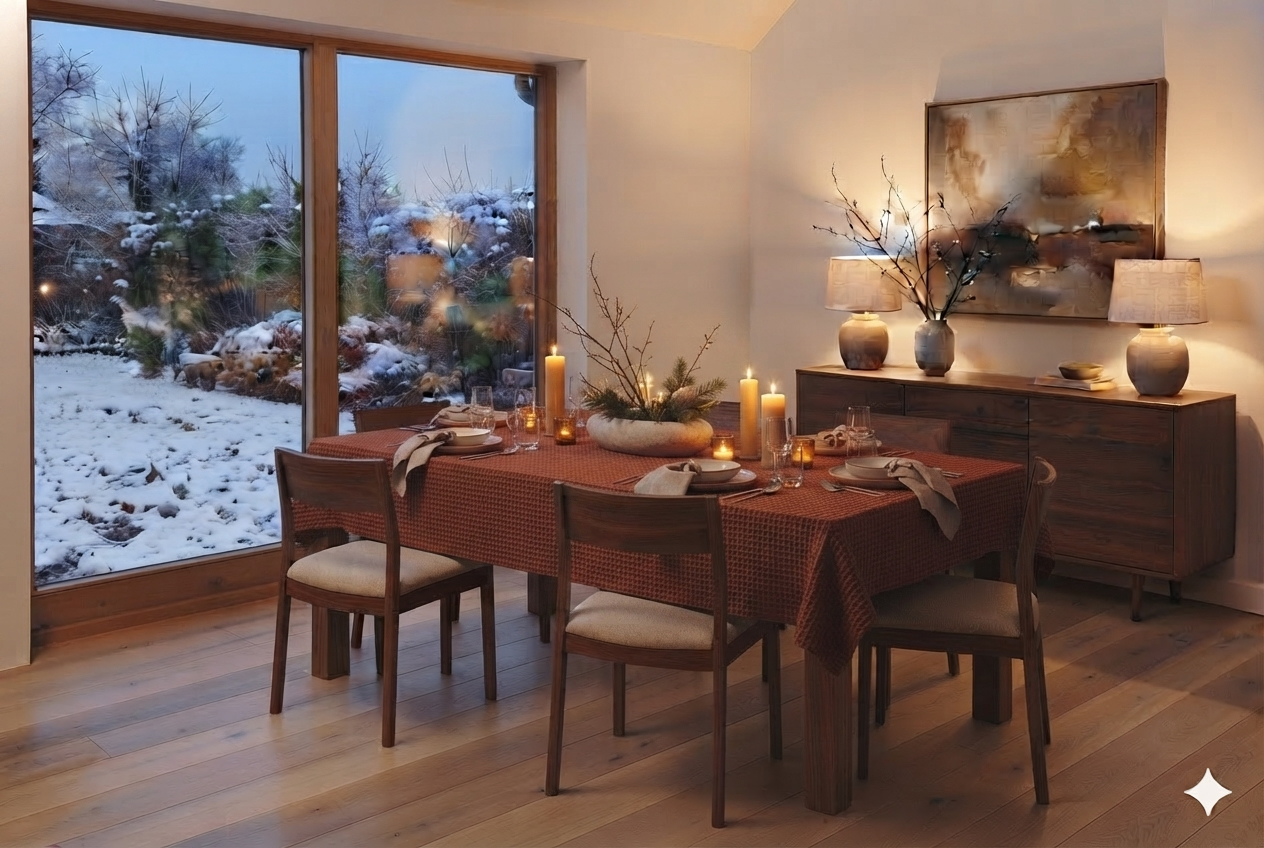
A faded, brick-red or rust-colored cotton tablecloth. It has been washed dozens of times, so it drapes heavily over the edges of the walnut table, softening the room acoustics and wrapping the space in color.
The Centerpiece
A single, dramatic branch of a blooming winter-forcing—like pussy willow or forsythia—placed in a clear, heavy glass vessel. It is surrounded by low, warm taper candles in unpolished brass holders.
The Light
The overhead fixture stays dark, as always. Instead, we rely entirely on the flicker of the tapers and a small, low-wattage table lamp with a linen shade placed on the dining room sideboard.
It casts long, soft shadows against the walls, creating an intimate dinner setting designed for long conversations and second glasses of wine.
The Coming Thaw (Anticipation & Light)
March is mud season. The snow is melting into gray slush, but the afternoons are stretching longer. The light is returning, and the table should reflect that quiet hope.
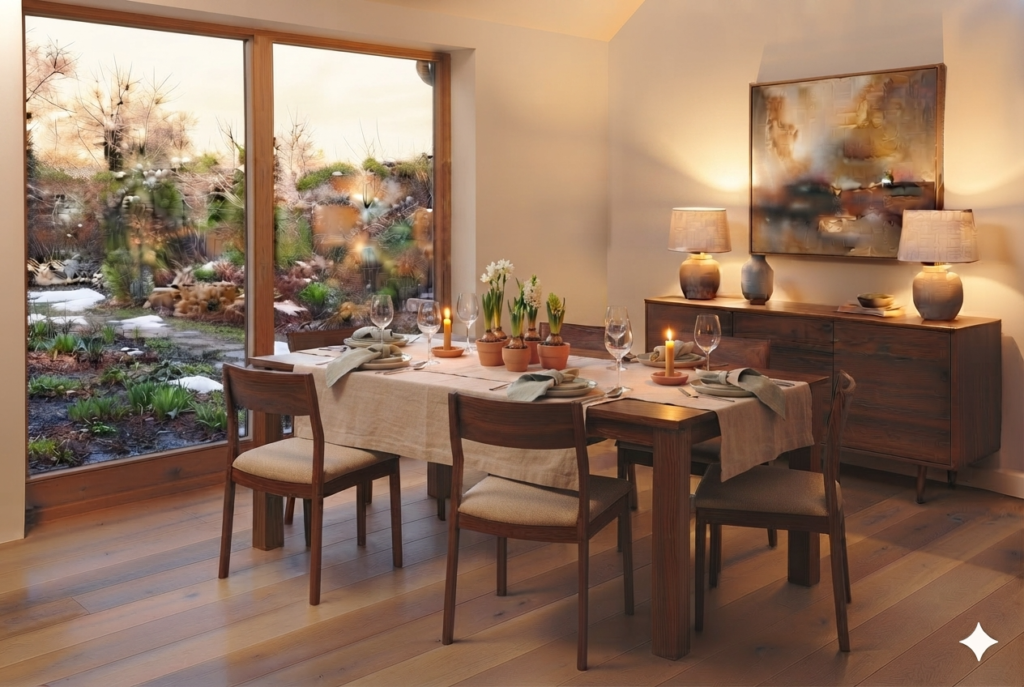
An early spring table setting bridges the gap between winter hibernation and outdoor living.
The Base & Linens
We return to a crisp, unbleached cotton or a light sand-colored linen runner. The heavy wools and dark brick-reds are washed and packed away.
The Centerpiece
Potted spring bulbs—paperwhites or hyacinths—planted in simple terracotta pots, grouped in a tight cluster of three in the center of the table. They bring a sudden, startling burst of green and the faint, clean scent of damp earth indoors.
The Light
March is the month we finally open the blinds and let the late afternoon sun do the decorating. We swap the heavy, dark winter stoneware for lighter, handmade ceramic plates in cream and sage.
When the returning sun finally breaks through the clouds, it catches the pale glaze on the plates and bounces a soft, warm glow back into the room.
Three Rules for a Hygge Winter Table Setting
Styling a table is easy. Keeping it usable is the practice.
1. Lower the eye level.
A centerpiece should never block your view. If you have to lean left or right to see the person sitting across from you, the arrangement is too tall.
Keep candles and branches low. Commensality requires eye contact.
2. Embrace the Arv (Legacy).
Arv is the Danish concept of inheritance. Use the good things now. Use the heavy silver, the crystal glasses, the heirloom plates. Do not save them for a hypothetical “special occasion” while eating off paper towels on a Tuesday.
The gathering is the occasion.
3. Never use the overhead light.
We have covered the 2700K rule in every room of this house, and the dining room is no exception. Bright, cool overhead lighting flattens the room, exposes every crumb, and kills intimacy.
Dim the pendants, light the tapers, and let the shadows do the work.
The Quiet After the Gathering
The best part of a winter table setting isn’t the moment the guests arrive. It is the quiet that settles in after the plates are cleared.
It is 11:00 PM. The beeswax candles have burned down to soft, golden pools on the brass holders. The room still smells faintly of pine and roasted garlic.
Henrik is in the kitchen, humming quietly as he stacks the heavy stoneware. The girls are asleep down the hall. The dining room is dim, warm, and entirely at peace.
The table has done its job. It held us, fed us, and kept the dark season at bay for one more night.
P.S. If your dining room lighting still feels clinical, read the Hygge Kitchen Task Lighting Guide next. The 2700K rule applies everywhere.
Light a candle. Slow down. Hygge.
— Elise