
5 Cast Iron Dutch Oven Rituals for a Hygge Winter: The Scent of Hygge
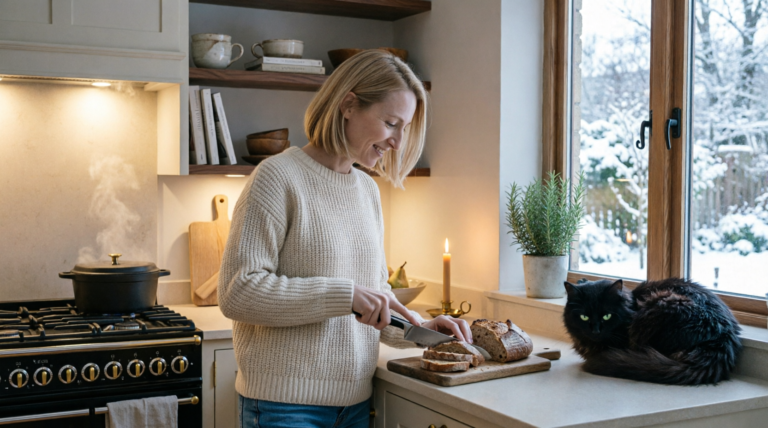
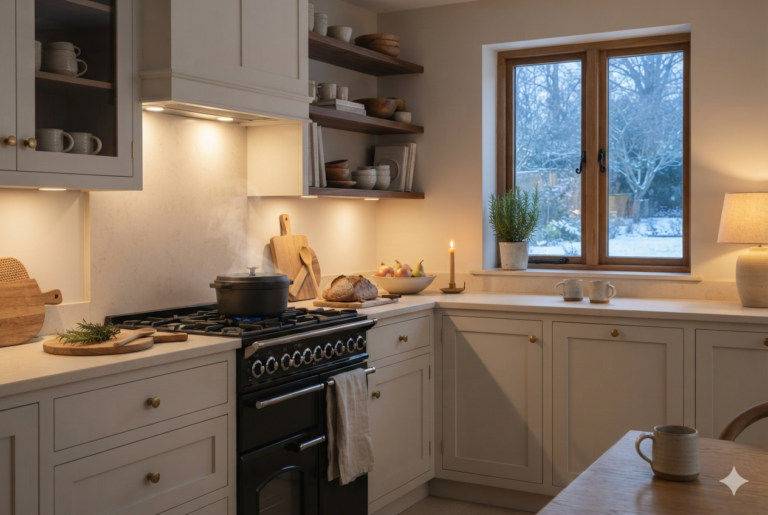
My Cast Iron Dutch Oven (family workhorse) rarely leaves the stove between October and March. It goes from soup to bread to porridge and back again.
On special holidays or if we are having guests over, usually on a Saturday, I bring out my “comfort companion” to make mulled wine. Quite often, I also use a larger cast iron Dutch oven to roast chicken or bake bread for the feast.
This website participates in the Amazon Associates program. As an Amazon Associate, I earn from qualifying purchases. It also participates in the Impact and AWIN affiliate programs. If you buy through links on this site, I may earn a small commission at no extra cost to you. Thank you for supporting The Hugged Home.
The Pot That Runs This Kitchen All Winter
I have had my 7-quart cast iron Dutch oven ever since Astrid introduced it to me. I retired my slow cooker and have not looked back.
The model I have no longer looks pretty, but it is heavy and large, and that’s the entire point. The thick cast iron walls distribute heat evenly and release it slowly. Soup left on low stays at a gentle simmer instead of scorching.
A loaf of sourdough bread bakes with real steam trapped under the lid, instead of drying out in an open oven. I also use it for grilling beef steaks or frying shrimp tempura. In short, it is versatile.
This cast iron Dutch oven is certainly not for decoration. It’s on the stove because it’s the family workhorse, mid-rotation more often than it’s empty. Putting it away between uses would mean pretending we use it less than we do.
By now, I have actually fallen into 5 Cast Iron Dutch Oven Rituals that make winter one of my favorite seasons. Here they are:
Ritual One: The Aromatic Sunday Stew
This is a winter Sunday ritual — the one Henrik and I have kept going since our first winter in this house with the cast iron Dutch oven.
This is the recipe that I use and I am sure it works as the house smells heavenly. Henrik and the girls are always asking for second helpings.
Ingredients
Equipment
Method
- Season the pork loin generously with salt and pepper. Sear on all sides in hot oil in the Dutch oven until browned, then remove and set aside.
- Add the onion, carrots, and potatoes to the pot, tossing briefly in the drippings.
- Whisk the apple cider and mustard together and pour over the vegetables.
- Nestle the pork loin back into the pot on top of the vegetables. Add the rosemary sprigs.
- Cover and roast at 325°F for about 1½ hours, until the pork reaches an internal temperature of 145°F.
- Rest the roast 10 minutes before slicing. Serve with the vegetables and pan juices spooned over.
This beef stew is, without doubt, the most hearty and comforting food we have all winter!
Ritual Two: The Slow Cooked Pork Roast
Some Sundays call for something more substantial than a beef stew. That is when I fall back to another of my winter favorites — a pork loin roast cooked slowly in the cast iron Dutch oven.
The name of the game is low, slow, and mostly left alone. The end result, juicy, melt-in-your-mouth pork to die for!
Ingredients
Equipment
Method
- Season the pork loin generously with salt and pepper. Sear on all sides in hot oil in the Dutch oven until browned, then remove and set aside.
- Add the onion, carrots, and potatoes to the pot, tossing briefly in the drippings.
- Whisk the apple cider and mustard together and pour over the vegetables.
- Nestle the pork loin back into the pot on top of the vegetables. Add the rosemary sprigs.
- Cover and roast at 325°F for about 1½ hours, until the pork reaches an internal temperature of 145°F.
- Rest the roast 10 minutes before slicing. Serve with the vegetables and pan juices spooned over.
Henrik loves to contribute to this winter ritual by carving the roast on the dinner table.
Ritual Three: The Crust You Can Hear
Bread in this pot behaves differently than bread in any other pan we own. The heavy lid traps the loaf’s own steam and gives it a real crust — the kind that crackles as it cools on the counter.
Ingredients
Equipment
Method
- Stir the flour, salt, yeast, and water together in a large bowl until just combined — the dough will be shaggy, not smooth.
- Cover and let rest at room temperature for 12–18 hours, or overnight.
- Turn the dough onto a floured surface and shape it into a rough ball. Let it rest, covered, for 30 minutes.
- Meanwhile, place the empty Dutch oven (with lid) into the oven and preheat to 450°F for the last 30 minutes of the dough’s rest.
- Carefully drop the dough into the hot pot. Cover and bake 25 minutes.
- Remove the lid and bake 15 minutes more, until the crust is deeply golden.
- Cool on a rack at least 20 minutes before slicing.
Lifting that lid for the first time, steam rising off a crust that’s gone properly dark, is as close to a guaranteed good moment as this kitchen has to offer.
Ritual Four: The Porridge That Warms the Heart
Some evenings call for something simpler than soup and less involved than a roast. On those days I like to make Rømmegrøt based on a recipe Astrid taught me.
Rømmegrøt — Norwegian sour cream porridge, rich and faintly tangy, traditionally eaten as kveldsmat, evening supper — is perfect for a cast iron Dutch oven.
The porridge needs the pot’s even heat to avoid scorching while it’s thickening.
Ingredients
Equipment
Method
- Bring the sour cream to a gentle simmer in the Dutch oven over medium-low heat.
- Whisk in the flour a little at a time, stirring constantly, until the butterfat begins to separate and rise to the surface.
- Skim off the golden butter and set it aside.
- Gradually whisk in the warmed milk until the porridge is smooth and pourable. Season with salt.
- Ladle into bowls, drizzle with the reserved butter, and dust with cinnamon sugar.
It’s not a Christmas dish here, whatever it might be elsewhere. It’s just what a cold Tuesday sometimes wants.
Ritual Five: Gløgg — Nordic Mulled Wine
Gløgg — Scandinavian mulled wine — gets its own slow simmer on evenings when Astrid’s coming over, or when I need an excuse to make the house smell like cardamom and orange for a few hours.
Ingredients
Equipment
Method
- Combine the wine, brandy, cinnamon, cloves, cardamom, and orange peel in the Dutch oven.
- Warm gently over low heat for 20 minutes. Do not let it boil.
- Stir in the honey just before serving.
- Ladle into mugs, adding a few raisins and one almond to each, the traditional way.
In December, on more afternoons that I care to count, I light a candle, place it on the kitchen counter top, pull out the smallest of my cast iron Dutch ovens and get to work on this heavenly drink!
My Cast Iron Dutch Oven Collection
By now I have collected three cast iron Dutch ovens, different sizes for different uses. Each one has earned its place in my kitchen.
The Daily Family Workhorse
The round shape aligns perfectly with standard circular stovetop burners for efficient, even heating. This is the Dutch oven I reach for when dinner needs to happen without fuss.
- Sourdough bread
- Weeknight chilis
- Slow-simmered marinara
- Cozy risottos
The Entertaining & Feast Hero
The elongated base accommodates long cuts of meat cleanly while maximizing horizontal oven heat circulation. It is the one I bring out when the table is full and dinner feels like an occasion.
- Whole roasted holiday chickens
- Pork loins
- Braised short ribs
- Large batard bread loaves
The Comfort Companion
Smaller, shallower, and wonderfully maneuverable, this is the Dutch oven I use when a full-size pot simply feels like too much. It is especially lovely for small-batch comfort food.
- Hot cinnamon cocoa
- Warm holiday mulled wine
- Stovetop oats
- Small side casseroles
The family workhorse sits on the back burner when not in use. I do not bother to put it on the shelf. Sooner rather than later, I will be cooking something or the other in it.
The other two stay on the open shelf, partly as kitchen decor, mostly ready for the call of duty, which is often during winter, particularly between Thanksgiving and New Year’s Eve.
Keeping It for Decades, Not Just This Winter
Care is simple, not precious: hand wash with hot water and a stiff brush, usually no soap unless something’s really stuck, dry it completely on the stove over low heat, then a thin wipe of oil while it’s still warm.
After this rather simple clean-up, the cast iron Dutch oven goes to either the back burner or the open kitchen shelf, as the case may be. That’s the whole routine, and it’s the reason a pot bought once can outlast the kitchen it started in.
That’s the same logic behind everything in this house that’s built to last rather than replace — an arv in the making, the same way the oak dresser is. [→ Solid Wood Furniture]
The Pot We’ll Still Have in Twenty Years
Maja asked last week if the pot would still be around when she has her own kitchen. I told her it would outlast several kitchens, hers included, if nobody’s careless with it.
She seemed satisfied with that answer. She’s not entirely wrong to think of it that way. Some things in this house are decoration. Others, like these cast iron Dutch ovens, are here to stay and be passed on to the next generation.
For the full picture of how this kitchen works all winter, see the complete guide: Hygge Kitchen.
Light a candle. Slow down. Hygge.
— Elise