How to Style Taper Candles: The Danish Art of Levende Lys
It was late November in Minneapolis, that bleak stretch of winter when four o’clock looks suspiciously like midnight.
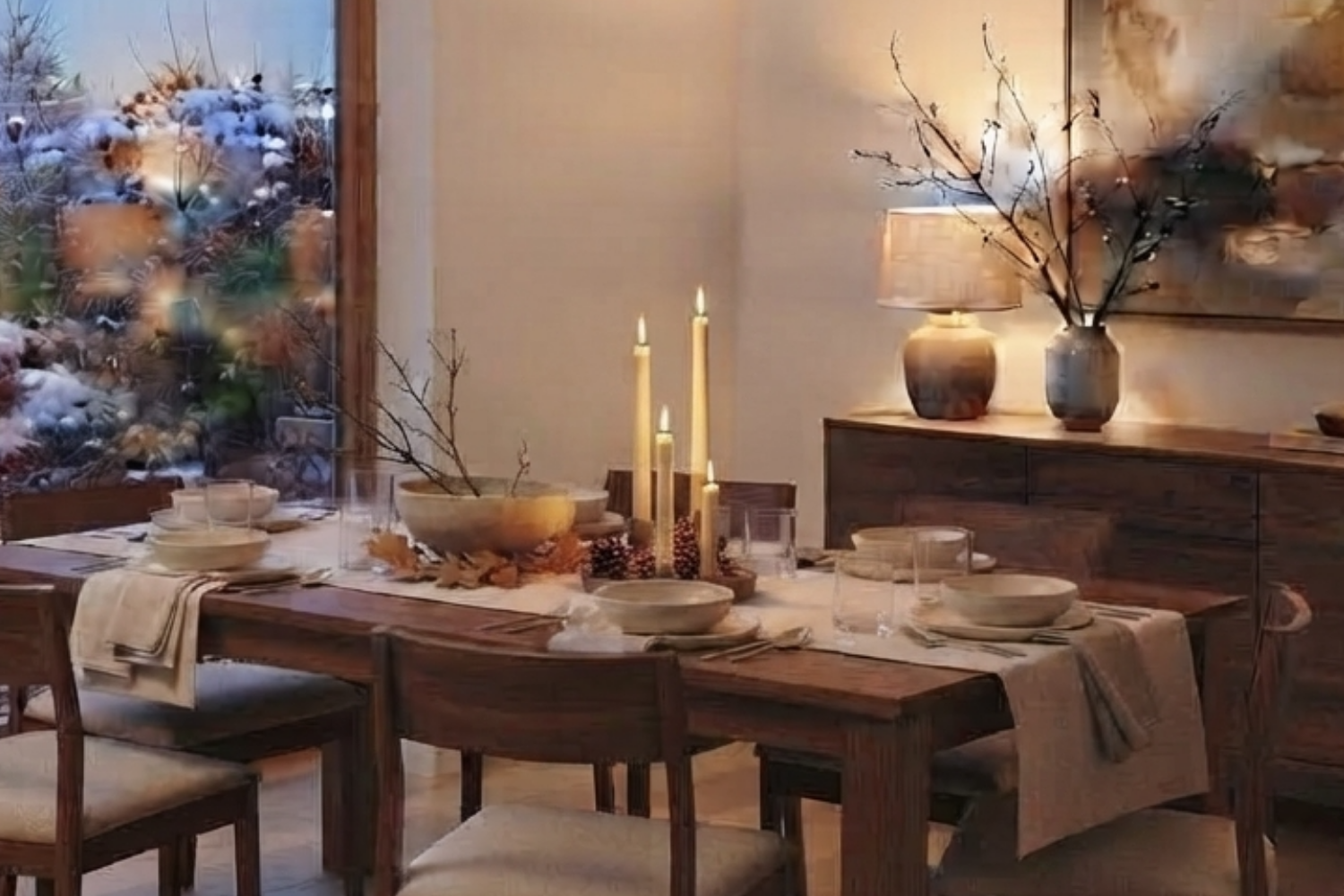
Eager to make the room inviting, I set the dining table with an ivory linen runner and four taper candles in brass holders. Everything was tidy, balanced, and perfectly uniform.
Then Astrid arrived for dinner, took one look at the table, and immediately nudged the center candlestick out of line.
“Wait,” I said. “I had those arranged.” She smiled. “Arranged for a magazine photoshoot, or for a cozy dinner?”
The Danes call candles levende lys—“living light”. Without realizing it, I had taken something living and regimented it.
A taper candle ceases to be mere decor the moment it is lit. The flame dances, the wax yields, and the light plays an unpredictable game of shadows against the walls.
How to style taper candles isn’t about arranging physical objects. It is about curating what the light will do.
This website participates in the Amazon Associates program. As an Amazon Associate, I earn from qualifying purchases. It also participates in the Impact and AWIN affiliate programs. If you buy through links on this site, I may earn a small commission at no extra cost to you. Thank you for supporting The Hugged Home.
You Don’t Style the Candle. You Style the Light.
Astrid’s approach to lighting starts with the room itself—analyzing where people gather and how the space behaves after dark before deciding where a candle belongs.
Taper candles are not designed to flood a room with wall-to-wall visibility; their purpose is to layer an entirely separate dimension of warmth and movement into the home.
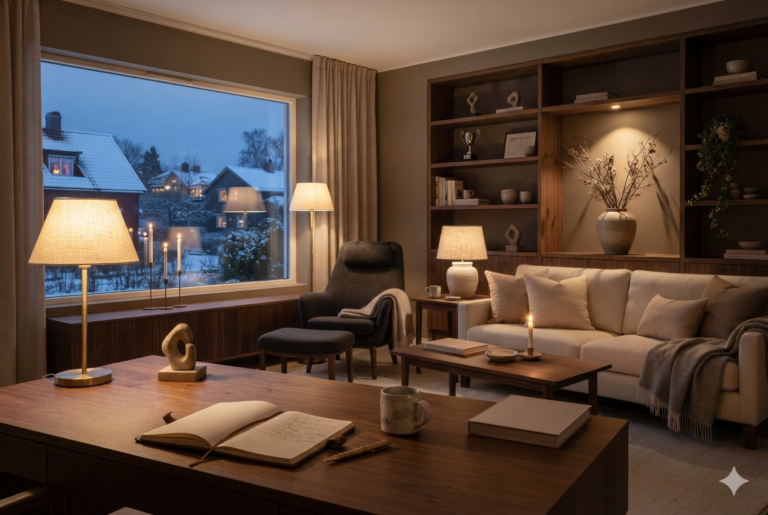
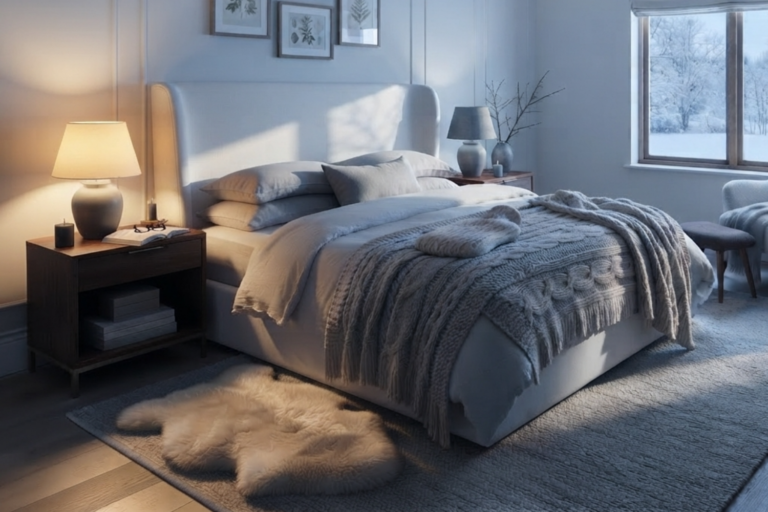
To create a truly hyggelig environment, a room needs a careful balance of different light sources working in harmony.
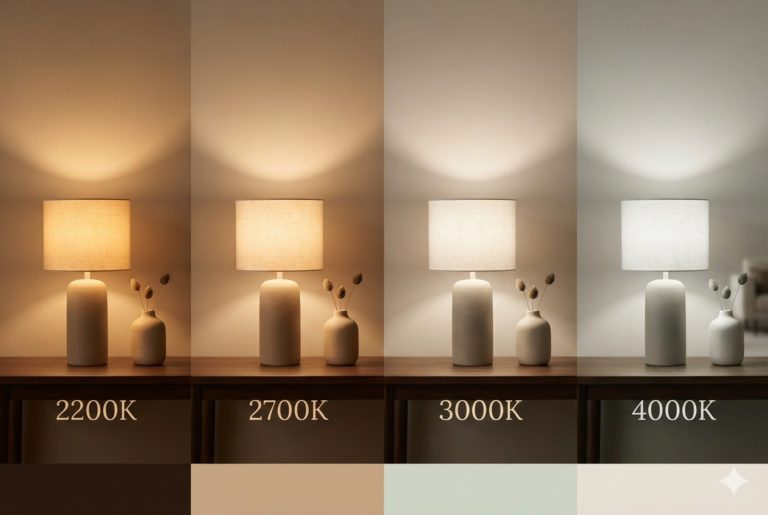
The foundational baseline of light is best anchored by low table lamps using soft-white bulbs around 2700 Kelvin. The magic happens when you introduce taper candles.
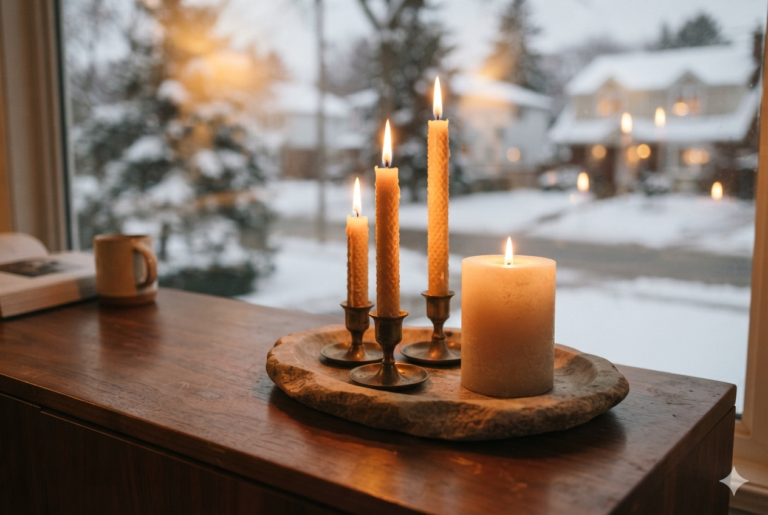
Burning at a much deeper, primal amber hue between 1800 and 2200 Kelvin, the flame pulls the eye inward. A lamp gives you enough light to read a book, but a candle gives the room its heartbeat.
How to Style Taper Candles: The Only 10 Tips You Really Need
1. Start with where the light needs to land
Before choosing a candle color or another set of holders, stand in the room after dark and look around.
This sounds obvious, but most of us decorate during the day. We arrange a dining table at eleven in the morning and assume the same arrangement will work at seven in the evening.
Then the sun goes down, the candles are lit, and suddenly the light is either shining directly into someone’s face or disappearing behind a centerpiece.
Think about where people will actually be.
On the dining table, taper candles should create warmth without blocking the people sitting across from one another.
On a mantel, they can sit higher because the flame is meant to become part of the room’s larger evening glow.
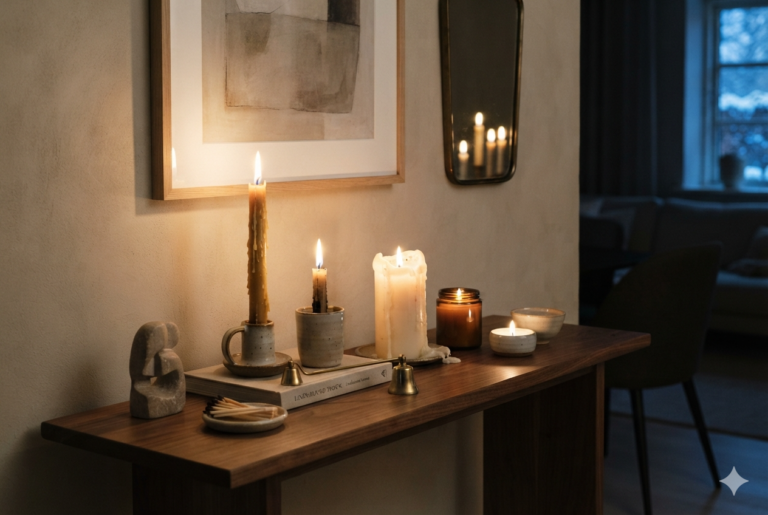
On a console table, one or two candles can create a welcoming point of light when you walk through the door after dark.
The same principle applies throughout the house: the candle belongs where its light improves the experience of being there.
That is why I rarely use candles as filler anymore. An empty surface does not automatically need a candlestick. Sometimes the surface is supposed to remain empty.
2. Build height the way you build a conversation
Once you know where the candles belong, the next question is height.
Three identical candlesticks can work beautifully, particularly on a formal table, but they create a very different feeling from three holders of slightly different heights.
When the heights vary, the eye moves naturally through the arrangement instead of stopping at one straight horizontal line.
I think of this as rhythm rather than decoration.
A tall candlestick, a medium one, and something even lower create a gentle rise and fall across the table. The differences do not need to be dramatic. An inch or two are often enough to make the arrangement feel relaxed and intentional.
This is why I like this simple set of three taper candle holders. Starting with varied heights makes the arrangement easier to build.
You may not need it if you have already built a strange assortment that accumulates after several years of birthdays, thrift-store visits, and Christmas presents.
The important thing is that the heights feel related. You are creating rhythm, not a staircase.
3. Let the candleholder carry the room’s visual weight
A taper candle is thin and delicate. The holder underneath it determines whether the arrangement feels grounded.
This is very similar to the principle I use when choosing a table lamp for a cozy living room. A substantial dining table can carry heavy brass candlesticks or thick stoneware holders.
A small side table might need something lighter, but with a broader base. The material of the holder should make sense beside the furniture that surrounds it.
Brass is particularly useful because it has visual warmth even before the candle is lit. As the flame begins to move, the metal catches and reflects the light back into the room.
A simple pair of gold candlestick holders can therefore do more than hold the taper upright; they become part of the way the light travels.
That is the job of the holder. It anchors the candle and helps the flame belong to the room.
4. Stop matching everything automatically
I love matching objects. This is a personal weakness.
Give me four identical brass candlesticks and I will immediately want to place them at perfectly measured distances from one another. But matching everything is not the same as creating harmony.
Some of the best candle arrangements in my house have developed slowly. One brass holder was a gift. Another came from an antique store.
A ceramic one was sitting in Astrid’s kitchen and eventually found its way home with me after she decided she had too many.
They do not match, but they seem to belong together.
The secret is to look for a shared language rather than identical objects. Perhaps all of the materials are warm. Perhaps the shapes are simple. Perhaps the holders vary in age but have roughly the same visual weight.
A room filled with natural materials makes this particularly easy. Brass, wood, stoneware, and linen do not need to match because they already speak to one another.
The same principle applies when you are working with solid wood furniture: the goal is not perfect coordination. It is cohesion.
5. Go for taper candle colors that do not shout
Most of the days, I favor using clean white or warm ivory taper candles, especially on my dining table.
The candles do not draw any attention until they are lit, and even when they are, the flickering flame draws the attention while the candle itself is content to bask in its glow. A true hyggelig spirit!
The Bluecorn Beeswax 12-Inch Ivory Taper Candles are my go-to when I want the holder and the room to remain visually important during the day and the flame to become the focus at night.
Colored taper candles, on the other hand, are one of my favorite seasonal decorating tools. The mood and decor of a room can be changed without buying another piece of furniture.
For the holiday season, I tend to use deep burgundy and muted green against warm wood. In autumn, rust and ochre work beautifully with cream linen and brass.
6. Put taper candles where people slow down
The dining table is the obvious place for taper candles, and it remains my favorite. By shifting our biology out of daytime alertness, a candle changes the whole experience of sharing a meal with family and friends.
This soft, flickering glow taps into a profound evolutionary link, serving as a civilized proxy for the ancient hominid campfire that once drew our ancestors together in shared warmth, safety, and deep social bonding.
But the dining room is not the only place where taper candles work.
A console table can become a small transition between the outside world and the house. A mantel can create a warm focal point across the living room.
A side table near a reading chair can add atmosphere, provided the actual reading is still handled by a proper lamp.
That distinction matters.
A candle should never be asked to illuminate your book, your chopping board, or the stairs. Its job is not functional brightness. Its job is to soften the spaces around functional brightness.
In our house, that usually means the lamps come on first. Then, once the practical work of the evening is finished, the candles begin to appear.
7. Leave enough room for the flame to exist
To make taper candles look better, put fewer things around them. This is particularly difficult if you enjoy decorating tables. This is how it usually goes.
A candleholder seems lonely, so you add greenery. The greenery needs a vase. The vase needs something on the other side to balance it.
Before long, you have created a beautiful centerpiece with one tiny flame struggling to survive somewhere in the middle.
Let the candle breathe.
The empty space around the flame is part of the composition because the light needs to travel. It also allows you to see the candle for what it actually is rather than treating it as one more object in a crowded collection.
There is a practical reason for this as well. It lets you keep burning candles away from dried flowers, paper decorations, curtains, and other flammable materials.
A stylized taper candle arrangement should never require you to spend the entire evening wondering whether it is about to catch fire.
Comfort requires a certain amount of common sense.
8. Mix materials, but let them rhyme
I have become less interested in buying complete sets as I have gotten older.
A set solves a decorating problem immediately, but it also finishes the story before the room has had time to develop one of its own.
Mixing materials allows a candle collection to grow naturally. Brass can sit beside ceramic. A vintage wooden holder can work with stoneware. An old piece can make a newer one feel less temporary.
The trick is to give the materials something in common.
Warm undertones work well together. Natural finishes tend to relate easily to one another. A collection of simple forms can tolerate considerable variation in material and age.
This is where styling becomes less about rules and more about looking carefully.
Does the arrangement feel settled?
Does it belong beside the furniture?
Would you still like it if none of the pieces matched?
Those questions will usually tell you more than any rigid rule about decorating in odd numbers.
9. Let the candles look used
This one took me the longest to learn.
For years, I would light a beautiful taper candle and immediately become concerned about what was happening to it.
The top changed shape. Wax appeared on the holder. One candle burned faster than the other, ruining what had been, only twenty minutes earlier, a perfectly balanced arrangement.
I was essentially upset that the candle was behaving like a candle.
Astrid found this very funny.
A candle is supposed to change. That is the entire arrangement unfolding over time. The flame moves, the wax softens, and the candle slowly melts away. If you want something to remain exactly the same, buy a ceramic sculpture.
The best homes I know contain objects that show evidence of their use. Wooden tables have marks. Linen has wrinkles. Books have bent pages. Brass develops a patina. None of these make a home any less beautiful.
10. Make the arrangement safe enough to forget about
There is nothing hyggelig about sitting at dinner while secretly monitoring a candle every thirty seconds.
The practical details matter. Use stable holders, make sure the taper is secure, and keep flames away from curtains, paper, textiles, and anything else that should not be anywhere near an open flame.
Avoid drafts that cause excessive flickering, and never leave burning candles unattended. Once those things are taken care of, you can stop thinking about the candle.
That is the goal.
When the evening is over, extinguish the candles using a candle snuffer. Do not blow on it, as it will spatter molten wax all over the table. The brass candle snuffer I use is simple, useful, and makes a great gift too!
The best candle arrangement is one you can light, enjoy, and eventually forget about.
The Dining Table After Dark
My dining table does not look the way it did that evening when Astrid first came over.
The brass candlesticks are no longer perfectly identical because, somewhere along the way, I added two more.
One of them has more patina than the others. There is a small amount of wax hardened near the base of another, and one candleholder always seems to migrate toward Henrik’s side of the table.
I could fix all of this.
I don’t.
The candles are lit by Henrik, a signal that we are ready to eat.
The brass catches the flame. The linen runner softens the light. The shadows move across the table as I start bringing the dishes from the kitchen onto the dining table.
Nothing is perfectly symmetrical because nothing in the room is standing still. However, the arrangement makes perfect sense. The taper candles are not there to be admired. They have another purpose.
They are here so the familiar faces around the table look slightly softer in the warm light. They are here to create the feeling that dinner can last a little longer.
That, to me, is the real lesson in how to style taper candles.
For the rest of your evening lighting, begin with the Complete Guide to Layered Lighting and let each layer do its own job.
Light a candle. Slow down. Hygge.
— Elise