Stoneware vs Ceramic: Which Is Best for Everyday Hygge?
It was a Saturday morning in late January when I reached for the porcelain cup on the counter—the “good” set, delicate and elegant, the kind meant to impress in a cabinet.
The coffee was hot, but the cup felt insubstantial. Its thin walls transferred heat instantly to my lips. By the time I settled down in my hyggekrog, the warmth had already faded.
I put the ceramic cup back in the cabinet, took out the heavy stoneware mug and made myself another coffee. I felt the difference immediately.
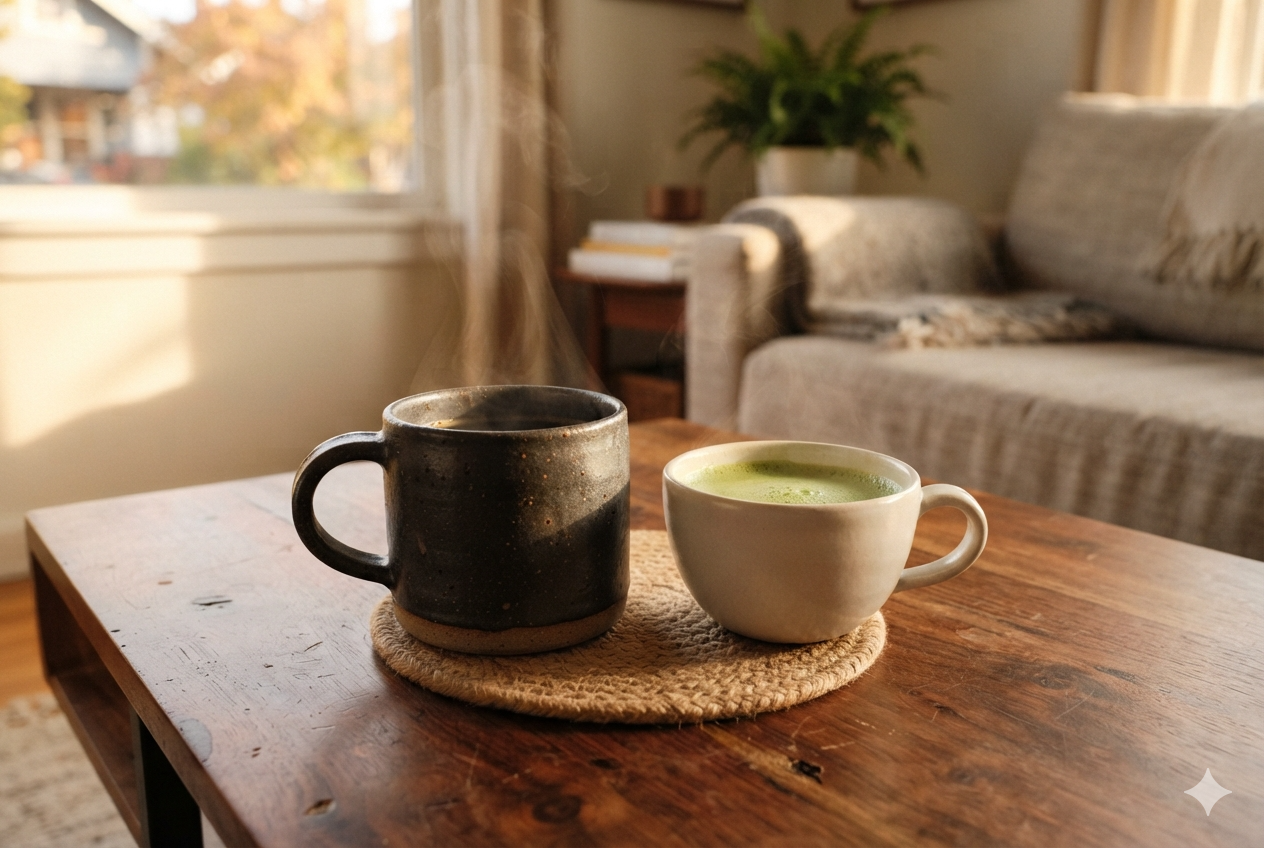
The weight of the stoneware mug settled reassuringly into my palm, the thick walls let me cradle it with both hands, and the coffee stayed hot longer. The rough glaze felt grounding, almost reassuring.
Such a small switch, yet it changed the entire experience. The material itself was teaching me what I truly needed to know about the objects I use every day.
This website participates in the Amazon Associates program. As an Amazon Associate, I earn from qualifying purchases. It also participates in the Impact and AWIN affiliate programs. If you buy through links on this site, I may earn a small commission at no extra cost to you. Thank you for supporting The Hugged Home.
Stoneware vs Ceramic: Both are Clay, Fired Differently
“Ceramic” is often used as a catch-all term, but it covers very different materials. Stoneware, for instance, is also a ceramic, yet its firing process sets it apart.
Both begin as clay shaped and hardened in a kiln, but differences in temperature, density, and texture create distinct experiences at the table.
Stoneware is fired hotter—between 2,100 and 2,300°F. That heat vitrifies the clay, making it denser, less porous, and more durable.
Its weight and ability to retain warmth are the physical results of that transformation. Hold a stoneware mug and you can feel the heaviness.
Earthenware and lighter ceramics, fired at lower temperatures around 1,800 to 2,000°F, emerge more porous and delicate. It looks elegant and crisp, but lacks the thermal mass and weight of stoneware.
Astrid once watched me agonize over porcelain versus stoneware for a casual dinner. She laughed: “We don’t worry if the soup bowl is heavier than the plate. We just want the food hot and people happy.”
She was right, but not entirely. The clay is also weight, texture, and warmth—qualities that shape how a meal feels, even if we don’t name them.
The Danish idea of hjemlig—homelike—captures this perfectly: objects belong not because they are flawless, but because they are useful and comforting. Stoneware often embodies that spirit more naturally than fine porcelain.
The Seven-Step Practical Selection Guide
You do not need to choose one material and banish the other from your home. A well-lived kitchen or dining room uses both, depending on the season, the meal, and the feeling you want to create.
Here is how to select the right material for your daily life.
1. Feel the Weight in Your Hands
Pick up the piece before you buy it.
Stoneware will feel substantial, grounding, almost anchoring in your palm. This weight signals durability and presence. It makes a simple bowl of soup feel like a proper meal.
Lighter ceramic feels more delicate and refined, which can be wonderful for special occasions or summer mornings when you want everything to feel airy.
But for the dark months, when you need your home to feel like a refuge, the weight of stoneware provides a tactile reassurance that lighter materials cannot match.
2. Consider the Thermal Mass
Stoneware holds heat longer because of its density. This makes it ideal for winter soups, slow stews, and coffee that you want to sip over twenty minutes instead of gulping it down. The material itself becomes part of the warming ritual.
Lighter ceramic cools faster, which can be an advantage for iced drinks or quick breakfasts, but it works against you when the goal is to extend a moment of warmth.
If you are building a cozy home for the Dark Season, prioritize stoneware for the pieces you use daily. They let you linger and enjoy meals or beverages at a slow, languid pace
3. Examine the Rim
Run your finger along the edge. A stoneware rim is often slightly thicker, sometimes uneven, and always substantial. It feels casual and inviting, the kind of edge that does not make you worry about chipping if the piece slips.
A fine ceramic rim is thinner and more precise, which feels elegant but also more formal. It signals that this object should be handled with care.
Ask yourself: which invitation do you want to extend to your family on a normal Tuesday night in winter?
4. Look at the Glaze and Texture
Stoneware glazes tend to be more rustic, sometimes matte, often with visible texture or slight variations in color.
These imperfections are not flaws; they are evidence of natural materials used and the high-temperature firing process. They make each piece feel unique and handcrafted.
A Danish designer describing a vase with an uneven, dripping glaze might call it “smukt uperfekt” (beautifully imperfect). It embraces the idea that the flaw is where the character lives.
Lighter ceramics typically have smoother, brighter, more uniform glazes that can look pristine and polished. Often they are machine made to uniform perfection.
Both have their place, but the tactile variety of stoneware adds visual and sensory interest to the table that smooth perfection cannot replicate.
5. Check for Oven and Microwave Safety
Stoneware is typically oven-safe and can go from the oven directly to the table, which makes it practical for casseroles, baked pasta, and bread. This versatility is useful in a real kitchen where efficiency matters.
Some lighter ceramics cannot handle high heat and may crack if exposed to sudden temperature changes.
Before you buy, check the manufacturer’s specifications. A piece that can move seamlessly from oven to table to dishwasher earns its place in a busy home.
6. Think About the Season
I rotate my dinnerware by season, though I did not plan to do this intentionally.
In April and May, when the light is getting brighter and the windows are open, I find myself reaching for lighter ceramic bowls and plates. They feel appropriate for salads, fresh berries, and quick meals eaten in natural light.
My Ceramic Pick: I also like to enjoy my afternoon cup of tea in Chip-Resistant Ceramic Cups from Teocera. I especially like the thought behind the ergonomic handle. I get a good grip, reducing chances of dropping or spillage.
From October through March, the stoneware comes out and stays out. The heavier pieces feel right for the darker months, when the goal is to create warmth and substance. A pumpkin soup in a stoneware bowl just feels right in November.
My Stoneware Pick: The Stoneware Dinnerware Set from Pokini has a distinctive look, is microwave and dishwasher safe. I have been using it for a couple of years and they still look as good as new.
You do not need two complete sets, but you might consider which material dominates your daily rotation and plan accordingly.
7. Mix Without Fear
You do not need a matching set. This was difficult for me to accept, because I love the order of identical objects stacked neatly in a cabinet.
But a stoneware soup bowl paired with a lighter ceramic dinner plate is perfectly hjemlig. The goal is not visual perfection; it is functional harmony.
If you are building a collection over time, as most of us do, embrace the variation. A speckled stoneware mug next to a smooth ceramic creamer tells the story of a home that is lived in, not on display.
It is Winter Now, So it is Mostly Stoneware
That Saturday night, I left the porcelain set in the cabinet and washed the stoneware mugs instead. They went back onto the kitchen island, ready for our Sunday morning coffee.
The truth is, I still love the delicate cups for special occasions. There is a time for elegance and precision.
But for the chilly winter mornings, when I sip coffee in my hyggekrog, looking out at the snow, I need something that feels substantial. Something that holds the heat and the weight of the moment.
Henrik walked into the kitchen an hour later, still half-asleep, and reached automatically for his stoneware mug without even looking.
He did not think about firing temperatures or thermal mass. He also knew, like me, that this was the cup that made his coffee taste right.
That is the point, isn’t it? The material is not the story. The warmth is.
Light a candle. Slow down. Hygge.
— Elise