Rattan vs Wicker and How Best to Style Them for a Cozy Winter Home
It was late October in Minneapolis, the windows finally closed against the first real chill. The house felt quieter, more contained.
I stood in the living room, looking at the oak coffee table and walnut sideboards. They grounded the space, yet in the fading autumn light the room seemed heavy, almost too solid.
The wood was beautiful, but it needed to breathe.
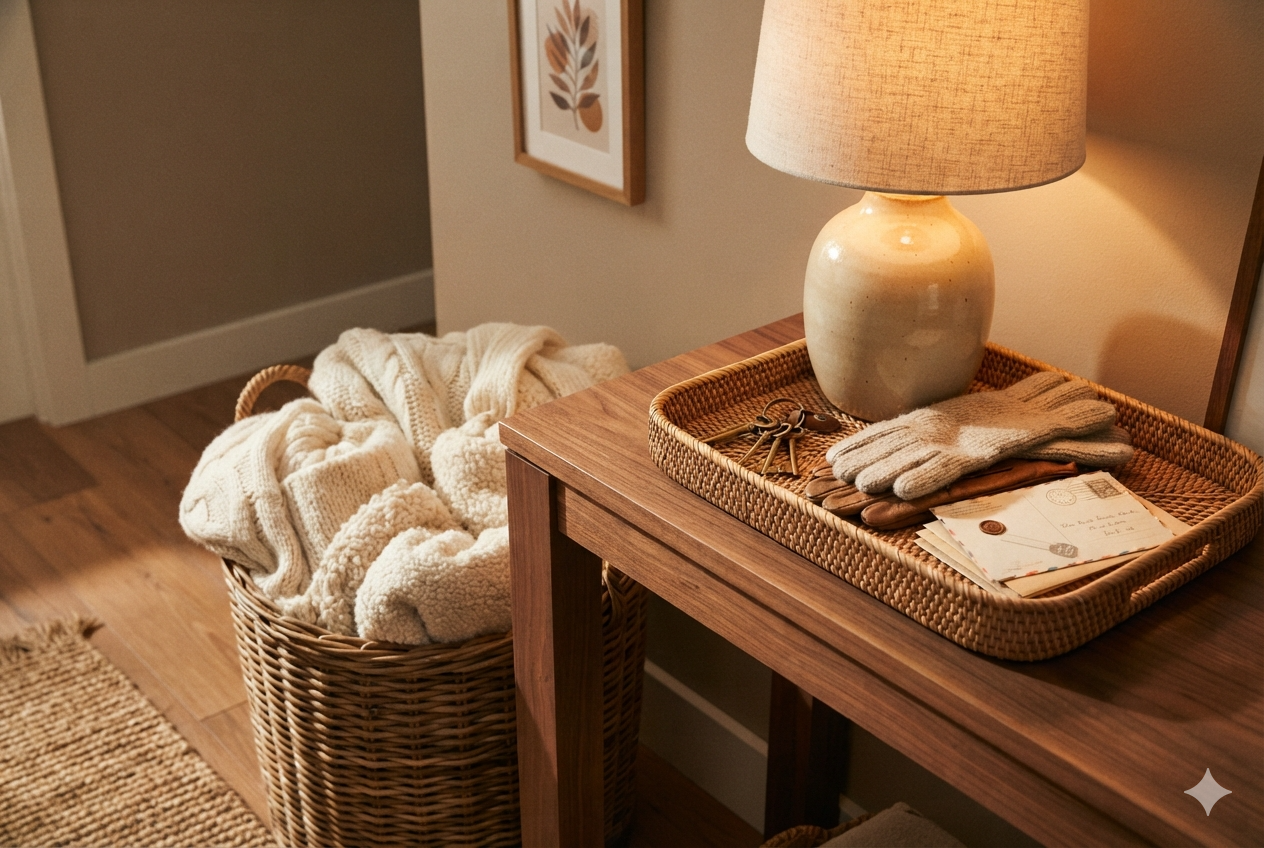
I reached for a woven wicker basket to hold the throws and a rattan tray for the console. Instantly, the weight lifted. The corner softened, and the room began to breathe again.
This website participates in the Amazon Associates program. As an Amazon Associate, I earn from qualifying purchases. It also participates in the Impact and AWIN affiliate programs. If you buy through links on this site, I may earn a small commission at no extra cost to you. Thank you for supporting The Hugged Home.
Rattan vs Wicker: What’s the Difference?
The comparison rattan vs wicker can be confusing, mainly because the comparison is not similar to wool vs fleece throws or beeswax vs soy candles.
- Rattan is the material. It is a solid, flexible palm vine that grows in tropical regions.
- Wicker is the technique. It is the weaving process, which can use rattan, willow, bamboo, or even synthetic fibers.
Balancing Solid Wood Furniture with Wicker
In my own home, I have developed a strict design hierarchy. I prefer solid wood—like oak, walnut, and cedar—for my large, structural furniture, beds, sofas, tables, dressers, etc.
Solid wood feels warm to touch and it complies with the arv principle, the Danish concept of inheritance or legacy. A solid wood table is built to hold the weight of a family for generations. It builds the bones of the house.
But a house cannot be made entirely of heavy bones. It needs breath.
Hard, flat surfaces bounce sound. A room full of glass, painted wood, and solid tables can actually echo, making the space feel sterile.
Woven textures do the opposite. They absorb sound and soften echoes. They also satisfy our innate need for biophilia—the human brain’s preference for organic, non-linear patterns.
Looking at the irregular, interlaced weave of a basket gives the eyes a resting place that a flat, solid surface simply cannot provide.
Summer vs Winter Interiors
Several years ago Astrid had watched me swapping out my woven summer baskets for solid plastic bins in the fall, trying to “tidy up” for winter. “Why do you hide the texture when it gets cold?” she asked.
In Denmark, the use of naturmaterialer (natural materials) does not stop when the snow falls. The texture is what makes the room feel alive when the trees outside are bare.
For years, I had treated woven textures as summer decor. I would pack my wicker baskets away in October, assuming they belonged to the patio season. I was wrong.
I have since learned that these open, organic textures are some of the most practical tools for a winter home. They are the perfect counterbalance to solid wood when the dark months arrive.
Style & Care Tips for Rattan and Wicker
You do not need to overhaul your home to bring these textures in. A well-lived home uses them intentionally to soften the edges.
Here is how to apply them without turning your living room into a beach house.
1. Know the Difference (Material vs. Method)
As a quick rule of thumb: if it is a solid, structural pole or frame, it is rattan. If it is an interlaced, flexible weave, it is wicker.
Understanding this helps you buy the right item for the right job. You want the structural integrity of rattan for a chair frame, but the soft, flexible weave of wicker for a basket.
2. Anchor with Solid Wood
Keep your heavy furniture solid. Your dining table, your bed frame, your main sideboards should be wood. This ensures the room feels grounded and substantial.
Leave the woven textures for the accents. If you replace a solid oak coffee table with a rattan one, you lose the thermal mass and the visual anchor of the room. Let solid wood hold the space.
3. Choose Wicker for Storage
This is where wicker earns its place in a winter home. A solid wood bin or a plastic box adds a heavy, visual block to a room.
A woven wicker basket helps organize the clutter—blankets, laundry, toys—while allowing the eye to pass through the gaps in the weave.
My Wicker Basket Pick: I keep an assortment of large and medium-sized wicker storage baskets in the living room, bedroom, and entryway. They are so convenient for holding extra throws, blankets, and pillows. And they look great too!
4. The Wicker Catch-All Tray
A flat rattan or wicker tray is one of the most useful objects on a console table or a coffee table. It corrals the daily clutter—keys, mail, remote controls, coasters—into a single, defined space.
The tray’s handwoven texture and use of natural materials brings coziness and warmth, without adding visual weight to the table.
5. Lighting and Shadows
A rattan or wicker lamp shade can be a secret weapon for layered lighting. When you place a warm 2700K bulb inside a woven shade, the light filters through the gaps, casting beautiful, intricate shadows on the ceiling and walls.
Go for it if you like rattan. My taste tends to be more in favor of linen lamp shades.
The Ambient Pick: Nourison Home 23″ Ceramic Jar Table Lamp. The distressed cream ceramic carries the visual weight the sofa corner asks for, and the ivory linen drum shade diffuses heavily to create the ambient pool itself.
6. Layering for Winter
To keep woven textures from feeling like a coastal rental, you must pair them with heavy winter materials.
Drape a thick, charcoal wool throw over a rattan chair. Place a wicker basket next to a dark walnut sideboard. The contrast between the cool, open weave and the heavy, dense textiles is what creates a cozy, grounded atmosphere.
7. The Practical Reality of Dusting
Woven items collect dust in their crevices. It is an unavoidable fact of owning them. Do not let it build up, or the texture will look dingy rather than warm.
Once a month, take the vacuum cleaner with the soft brush attachment and gently run it over the weave. For sticky spots, a barely damp cloth is enough. Never soak them, or the natural fibers will warp.
Bringing It All Together
Rattan and wicker aren’t just decorative choices; they’re tools for shaping how a room feels in the darker months.
Solid wood anchors the space, but woven textures give it breath, soften the edges, and remind us that a home should feel lived‑in.
Whether it’s a basket by the sofa, or a tray on the console, these materials work best when paired with the weight of winter textiles and the warmth of layered lighting.
The lesson is simple: don’t think of rattan and wicker as seasonal props. Think of them as part of the architecture of comfort.
Used with intention, they balance strength with softness, turning heavy rooms into welcoming ones—and making winter interiors feel not only cozy, but deeply human.
Light a candle. Slow down. Hygge.
— Elise