Linen vs Flannel Sheets: Why One Freezes and the Other Sweats
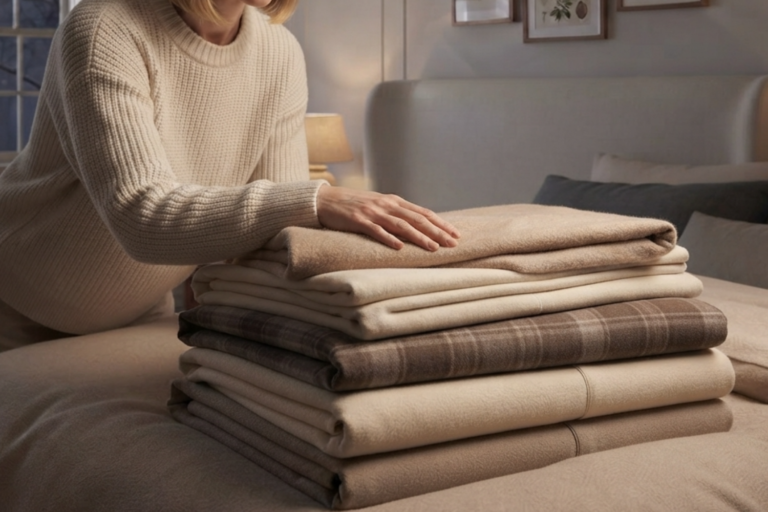
The first real cold snap came on a Tuesday in early November, and with it, the annual migration: the flannel sheets out of the linen closet, the linen stacked away until spring.
By 2 a.m. I had one foot kicked out of the covers, hunting a cool patch of mattress. Beside me, Henrik, wrapped to the chin, was deeply content. We have settled this at the pillow layer — wool for me, down for him. At the sheet layer, the negotiation is still open.
Your skin is in touch with the sheet for eight hours every night. The duvet gets the credit, but the sheet material matters as much. And there are two critical moments: the first touch, and the 2 a.m. experience.
One sheet can win both. Rarely is it the same sheet for both sleepers.
Here is the linen vs flannel question, answered by physics and my dealing with several Minnesota Novembers.
This website participates in the Amazon Associates program. As an Amazon Associate, I earn from qualifying purchases. It also participates in the Impact and AWIN affiliate programs. If you buy through links on this site, I may earn a small commission at no extra cost to you. Thank you for supporting The Hugged Home.
The Physics of First Touch (and the 2 A.M. Truth)
A night in bed has two moments that matter: the slide-in, and 2 a.m. Linen and flannel win different moments. Here is the plain physics.
The slide-in: why flannel feels warm, and linen feels cold.
Flannel is brushed until its fibers stand up, and those upright fibers hold a thin layer of still air. Still air is insulation — the same as a down jacket. The feeling at first touch seems like a warm hug because the heat leaving your skin stays next to your skin.
Linen is the mirror image. It is a smooth, dense weave with no trapped air. Flax fiber carries heat away from the body about five times faster than wool. For a few seconds it borrows warmth from your skin, and the borrow feels like a chill.
If you have ever shivered at linen sheets cold at night, that borrow is the reason. (The lab name for the first-steal feeling is thermal effusivity. The household name is “cold sheet.”)
First touch, in one line: flannel holds your heat close; linen carries it away fast.
2 a.m.: why the story flips.
Your body gives off heat and moisture all night. Under flannel, both stay trapped — the same still air that felt cozy at ten o’clock becomes a seal by two. If you have ever typed do flannel sheets make you sweat into a phone at 2 a.m., that is the answer.
Linen keeps doing its job until morning: carrying heat and moisture away from your skin and dissipating it. The hollow flax fiber is the helper here — a microscopic straw that soaks up vapor and passes it along instead of holding it against you.
The sheet that felt cold for ten seconds stays dry for eight hours. And dry skin sleeps warmer than damp skin.
The verdict, in one line.
Flannel wins the first ten seconds. Linen wins the next eight hours. Which moment matters more depends on whether you run hot or run cold — and that is the rest of this article.
Should the Sheet Even Insulate?
No. That is the pivot. The sheet’s job is moisture management and skin feel; insulation belongs to the duvet, the throw, the layered bed.
Ask the sheet to insulate, and you are assigning it the wrong job.
The Spec Sheet: Reading a Sheet Label
The tag tells the truth, if you know which number to read. For both fibers, the number is weight — and the marketing number is thread count, which you can ignore.
The Flannel Specs
- Weight, not thread count. Five ounces per square yard — about 170 GSM — is the floor; 190 to 200 GSM is the premium shelf, and the heavy heritage sets run past 210. Below the floor, you are buying a brushed shirt.
- The fiber line. 100% cotton, never a polyester blend. Poly flannel is the fleece throw in disguise — the same trapped-sweat physics, moved under your duvet.
- The brushing. Double-brushed is the softness claim worth paying for; single-brushed is a shirt again.
The Linen Specs
- Weight. 160 to 190 GSM for a midweight bed sheet — lighter drapes and breathes; heavier feels like an heirloom from the first wash.
- The certification. European Flax on the label is the difference between flax grown for fiber and flax grown for whatever was profitable that season. Oeko-Tex on the dye line is the extra credit.
- The yarn. Single-ply, not twisted multi-ply — single-ply is the soft, breathable weave.
- Ignore the thread count. Linen yarn is thick by design, so a “1,000 thread count linen” is either a lie or a very stiff bed.
The Sleeper Test
- Hot sleeper: linen, no contest.
- Cold sleeper: flannel, no contest.
- The girls’ beds: flannel — small bodies lose heat fast, and first-touch warmth matters more at forty pounds.
- The guest room: linen, with a flannel top sheet folded in the closet; let every guest choose their own first touch.
And the layering answer, which finally ends the negotiation in our house: linen as the base layer, wool duvet or throw on top.
The linen manages the moisture; the wool dials the warmth up or down. It is the adjustable winter bed — the Scandinavian Sleep Method argument, one layer deeper.
What we sleep on, and why:
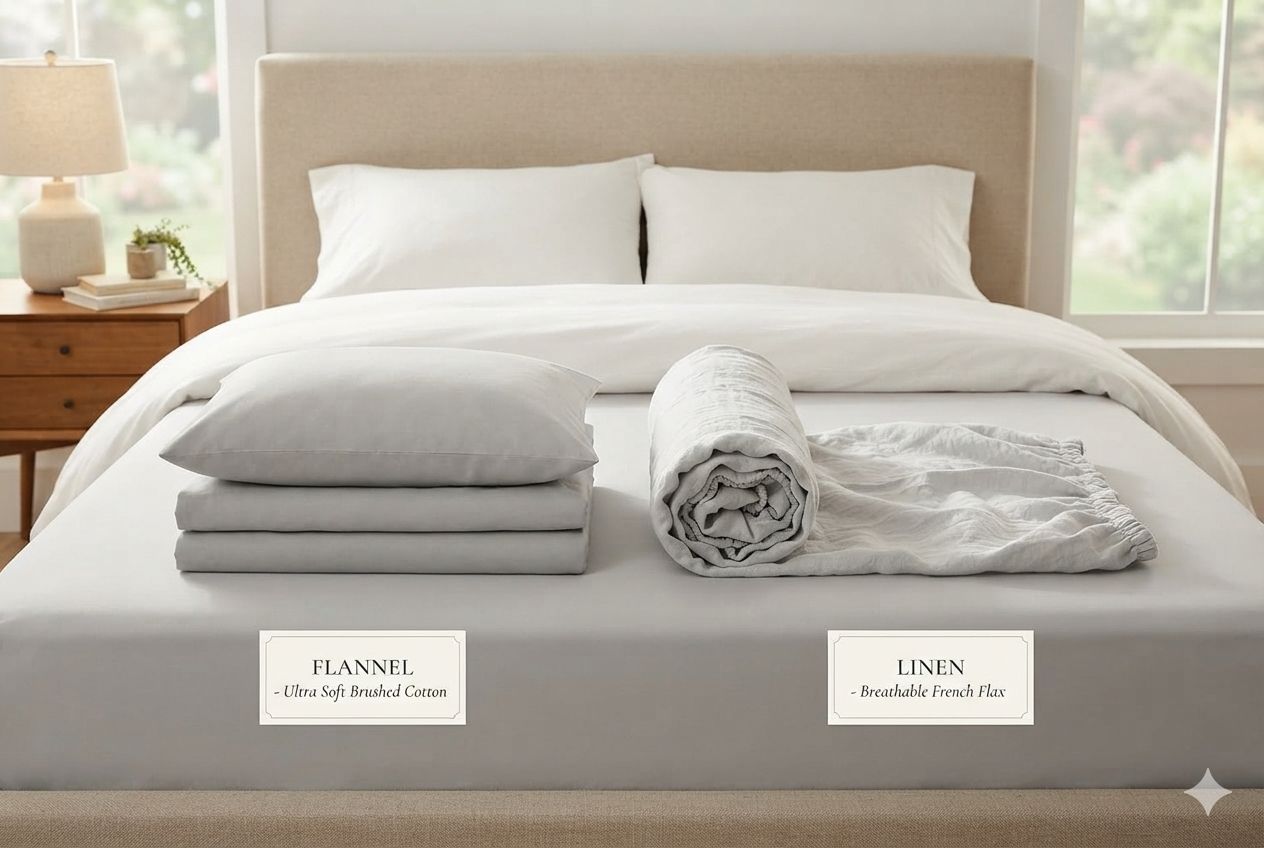
The fitted sheet we share is the Simple&Opulence 100% Linen Set — Natural French Flax Stone Washed Farmhouse Soft Breathable Bottom. It goes directly on the mattress and manages the moisture for both of us.
But Henrik needs his first-touch warmth, so his half of the bed gets a Tribeca Living Triple-Brushed Cotton Flannel top sheet, folded back until he slides in. The flannel survived its third winter of washing without going scratchy, which is all I ask of a November compromise.
The Care Guide: Two Fibers, Two Routines
Caring for Linen
Here is how to wash linen sheets so they keep softening: warm or cold water, and skip the softener — a softener is a wax coat in disguise, and it seals the hollow fiber shut.
Tumble low or line dry. The wrinkles are the point; ironing linen is just a way to tell your guests you own an iron. Does linen soften over time? It is the only sheet in the house that does — wash after wash, for a decade.
Caring for Flannel
Flannel’s enemies are heat and friction. How to wash flannel sheets without pilling comes down to three words: cold, inside out, gentle — the inside-out flip keeps the nap from rubbing itself into pills.
Skip the softener here too; a half-cup of white vinegar in the rinse does the softening, and it cuts the pilling.
High heat turns a second-winter flannel scratchy and thin. It is best to dry on low heat. De-pill a beloved old set with a fabric shaver once a season, and it stays in the rotation years past its label life.
The Cheat Sheet: Linen vs Flannel Sheets at a Glance
| Linen | Flannel | |
|---|---|---|
| First touch | Cool, brief | Warm, immediate |
| 2 a.m. feel | Dry, even | Cozy, then clammy for hot sleepers |
| Wicking | High — hollow flax | Moderate — holds damp close |
| Pilling | None; softens instead | Pills; short-staple cotton |
| Softening | Improves for a decade | Peaks early, then thins |
| Care | Warm wash, line or low tumble | Cold, inside out, low heat |
| Best for | Hot sleepers, layerers, sweaters | Cold sleepers, kids, guest room |
When Flannel Is the Right Call
Cold sleepers. The girls’ beds. The guest room in January, when the first touch must be a warm welcome.
Flannel is brushed cotton — a natural fiber with a natural feel. Flannel bed sheets certainly meet the hygge essentials requirement.
Are flannel sheets good for winter? For the cold sleeper, someone whose body loses heat fast or a room that never quite warms up, the flannel sheets are terrific value for money.
When Linen Is the Right Call
Hot sleepers and night sweats. The layerers, who want a base that manages moisture while the wool dials the warmth. Anyone who loves the cold side of the pillow.
Linen sheets are a must-have for a home that wants at least one set that softens for a decade. Linen is the only sheet that works in January and still works in July — it never needs to see the linen closet.
Are linen sheets warm in winter? With a wool layer on top, warmer than flannel — dry skin sleeps warmer than damp skin.
The Sheets at the End of the Night
It is 10 p.m. The bed is made in linen, with a flannel top sheet folded on Henrik’s half — the compromise, one layer deeper than the pillows.
Björn is asleep at the foot of the bed, on the flannel side, which is the entire peer review I need on first-touch warmth.
Two fibers, one bed. Nobody sweating, nobody shivering. The candle burns down; the furnace kicks on; the house settles.
P.S. The sheet is one layer of the winter bed — read the Scandinavian Sleep Method guide for the duvet logic, and the wool vs down pillows guide for the layer above your head. Feet still cold? The cold feet guide finishes the stack.
Light a candle. Slow down. Hygge.
— Elise